Get Full Government Meeting Transcripts, Videos, & Alerts Forever!
Get email alerts on the Preclearance Wvra topic
No spam. Unsubscribe anytime.
House Bill 1710 would add state preclearance to Washington Voting Rights Act; sponsors say it prevents discrimination, critics warn of broad reach
Summary
House Bill 1710 would establish a state preclearance program under the Washington Voting Rights Act requiring certain jurisdictions to obtain approval before implementing election changes.
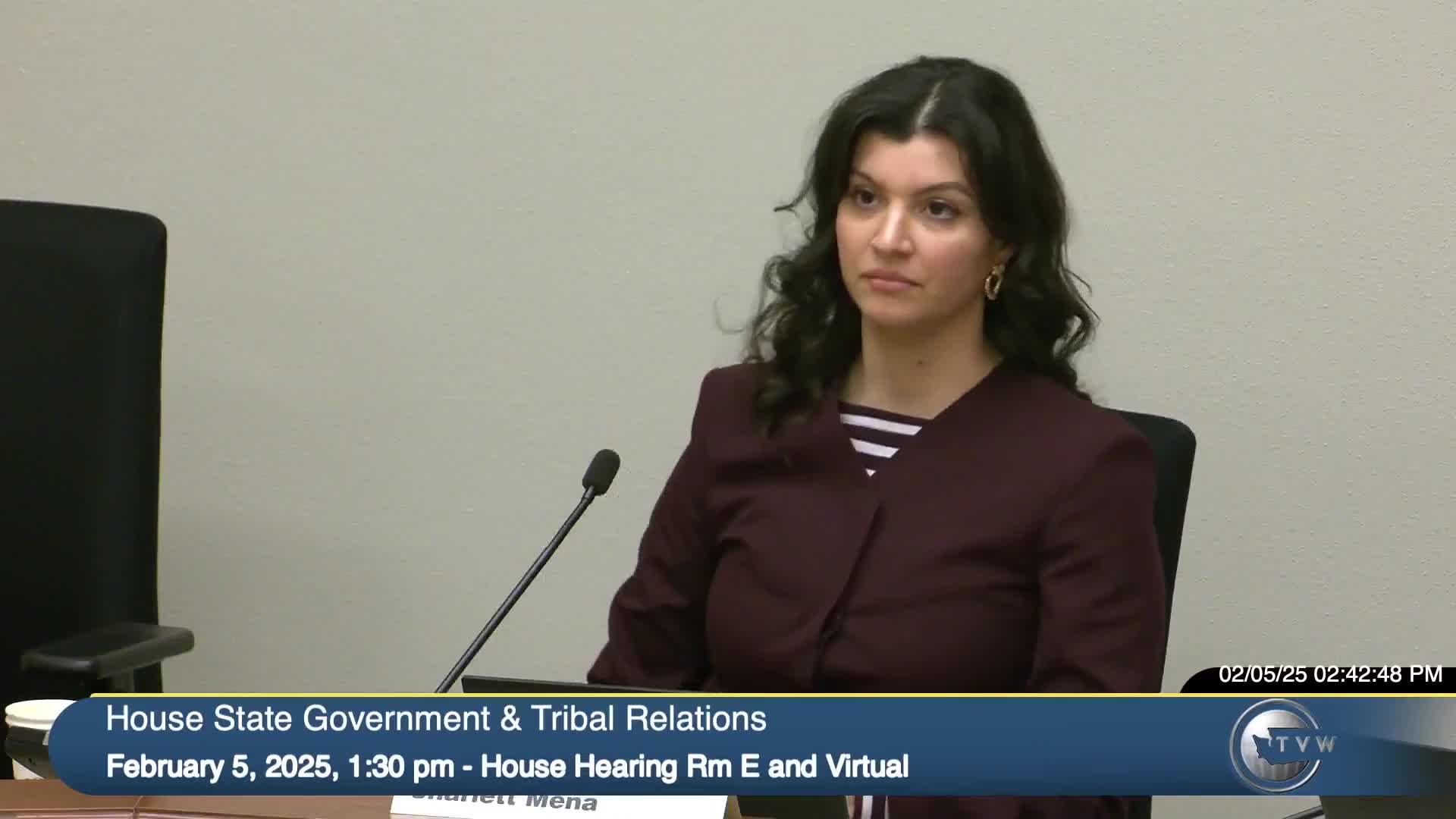
House Bill 1710 would add a preclearance requirement to the Washington Voting Rights Act, requiring jurisdictions designated as “covered” to obtain certification from the attorney general or a declaratory judgment from superior court before implementing certain election-related changes, Representative Charlotte Mena (chair) told the committee.
Staff explained that the bill’s coverage criteria identify jurisdictions by recent enforcement history, demographic thresholds, or measures of racial disparities (including registration and turnout gaps, arrest rates, and poverty rates). Examples in the staff report included: a protected-class population threshold of at least 6,000 citizens of voting age or 15% of the citizen voting-age population; an enrollment/registration or turnout gap of 10 percentage points; a 25-year lookback for certain enforcement findings; and a 10-year window for other metrics. Preclearance applies to “covered practices” such as changes to method of election, boundary or district changes, and other measures that may “deny, abridge or dilute” the right to vote.
Proponents said the rule restores a “shield” that complements existing cause-of-action remedies (the “sword”) and would reduce the need for costly litigation after discriminatory changes take effect. Roxana Neruzzi of OneAmerica and representatives of the Campaign Legal Center and Legal Defense Fund testified that state preclearance mirrors similar programs adopted elsewhere and can prevent disenfranchisement before it happens. Legal witnesses said the bill includes time-limited, metric-based coverage criteria and an exit path as jurisdictions improve.
County and city associations — represented by Paul Jewell of the Washington State Association of Counties and Candice Bach of the Association of Washington Cities — said the draft is too broad, flagged the five- or 25-year lookback periods as punitive, and warned the bill could delay routine actions such as annexations, charters, or redistricting. Paul Jewell said the bill’s triggers could stall time-sensitive actions (for example, post-census redistricting) if extensions are used by the attorney general’s office, and suggested trimming the 25-year window and narrowing covered actions. Pasco deputy city manager Risha Sigdel told the committee the city of Pasco would face recurring preclearance requirements for routine annexations and urged revisions to avoid repetitive costs; she also asked that the bill allow local filings outside Thurston County where the bill currently directs declaratory-judgment filings.
Legal experts who support the bill argued coverage will be limited to jurisdictions that meet the statutory metrics — not to the entire state — and noted that state-level preclearance differs from the federal formula struck down in Shelby County v. Holder because state legislatures can set current, time-limited criteria. Hearing witnesses cited New York’s and Connecticut’s recent state preclearance programs as precedents, with supporters saying those states provide models for a stable rollout; opponents pointed to ongoing litigation in New York as a cautionary example and urged narrower, clearer triggers and an exit process.
Committee members asked how many jurisdictions would be covered; sponsors and staff replied the bill sets objective criteria and the attorney general or the secretary of state would determine coverage by rule. No committee vote was recorded during the hearing.