Get Full Government Meeting Transcripts, Videos, & Alerts Forever!
Get email alerts on the Preventive Care Timing topic
No spam. Unsubscribe anytime.
Bill would require 30‑day grace window for annual preventive services
Summary
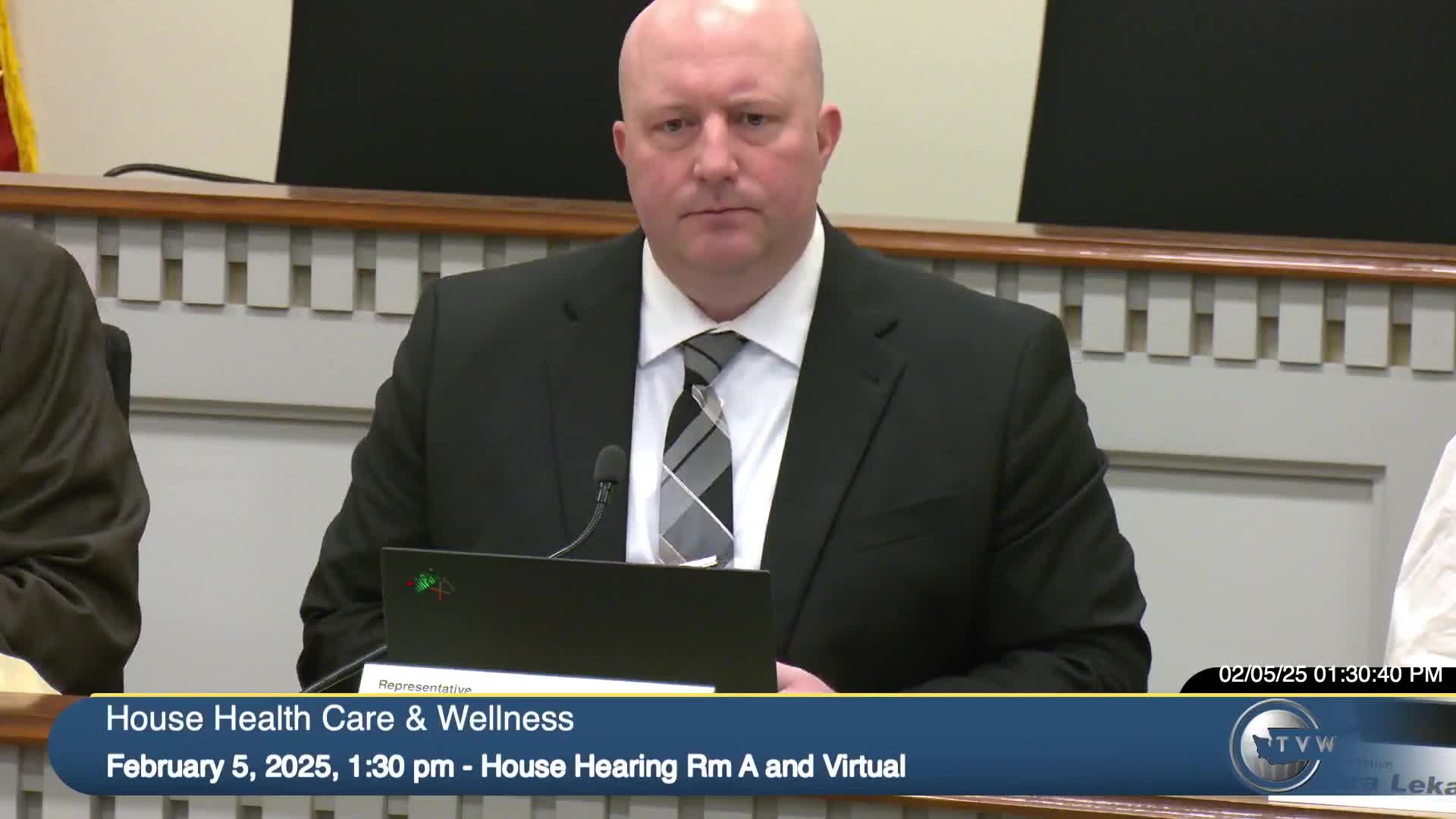
The Washington House Health Care & Wellness Committee on Feb. 5 heard House Bill 1627, which would require health plans — including plans for state and school employees and vision‑only and dental‑only plans — to allow enrollees to obtain covered annual preventive services at least 30 days before 12 months have elapsed since the enrollee last received the service.
The Washington House Health Care & Wellness Committee on Feb. 5 heard House Bill 1627, which would require health plans — including plans for state and school employees and vision‑only and dental‑only plans — to allow enrollees to obtain covered annual preventive services at least 30 days before 12 months have elapsed since the enrollee last received the service.
Kim Weidner, staff to the committee, told members the bill "provides that health plans ... must provide coverage for any covered annual service in a way that allows the enrollee to obtain the covered service at least 1 month before 12 months have elapsed since the enrollee was last provided the service." Weidner also summarized that the bill applies the same approach to services covered on biannual or other multi‑year frequencies.
Representative Dave Paul (D‑10), the bill's sponsor, told the committee the measure was prompted by constituent reports that the scheduling rules push routine preventive care out of the months when people are used to getting it. "This bill would require that patients have a 30‑day grace period to be able to have that, so that they're having that preventative care within that same calendar month," Paul said, noting an example from a constituent who receives a prompting campaign in October for a mammogram but whose insurance scheduling rules moved the test into November.
Paul added that, after drafting the bill, he learned the practice in question “may already be the law that that's supposed to be allowed,” but that providers did not uniformly understand that and that education or clarification may be needed even if the statute is unnecessary.
Committee staff recorded that the bill would apply the same cost‑sharing that would have applied if the service had been obtained at the plan's standard frequency. No public commenters signed in on HB 1627 during the Feb. 5 hearing.
The hearing closed with an invitation for committee members to email staff with questions; there were no votes or formal actions taken on the bill during the hearing.
HB 1627 now proceeds through the committee process for further consideration, amendment, or scheduling of subsequent floor action.