Get email alerts on the Code Enforcement topic
No spam. Unsubscribe anytime.
Sebring council asks staff for options to push owners to fix chronic code violations
Summary
Council members discussed long‑standing code enforcement liens, asked staff and legal for proactive notification and enforcement options including foreclosure on non‑homestead property, and heard staff explain current lien, estoppel and reduction processes.
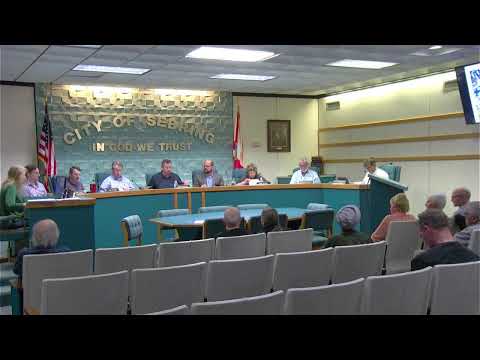
The City of Sebring City Council discussed steps to push long‑term property owners to resolve code enforcement violations and liens, and asked staff and the city attorney to present options for more proactive notification and enforcement.
Councilmember Carlisle raised the issue after describing multiple properties that accumulate fines and sit unrepaired for years. “My thought…was to at least start tracking and then updating the these the owners of these buildings who are incurring these fees on at the very least a yearly basis,” Carlisle said, adding that his goal was not to foreclose but to prompt action.
Chief Carl Hogan explained how the city currently notifies owners: certified hearing notices, notices of lien, and invitations to report property status. “We do formal notification through the hearing process…we send them a notice of lien by mail to notify them that they are now accruing a daily fine,” Hogan said, adding the city asks owners to update staff once the property is brought into compliance so fines will stop.
City Attorney Bob Swain outlined the legal limits and remedies the city has used and what foreclosure would mean. “Just, for like, foreclosing any other lien…they would lose title to it,” Swain said, adding that the city cannot foreclose on a code enforcement lien on homestead property but can on non‑homestead property and that a code enforcement lien can attach to all real property owned by the same legal entity in the county.
Council members and staff discussed other tools mentioned in the meeting: estoppel letters (which can pause daily fines so a buyer can close and pay outstanding liens within 90 days), lien reduction requests (sometimes used to incentivize transfer to an owner who will rehabilitate the property), and automated reminder letters through code‑enforcement or financial software. A staff speaker said the city uses BSNA software for billing and that recurring receivable letters might be possible to generate.
Council heard staff estimate there are “millions of dollars worth of liens that are outstanding” and was told liens expire after 20 years. Legal and staff cautioned that foreclosure has been rare, used principally against habitual offenders, and raised questions about the city’s obligations to remediate hazards before disposing of foreclosed properties.
After extended discussion, the council asked staff and legal to draft options that provide more proactive outreach and stronger enforcement “so we can actually force these properties into compliance,” in Carlisle’s words. The council did not adopt a new policy at the meeting; it directed staff to return with proposed procedures and legal options for council consideration.
The discussion included concerns about fairness, potential costs to the city, and how lien reductions have been handled in past cases, and council members emphasized that the intent is to spur remedial action rather than to acquire title in most cases.
AI generated
The text on this page is AI generated. Summaries, highlights, analysis, and video transcripts are all produced from the original source material.
AI can make mistakes, so if you spot one, and we will fix it for everyone.
Note: the source content is unaltered by us. Any content source we link to, be it a video, an audio recording, or a document, is presented exactly as its publisher released it. That publisher is usually a government body, sometimes an individual official or another organisation.