Get Full Government Meeting Transcripts, Videos, & Alerts Forever!
Get email alerts on the Consumer Protection topic
No spam. Unsubscribe anytime.
Board raises county civil penalty ceiling for price gouging, directs DCBA to expand enforcement
Summary
In response to post‑fire rent spikes and other price gouging reports, supervisors approved raising the county civil penalty cap to $50,000 per violation and directed the Department of Consumer and Business Affairs to expand outreach, data and enforcement efforts.
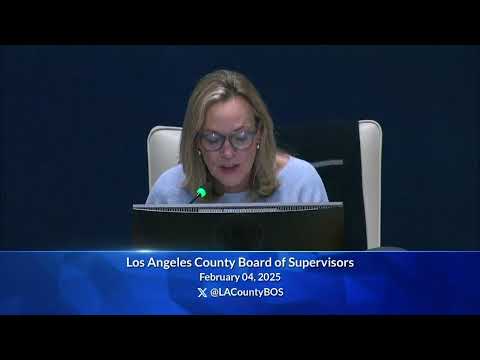
The Board of Supervisors voted Feb. 4 to increase county civil penalties for price gouging from $10,000 up to a maximum of $50,000 per violation and directed the Department of Consumer and Business Affairs (DCBA) to expand outreach and enforcement efforts, including data analysis of algorithmic pricing tools used by some landlords.
Supervisor Horvath authored the motion and co‑authored it with Supervisor Solis. The motion directs DCBA and County Counsel to review county authority and pursue stronger enforcement tools, asks DCBA to coordinate with cities and the Attorney General, and requests additional disaster‑service staff and data analysis resources to identify and act on violations.
DCBA reported the department had fielded 915 price‑gouging complaints as of the night before the meeting, with roughly 90% involving rental properties. DCBA said it had repurposed communications contracts to run radio, social and billboard ads, issued letters to registered landlords, and coordinated with cities across the region.
Supervisors and tenant advocates said the existing $10,000 penalty was insufficient and pointed to crowdsourced tracking indicating thousands of alleged rent spikes since the fires. Supervisors and DCBA staff discussed concerns about algorithmic pricing software that can recommend repeated rent increases; DCBA said some landlords have removed listings when notified.
The motion passed 5-0. Supervisors asked DCBA to consult with tenant, labor and landlord stakeholders and to explore partnerships with online listing platforms and pricing‑software vendors to improve transparency and enforcement.