Get Full Government Meeting Transcripts, Videos, & Alerts Forever!
Get email alerts on the Hb 1007 Tax Credits topic
No spam. Unsubscribe anytime.
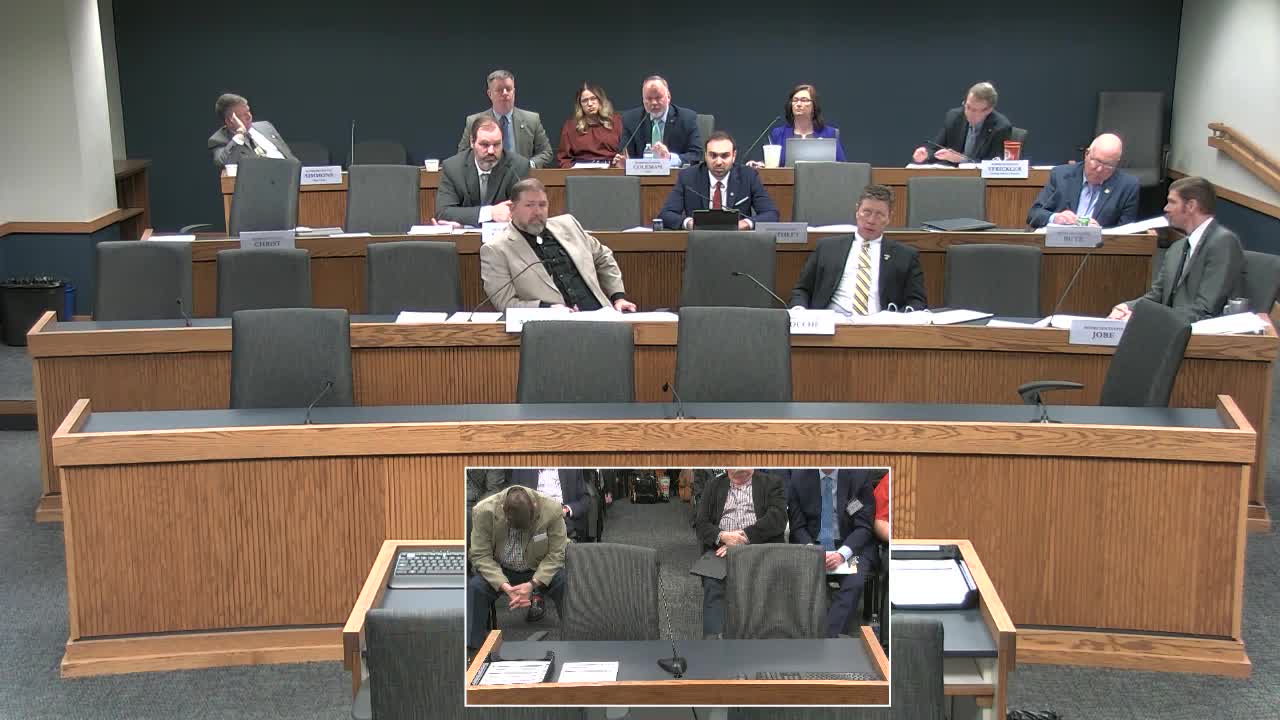
Committee hears bill to standardize and cap state tax credits; film advocacy warns of harm to new credit
Summary
Representative Owens presented HB 1007, a 169‑page restructuring of numerous state tax credits to add administration, caps, sunsets and appropriations. The Missouri Motion Media Association opposed annual appropriations for the new film tax credit, arguing it would stifle a recently created incentive.
Representative Owens introduced House Bill 1,007, a statutory rewrite aimed at standardizing the administration, caps and sunset provisions for nearly 59 distinct tax credits.
Representative Richard Owens, sponsor and member of the committee, said the bill focuses on four main reforms: assign administering agencies for credits currently lacking oversight; standardize issuance and redemption periods (most to six years); impose caps on credits that currently carry no limits; and remove expired credits from statute. He described the measure as structural reform rather than an immediate reduction of credit caps. “The structure does not reduce the caps on the tax credits. I'm not eliminating any functioning tax credits but we are putting caps,” Owens told the committee.
Several members asked technical questions about how transfers of administration would work and whether Department of Revenue (DOR) would retain return processing duties while other departments issued credits. Owens said DOR would continue to receive tax returns and perform the tax‑return review while the substantive administration and programmatic issuance would be moved to the department that best aligned with each credit’s purpose. He described that as a “check and balance” meant to reduce fraud and improve oversight.
Olivia Wilson of the Missouri Motion Media Association testified in opposition on behalf of the film industry, asking that the bill not place the film tax credit under an annual appropriation requirement. Wilson said the film tax credit enacted in 2023 is still early in its first calendar year of use and the industry needs multi‑year certainty: “Film producers are not going to come to Missouri to film if there's a chance that that tax credit may not be there next year,” she told the committee. Wilson urged changes that would preserve the program’s predictability while still allowing oversight.
Representative Strickler and other members questioned whether the proposed annual appropriation/appropriations review requirement would obligate numerous small nonprofits or new industries to appear every year to secure funding. Owens replied the intent is to create ongoing legislative oversight and to allow appropriation decisions to be made with annual visibility rather than having uncapped credits accumulate without review.
Ending
The committee concluded testimony and reserved further deliberation. Sponsor Owens said he would work with interested stakeholders (including the film industry) to refine administrative and appropriations language before additional committee action.