Get Full Government Meeting Transcripts, Videos, & Alerts Forever!
Get email alerts on the Hb 499 Earnings Tax topic
No spam. Unsubscribe anytime.
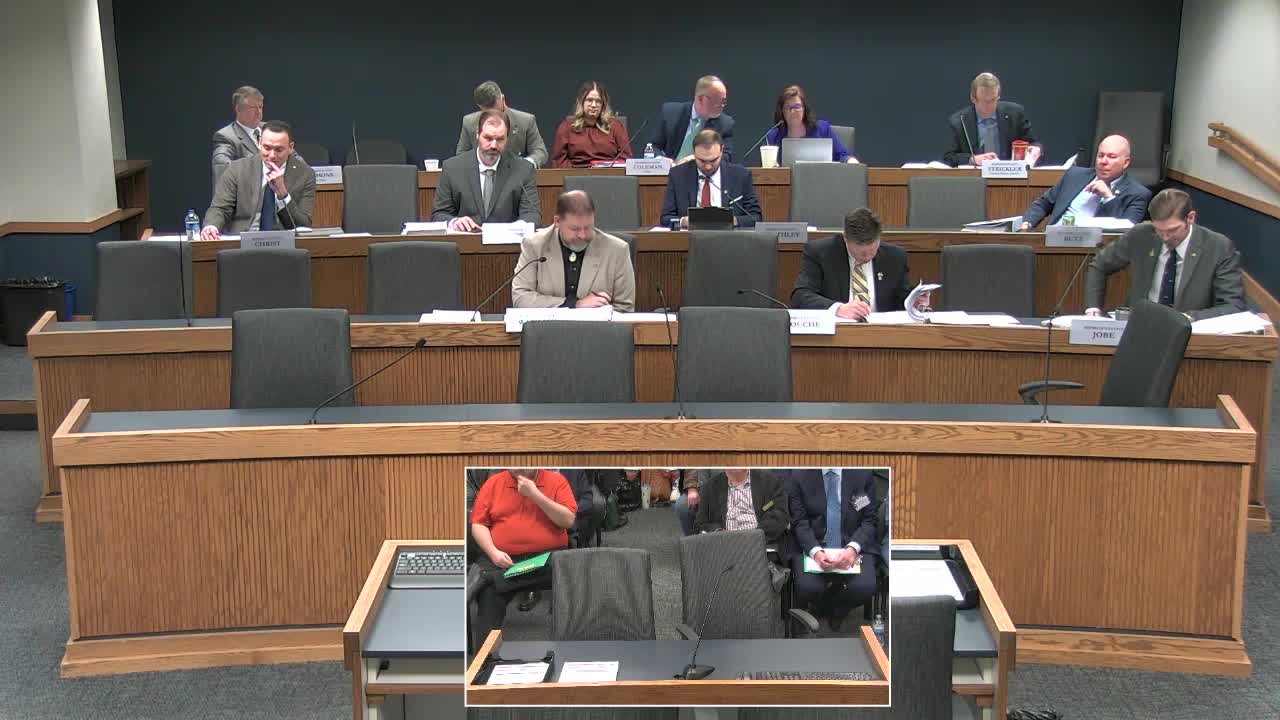
Committee hears divided testimony on bill exempting St. Louis ‘opportunity zones’ from earnings tax
Summary
Representative Crist presented House Bill 499 to carve earnings-tax exemptions for federally designated opportunity zones mapped to ‘distressed’ census tracts in St. Louis; city budget director warned of a possible $15–$22 million recurring revenue loss and additional refund liability.
State Rep. Crist opened public testimony on House Bill 499, a bill that would create targeted earnings-tax relief to encourage investment and job creation in portions of the city of St. Louis.
Representative Mark Crist, state representative and sponsor of House Bill 499, told the committee the measure “provides targeted earnings tax relief to encourage investment and job creation in the city of St. Louis.” He said the bill maps federally designated opportunity zones to locally designated distressed communities and exempts wages and business earnings within those mapped areas from the city’s 1% earnings tax. “Rather than eliminating the tax citywide, this bill creates earnings tax opportunity zones with federally designated opportunity zones in Saint Louis' most distressed communities,” Crist said.
The hearing drew detailed fiscal opposition from Paul Payne, budget director for the city of St. Louis. Payne told the committee the city’s analysis—using American Community Survey data and accounting for pending developments—estimated a minimum recurring revenue loss to the city of about $15 million per year from exempting the identified census tracts. Payne added a pending, catalytic relocation of the National Geospatial-Intelligence Agency (NGA) into one affected tract could raise the combined annual impact to roughly $20 million. If the bill would require refunding previously collected earnings tax for the defined zones “the estimated cost will increase by approximately $22,500,000 in addition to the annual $20,000,000 noted above,” Payne said, describing that figure as an estimate of potential retroactive refunds.
Payne stressed the earnings tax is the single largest source of general‑fund revenue for St. Louis,