Get Full Government Meeting Transcripts, Videos, & Alerts Forever!
Get email alerts on the School Bus Endorsement Age topic
No spam. Unsubscribe anytime.
Missouri committee hears bill to delay mandatory retesting for older school bus drivers
Summary
A House Transportation Committee hearing on House Bills 296 and 438 focused on raising the age at which school bus drivers must retest. Sponsors and members emphasized rural driver shortages and local oversight; no public testimony was offered and no vote was taken.
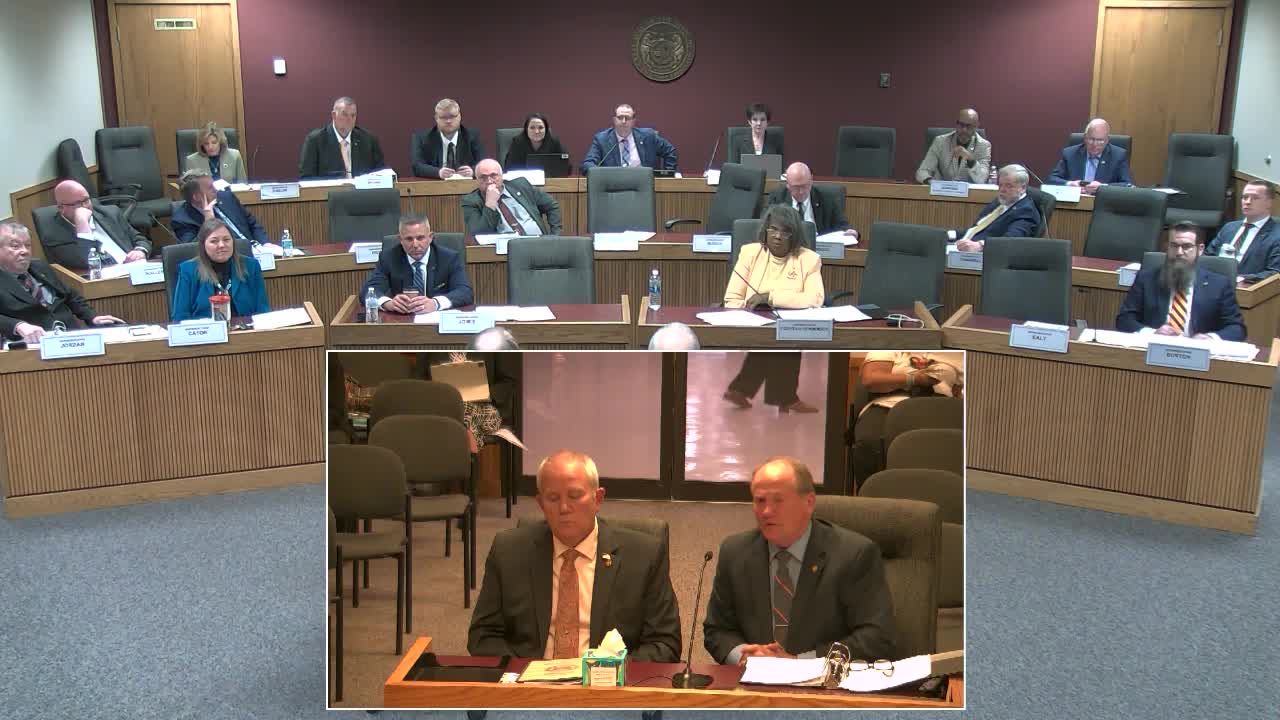
Representative Jim Cabello, sponsor of House Bill 296, and Representative Danny Buzick, co-sponsor of House Bill 438, told the Missouri House Transportation Committee that the bills would raise the age at which bus drivers must undergo mandatory retesting from 70 to a higher age (proposals discussed included 75 and 77).
The bills aim to reduce administrative and recruitment burdens on rural school districts facing driver shortages. “Usually, in July or August, there's a school bus setting somewhere with a big sign on it that says we need drivers,” Representative Cabello said, describing recruitment difficulties in both urban and small-town districts. He and Buzick urged the committee to advance the measures and said either age proposal would be acceptable to them.
Supporters argued older drivers bring institutional knowledge that benefits safety on local routes. Representative Buzick said many drivers earn relatively low pay and that “many bus drivers are of the age of 70 and over that are very good bus drivers,” adding that local school officials are best positioned to judge competence. Representative Chappell noted that “if a bus driver is not acting right, that'll be known about 2.4 seconds after the kids get off the bus,” saying community oversight in small districts provides a safety check.
Some members raised safety and equity questions. Representative Burton cited crash-rate data and said she was concerned because “the fatal crash rate [has] an increase among 75 and older drivers,” and asked whether the bill should allow districts to opt in or opt out of the age change. Representative Mayhew and others discussed how most safety oversight in small districts is handled directly by a superintendent or transportation director, and asked why age 70 had been selected originally.
Committee members also questioned whether the bill would change existing requirements such as Department of Transportation (DOT) physicals for commercial drivers. Sponsors and other members confirmed that DOT physicals and other required screening would remain in place; a driver still must pass required physical exams and meet local hiring standards.
No members of the public testified for, against, or for information on House Bills 296 and 438. The committee did not record a vote during the hearing. The sponsors said this was the third year the measure had been carried in some form and that they plan to pursue committee work to move the bills forward.
The hearing concluded with no formal action taken on either bill.