Get Full Government Meeting Transcripts, Videos, & Alerts Forever!
Get email alerts on the Initiative Referendum Reform topic
No spam. Unsubscribe anytime.
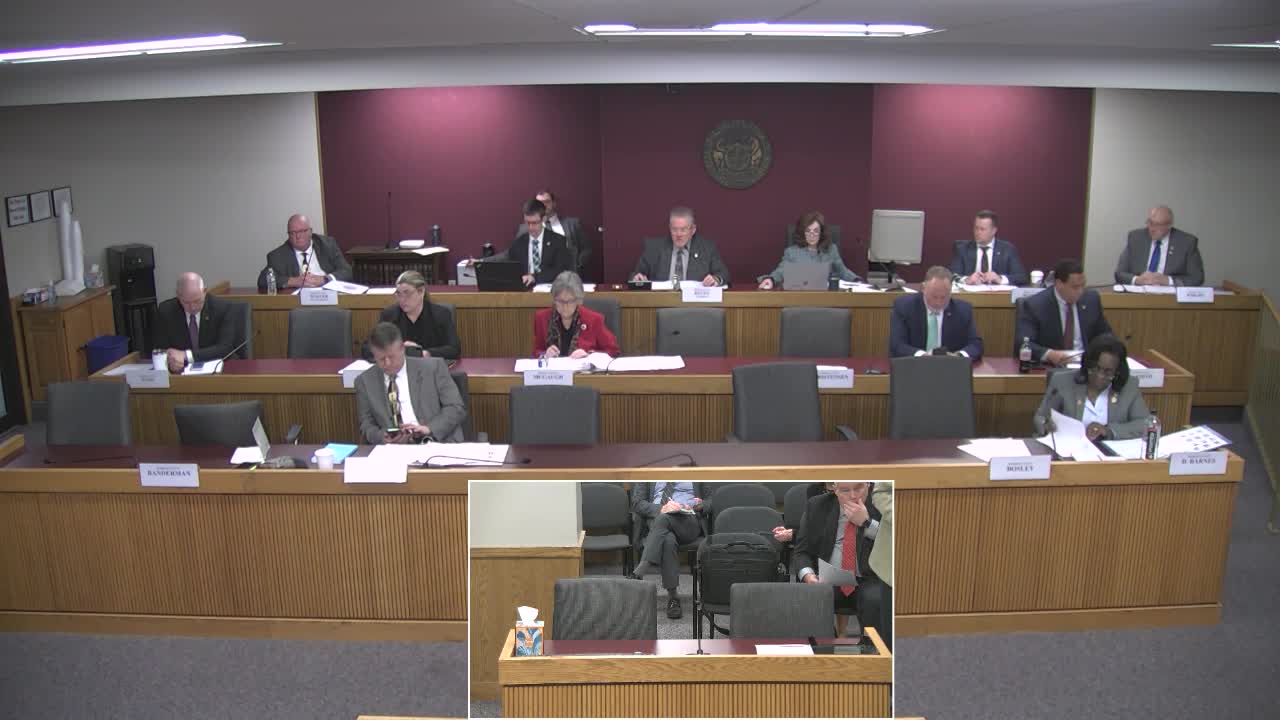
Elections committee hears testimony on initiative, referendum reforms in House Bills 551 and 575
Summary
The House Committee on Elections heard testimony on two identical bills, House Bill 551 and House Bill 575, proposing changes to initiative and referendum procedures including standardized petition pages, limits on pay-per-signature compensation, a circulator residency/presence requirement, and tighter timing for judicial review.
The Missouri House Committee on Elections held a public hearing on House Bill 551 and House Bill 575, identical measures that would revise statutory procedures for initiative petitions and referendums.
Representatives John Martin (the bills’ primary sponsor) and Representative Vanderman presented the measures, telling the committee the bills aim to “let Missourians take charge of their constitution” by standardizing petition forms, tightening circulator requirements, and changing payment rules for signature gatherers. Representative John Martin said the bills would require petition pages to use a form prescribed by the Secretary of State, specify one-inch margins and a minimum 12-point Times New Roman font, and make an electronic form available for printing and use.
Representative Vanderman, who also spoke for the measures, highlighted a provision that would prohibit payment to petition circulators based on the number of signatures collected. Vanderman said, “no petition circulator shall be paid anything of value that is based on the number of signatures collected,” and argued courts have given precedent supporting limits on pay-per-signature arrangements.
Sponsors also described three other main changes: (1) requiring circulators be state residents or present in Missouri for at least 30 days before circulating a petition; (2) clarifying standing so a Missouri registered voter may challenge ballot titles or fiscal notes; and (3) moving certain judicial adjudications earlier in the process so final adjudication occurs no less than eight weeks before an election. Sponsors said those timing changes could save petitioners time and money by resolving title and sufficiency issues before signatures are widely gathered.
Opponents and public witnesses urged caution and registered multiple concerns. Arnie C. (testifying in opposition) called parts of the bills an erosion of free speech and warned against making petition pages non-public; he told the committee the changes would “take away the right of free speech and the right of elections” and argued petition signature pages should remain public records under the Missouri Sunshine Law. Several civil-society and voting-rights groups echoed worries that restricting availability of the scanned image of signature pages would reduce transparency and impede validation and legal challenges.
Other opponents raised constitutional and practical concerns with the residency and circulator rules. Witnesses said the legal status of residency requirements has been litigated across multiple federal circuits and is not uniformly settled; opponents warned that limiting circulators to state residents or short-term in-state presence could reduce capacity to gather the large number of signatures now required and could disproportionately affect smaller or less-resourced campaigns. Witnesses also urged caution on criminal penalties in the bill tied to release of signature images, noting local election offices sometimes share scanned pages with parties that are validating petitions and that staff could inadvertently run afoul of any new misdemeanor provision.
The Secretary of State’s office provided informational testimony through Amanda Bell, who took committee questions and offered to supply follow-up technical details. Committee members asked the Secretary of State’s office and sponsors to clarify implementation details such as which local officials would be subject to penalties, how redaction or limited release of signature images would work in practice, and whether the statutory language precisely reflects existing case law on standing and circulator residency.
Several witnesses who testified in opposition included representatives of voter-protection and civic groups (Missouri Voter Protection Coalition; Missouri Coalition for the Environment; Action St. Louis Power Project) and local advocates who said the signature-image restriction and other provisions merited more study. Samuel Lee of Campaign Life Missouri testified in support of the bills, saying stronger safeguards were appropriate and noting prior experience with petition drives.
The hearing record shows robust questioning from committee members on technical points — ink color, font and page-size standardization, whether a scanned signature image should be released, the definition of “substantially alters” when courts change a ballot title, and the mechanics of judicial review and appeals. Representative Woods repeatedly asked sponsors for legal citations and asked for clarity on whether the residency language matched precedents; Representative McGaugh and others asked about the misdemeanor penalty and local election authority responsibilities.
No committee vote on House Bill 551 or House Bill 575 was recorded in the transcript; the transcript ends with the committee closing the hearing and adjourning. Sponsors and members indicated they would continue to work through technical questions, and the committee requested follow-up information from the Secretary of State’s office on several points.
Ending: The committee concluded the public hearing after a series of witness statements and committee questions; no formal committee action (vote) on HB 551 or HB 575 was recorded in the meeting transcript.