Get Full Government Meeting Transcripts, Videos, & Alerts Forever!
Get email alerts on the Procurement Dese Childcare topic
No spam. Unsubscribe anytime.
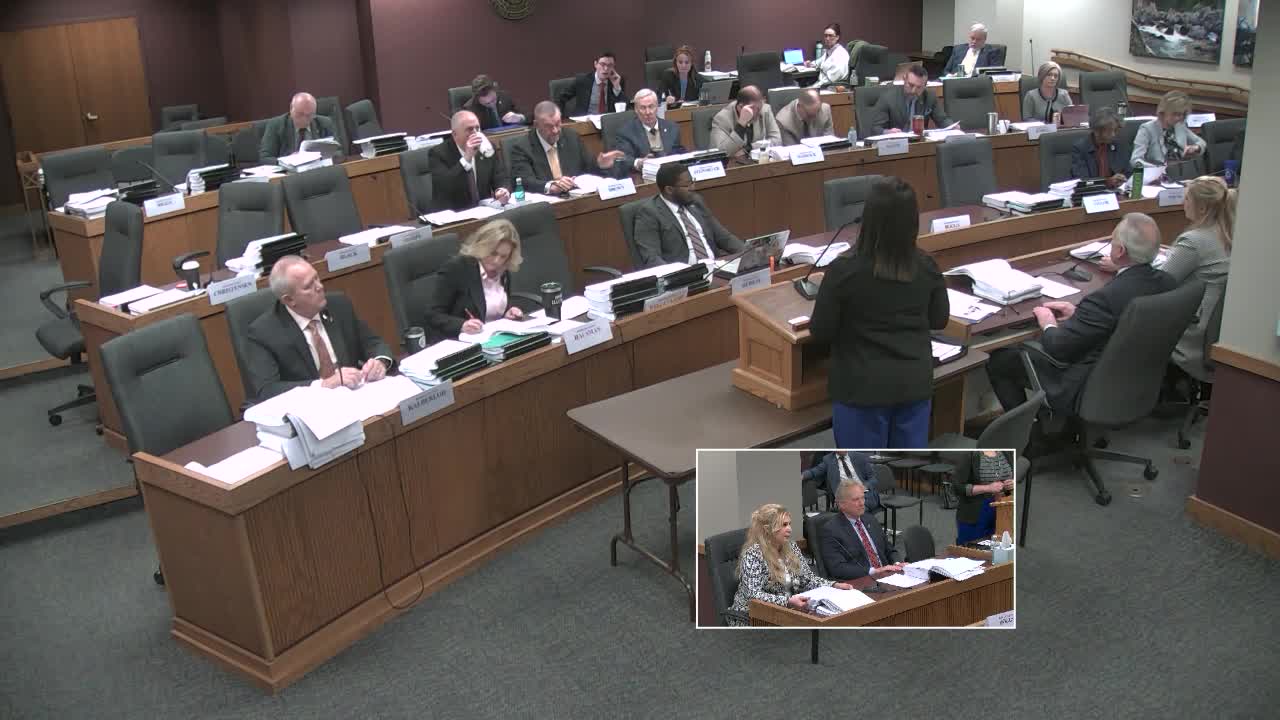
House panel probes procurement practices after DESE child-care payment system problems; officials promise tighter oversight
Summary
The House Budget Committee heard that the Department of Elementary and Secondary Education (DESE) purchased a child-care payment system using a cooperative contract and subcontractors, then faced serious post-launch issues. Purchasing and IT officials told lawmakers the state will tighten oversight of large, complex procurements going forward.
House members pressed Office of Administration purchasing and IT officials over procurement choices and oversight after the Department of Elementary and Secondary Education (DESE) encountered major problems with a child-care payment system that began failing after it went live.
John Lorent, CIO for the Office of Administration's IT Services Division, described how the DESE implementation was procured and why ITSD was not deeply involved before the system went live. Purchasing officials said DESE procured the product off a cooperative contract originally established by another state; that vendor arrangement was with Carahsoft and the work was run by subcontractors such as Worldwide Technology and MTX. Purchasing staff said the state's agreement is with the lead contractor, and the subcontractor relationships are between that contractor and its vendors.
Representative Hein and others asked why the state did not require more direct, formal oversight of the vendor-subcontractor chain or require ITSD to run the project, and whether the state's standard bid process should have been used for such a large implementation.
Karen Boger of the Division of Purchasing said the state adopted the cooperative contract and made it available to DESE. She acknowledged the use of brokers and subcontractors is a structural risk: "Our agreement is with the party that we signed on with ... the concern, of course, is when we don't have a direct relationship with the vendor that's doing the work." She and others said purchasing and ITSD will assess when a full RFP and direct contracting process is preferable to buying off a cooperative contract.
ITSD CIO John Lorent said ITSD lacked early visibility into DESE's project, and ITSD became involved after the system had gone live and problems emerged. He said the primary technical issue was expertise on the Salesforce platform in which the solution was built and that ITSD took on work to keep other agency reporting tasks on track so that agency operations were not interrupted.
Lawmakers asked about contract accountability and whether penalties or liquidated damages applied. Purchasing officials said typical contracts include penalty provisions, but they could not confirm details of DESE's specific agreement during the hearing and deferred to DESE for the procurement history. Members also noted the FBI had executed a search related to Carahsoft; purchasing officials said the state was aware of media reports but had no indication that Missouri's vendors were directly implicated and agreed to report back about existing contracts with Carahsoft.
The purchasing division described reforms already underway: more consistent use of enterprise project management oversight for million-dollar-plus projects, stronger training and certification for agency procurement officers, the creation of a training role within purchasing to stop pulling procurement staff off projects for training, and a data dashboard that shows procurement status (green/yellow/red) and has helped reduce average turnaround on complex procurements from about 274 days to about 163 days.
State officials told lawmakers that the procurement and IT offices will require greater engagement on large or complex agency projects in order to ensure early visibility, stronger technical review, and clearer contractor accountability.