Get Full Government Meeting Transcripts, Videos, & Alerts Forever!
Get email alerts on the Property Rights Surveillance Hunting topic
No spam. Unsubscribe anytime.
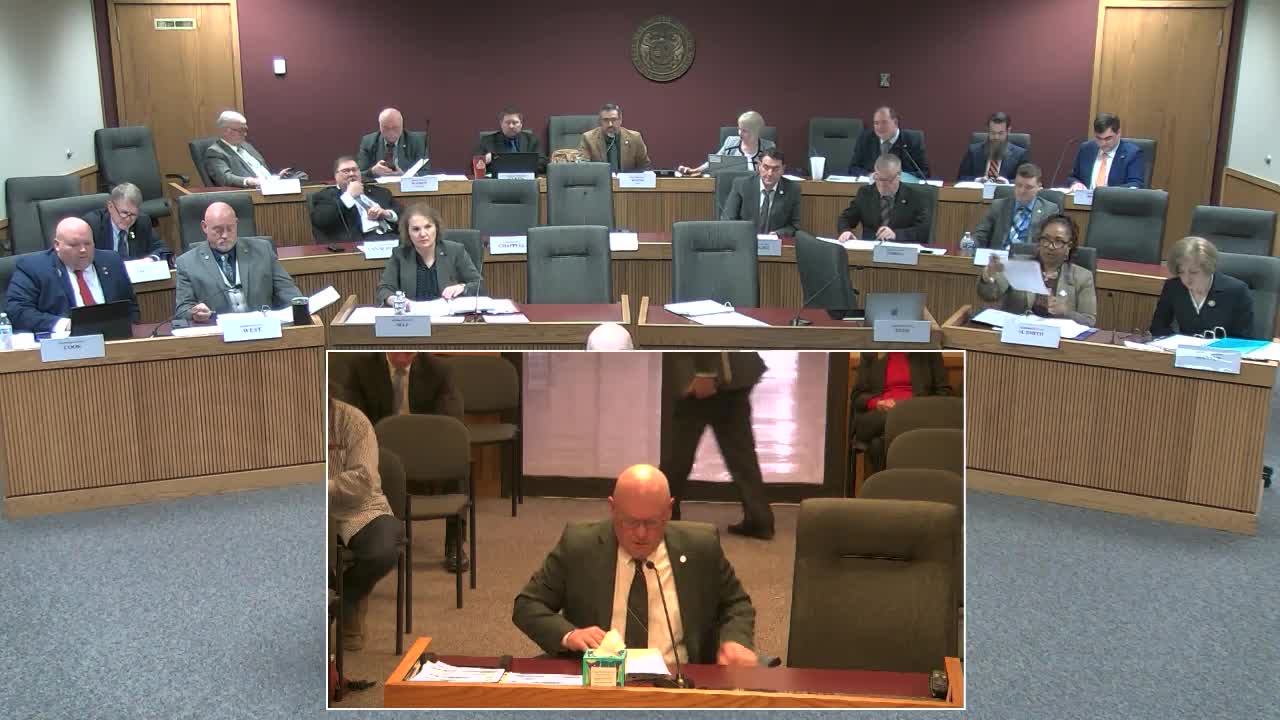
Lawmakers debate surveillance limits and landowner hunting permits in paired bills on property rights
Summary
Representative Bob Boggs presented HB 561 to limit government use of surveillance and game cameras on private property to warrant or written landowner consent, and HB 563 to expand landowner hunting privileges and change acreage and registration rules; conservation officials said cameras are rarely used and defended existing protocols while supporters called for stronger private‑property protections.
Representative Bob Boggs (R) presented two bills addressing private‑property rights: House Bill 561 would restrict government placement of surveillance or game cameras on private land by removing a current exception that allows a "highest‑ranking" law‑enforcement official to authorize camera placement without a warrant or landowner consent; House Bill 563 would change how landowners obtain hunting permits and reduce registration and acreage requirements for landowner permits.
On HB 561, Boggs said the bill strengthens Fourth Amendment protections by ensuring agencies cannot place cameras on private property without a warrant or the landowners consent. Representative Mayhew asked the sponsor to require written consent and suggested notarized affidavits; Boggs said he would consider adding a written‑consent requirement. Department of Conservation Deputy Director Aaron Jeffries told the committee the department developed policy guidelines after incidents in other states and said its agents use cameras rarely. Jeffries and other conservation witnesses said the agency works with private landowners and that in past incidents cameras on private property were used sparingly to investigate tips such as suspected illegal release of feral hogs or elk poaching.
On HB 563, Boggs framed the bill as protecting private‑property rights and allowing landowners to issue limited nonresident family permits so relatives can hunt on the owners ground. Key points in the hearing included debate over minimum acreage thresholds (some witnesses and the department favored a 20‑acre threshold for certain deer/turkey privileges; supporters said 5 acres or even 3 acres should be sufficient), concerns about fraud or misuse if registrations are removed, and the departments data showing prior misuse rates.
The Department of Conservation described its landowner application and registry process: since policy changes in 2020 the agency said misuse of landowner permits fell from about 34% in a prior audit to under 5% in recent years and that the department issues roughly 2.7 million permits annually, including about 500,000 free landowner permits. Deputy Director Jeffries said the 5→20‑acre change was developed after public comment and expressed concern that removing a registry or reducing acreage could increase misuse and make enforcement harder. The Conservation Federation of Missouri opposed removing the registry and said registration helps keep hunters and private resources accountable; other witnesses, including a state public advocate and landowners, supported greater landowner discretion and asked for reduced acreage and elimination of fees.
Committee members discussed tenant vs. landowner permission, drone surveillance, written consent, and the narrow public‑safety uses conservation officials said they rely on when investigators place cameras. Several members asked for written‑consent language and tenant‑designee clarifications; conservation officials said they would work with the committee.
Ending: Sponsors and conservation officials agreed to continue discussions on written consent, tenant designation and acreage thresholds; the transcript shows no committee vote on either bill during the hearing.