Get Full Government Meeting Transcripts, Videos, & Alerts Forever!
Get email alerts on the Unemployment Accountability topic
No spam. Unsubscribe anytime.
Bill would let employers report repeated no‑shows to cut off unemployment benefits after three misses
Summary
Representative David Castile presented HB 202, which would permit employers or the state to flag unemployment recipients who repeatedly fail to appear for job interviews or refuse suitable work, with a three‑strike cutoff mechanism; witnesses and members urged clearer notice, verification, and protections against abuse.
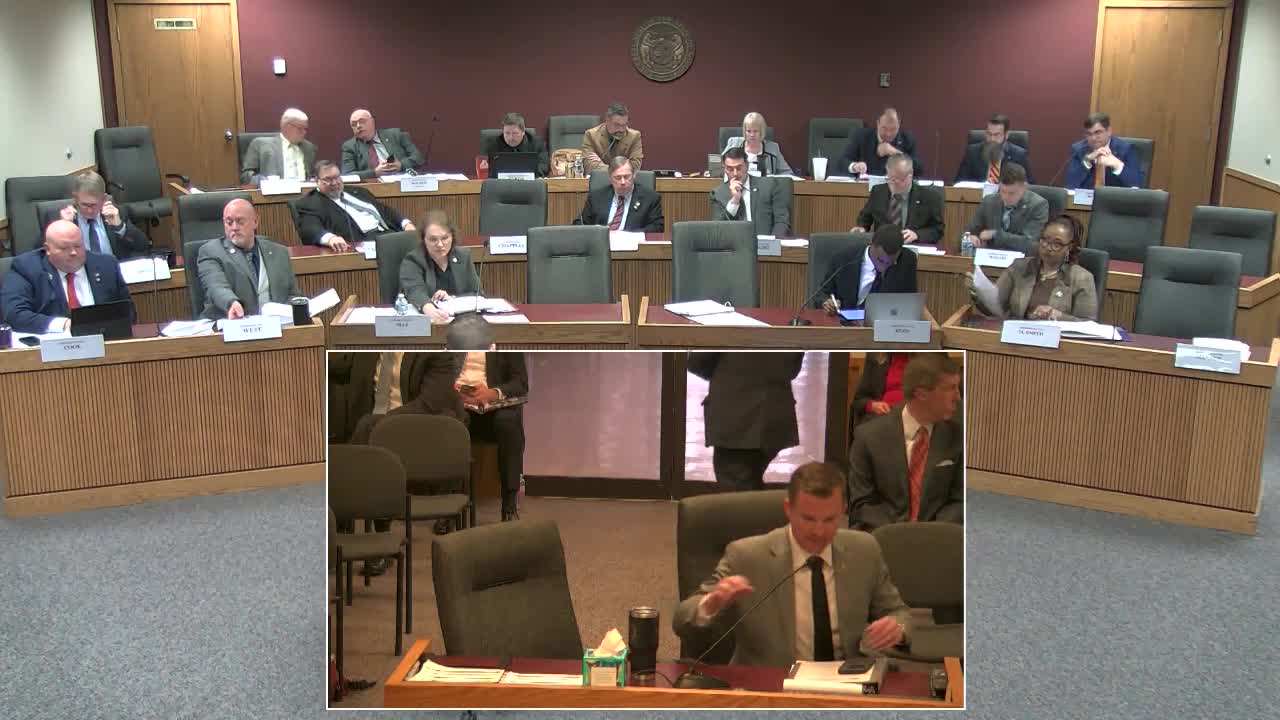
Representative David Castile (R) presented House Bill 202, a bill he described as aiming to reduce "ghosting" of employers by some unemployment claimants and to protect the employer‑funded unemployment trust. Castile said unemployment is funded by employers and that the bill would require claimants to apply for suitable work or attend scheduled interviews; if a claimant fails to appear for interviews or otherwise refuses work repeatedly during the same unemployment cycle, benefits could be reduced or ended. The sponsor said the current proposal incorporates a three‑strike standard as a compromise.
Castile said the bill would permit employers or the division to notify that an offer of work was made; the bill uses a rebuttable presumption that notice establishes an offer unless the claimant shows otherwise. Several committee members and witnesses raised concerns about how notification would be delivered (certified mail vs. email or other methods), how "failed to appear" would be verified, and protections against false or abusive reports by employers.
Representatives, including Ranking Member Clemens and others, asked for clarifications and suggested amendments. They discussed relocating the "three strikes" language to make clear the standard applies to failure to appear at interviews or training, rather than merely failing to apply, and suggested adding identity verification or business registration requirements for employers who report claimants to the division.
Witnesses: James Harris of FGA Action testified in support, saying the bill helps get people back to work and cited employer complaints about no‑shows. Luke Reed, Missouri Chamber of Commerce and Industry, supported the bill and said notification procedures could be tweaked. Arnie C., state public advocate, opposed the bill in its present form and urged keeping certified‑mail requirements, saying email is unreliable for people who depend on benefits; he said many Missourians depend on unemployment benefits as a lifeline and changes must be clearly defined and administrable.
Sponsor Castile, committee members and stakeholders agreed to discuss amendments to clarify notification methods, add safeguards against false reports and tighten definitions of "failed to appear" and "suitable work." No formal committee vote on HB 202 is recorded in the transcript.
Ending: Members asked the sponsor to work offline with the ranking member and Department of Labor representatives to refine notice methods, evidentiary standards and possible technology solutions (text notifications) before returning.