Get Full Government Meeting Transcripts, Videos, & Alerts Forever!
Get email alerts on the Enterprise Resource Planning Movers topic
No spam. Unsubscribe anytime.
Missouri lawmakers press Office of Administration on 'Movers' ERP rollout after performance, cost concerns
Summary
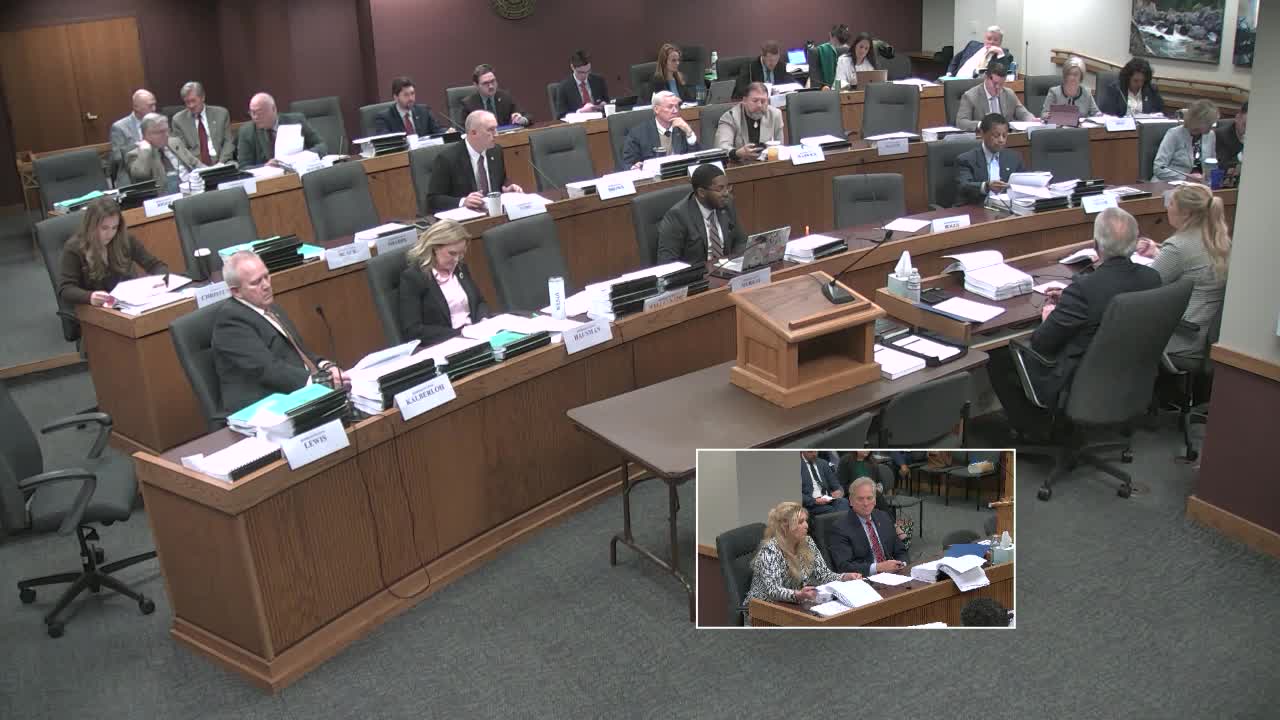
Members of the Missouri House Budget Committee pressed Office of Administration officials about persistent performance problems, ongoing costs and staffing tied to the state's Movers enterprise resource planning project, while agency officials defended progress and outlined next steps including a potential hybrid finance rollout in July 2025.
State budget and technology leaders defended an uneven rollout of the state's new enterprise resource planning system, known as Movers, while House Budget Committee members pressed for projected costs, timelines and evidence the system will meet state needs.
Committee members said Movers's performance problems have disrupted reports and operations and asked how much the state has spent so far and whether the administration should consider alternate approaches. Dan Hogg, state budget director, told the committee: "At this point, I would say that, in the first-year implementation, Movers is not performing as well as we'd hoped." He and other Office of Administration officials said they are working with the vendor — including elevating issues with Oracle's development teams — and that some system functions already outperform the old platform.
The issue matters because Movers is replacing a decades-old suite of systems that support state payroll, finance and human-resources transactions. Committee members said the state has invested significant funds and staff time and asked for a clear accounting of total spend, a go/no-go timeline and observable milestones the committee can track.
Officials said the rollout has produced both gains and persistent problems. Paula Peters, deputy CIO for the Information Technology Services Division, said core modules already in production include the budget module, core human resources, learning, solicitations and buyer registration, while the finance module is scheduled for a July 2025 go-live. Peters said the HR portion is scheduled for December 2026.
Hogg and other officials described measures to limit risk as the finance module approaches launch. Among the options under review is a hybrid go-live in which the new system would run alongside the old system for a transition period "to make sure everything's working correctly," Peters said. Committee members pressed whether that recommendation would be final soon; Peters said the executive steering committee expected to decide in about a month.
Committee members also questioned the system's ongoing staffing plan and recurring costs. Officials said some staff who had been funded as project positions were transferred between appropriations while portions of the work remain. The administration asked to move 43 FTE that were originally supported by one-time federal ARPA funds back into the core IT budget this year, and requested six additional FTE for longer-term security and portal support.
Lawmakers pressed for better visibility into how the state is measuring Movers's success. Representative Cupps said he wanted a ballpark figure for the total already spent: "Can we get a ballpark on how much we have spent on Movers?" Hogg said the administration would provide a cost estimate. Committee members also asked for a meeting with Oracle and the state's prime contractors so lawmakers and agency leaders could jointly press for fixes.
Officials acknowledged the transition has been difficult. "We've gotta get the vendor to work with us and make this system better," said Ken Zellers, commissioner of the Office of Administration. He said many large IT implementations experience severe "growing pains" in the first year, and that undoing the switch-back to the old, unsupported system is not feasible because the legacy platform is obsolete.
The committee asked for several follow-ups: a summary of total Movers spending to date, an updated timeline and a list of the critical reports and functions that must be running well for the finance go-live to proceed. Officials agreed to provide program documents and to organize additional briefings that include the vendor and contractor leads.
For now, the state is moving toward a staged approach for finance, running a hybrid model under consideration for a July 2025 go-live date while HR functions remain scheduled for late 2026. Committee members said they will use that schedule to decide whether additional funding or policy changes are warranted.