Get Full Government Meeting Transcripts, Videos, & Alerts Forever!
Get email alerts on the Ballot Language Hancock topic
No spam. Unsubscribe anytime.
Rep. Murphy pushes changes to ballot language and levy rollback rules tied to Hancock amendment
Summary
Representative Jim Murphy described legislation to require clearer ballot language when temporary levies become permanent and to close a loophole allowing districts to capture windfalls when property values rise.
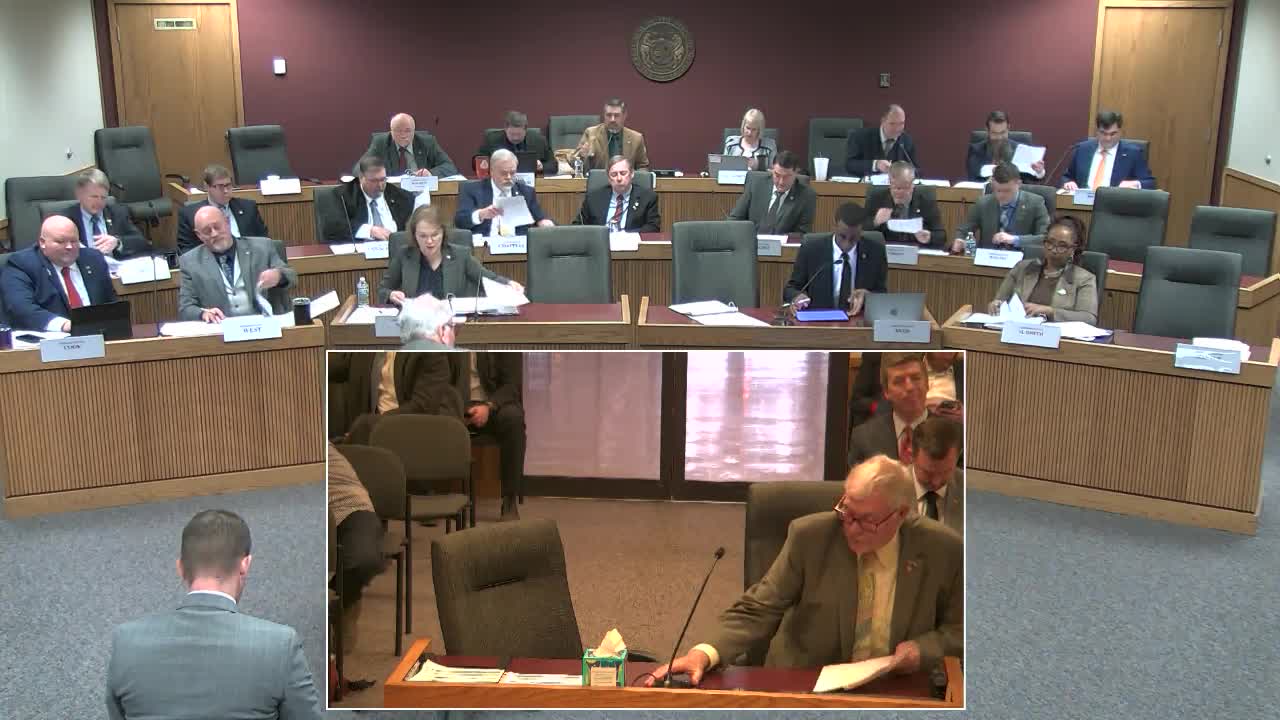
Representative Jim Murphy (R), sponsor of House Bill 119, presented a multi‑part bill addressing local tax levies, ballot language and Hancock Amendment (Missouri Constitution) interactions.
Murphy said the bill aims to make ballot language clearer when a temporary levy or obligation becomes permanent and to close what he described as a loophole that allowed some political subdivisions to retain more revenue when assessed property values spiked. He told the committee the measure would require ballot language to disclose if a change would nullify a sunset and make a levy permanent so voters are clearly informed.
Murphy outlined four components: a 49‑cent levy he helped pass in February to pay bonds tied to building improvements that included a rollback clause; a provision to limit windfall revenue when district assessments grow sharply during the same year a levy is adopted; a required cost‑per‑$100,000 disclosure in ballot language; and a change to ballot item lettering to avoid confusing or misleading descriptive titles.
Committee members asked technical questions about how rollbacks would operate when assessed values fall or rise, new‑construction treatment, and timing for resets. Representative Wolfen and Representative Mayhew sought assurances that the bill would not inadvertently give political subdivisions more authority to increase rates; Murphy and members discussed how Hancock is intended as a leveling mechanism to prevent windfall tax increases.
Murphy said the bill closes a loophole that in one example allowed a district that passed a 12¢ levy to capture the equivalent of 83¢ after an 18% jump in assessed values, because the district did not roll back rates when assessments rose. He framed the proposal as a transparency and consumer‑protection measure so voters understand long‑term effects of ballot questions.
No public testimony on HB 119 was recorded in the hearing and the committee moved on to the next item.
Ending: Murphy asked the committee to consider technical amendments that clerks requested; members said they would continue work on language to ensure the bill meets intent without unintended consequences.