Get Full Government Meeting Transcripts, Videos, & Alerts Forever!
Get email alerts on the Born Alive Legislation topic
No spam. Unsubscribe anytime.
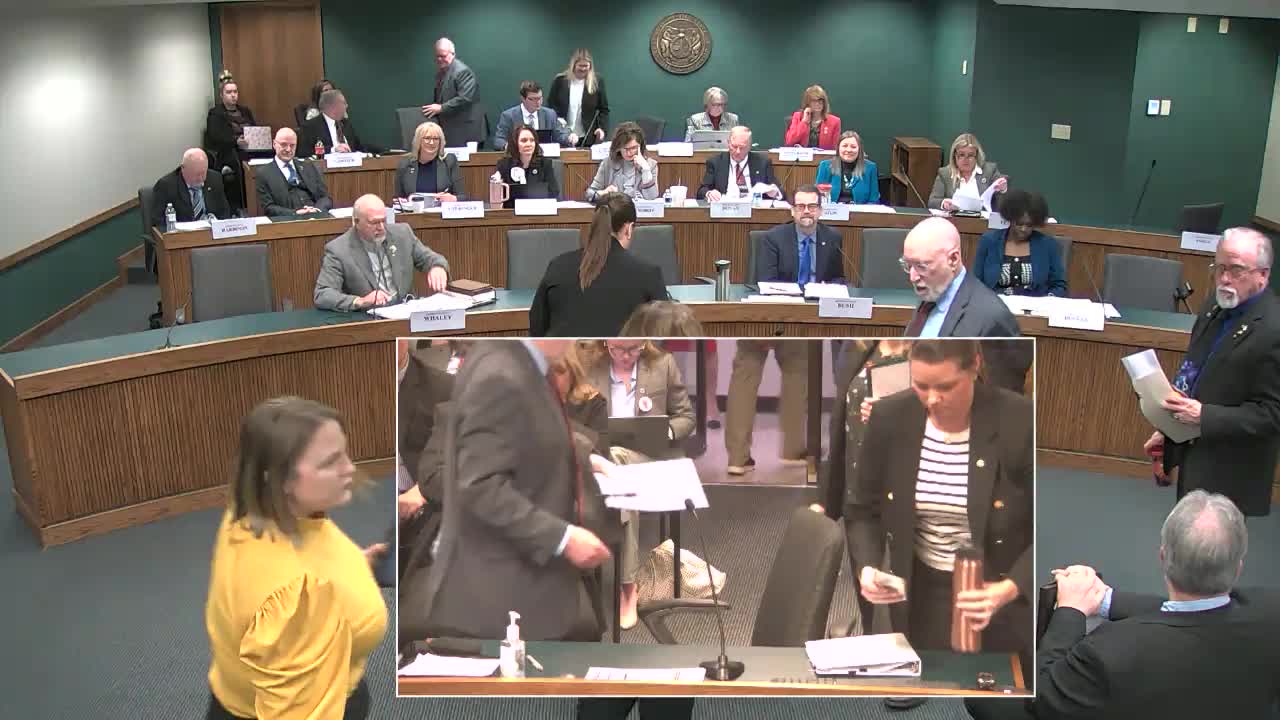
Heated hearing on 'born‑alive' bills draws sharply divided testimony; sponsors seek reporting and mandated care for infants born after abortion attempts
Summary
Sponsors urged the House Committee on Health and Mental Health to pass bills requiring life‑saving care and mandatory reporting when infants are born alive following abortion procedures; opponents and several committee members said Missouri and federal law already cover such situations and warned the bills could have unintended effects.
House Committee hearings on House Bill 195 (Seitz) and House Bill 1119 (Jones) brought prolonged, at‑times heated testimony and sharp questions from representatives about whether new state language is necessary, duplicative or could have unintended consequences for maternal care and medical practice.
Sponsors described the bills as narrowly focused protections for infants who survive an abortive attempt, requiring that a child “born alive during or after an abortion” be provided the same rights and “the same degree of professional skill, care, and diligence” that would be rendered to any other child of the same gestational age. Representative Seitz framed the measures as an update to existing law “to grant the same rights and privileges as any other person born alive,” and Representative Holly Jones pointed to similar federal attention in the U.S. House and to reporting gaps when infants survive abortion procedures.
Proponents included Missouri Right to Life, Campaign Life Missouri, the Missouri Catholic Conference and individual witnesses who read or recounted historical court testimony alleging instances where infants were left without appropriate care. Susan Klein of Missouri Right to Life said the bill is “common sense” and urged the committee to clarify reporting and protections in state law. Samuel Lee of Campaign Life Missouri emphasized creating mandated reporters to ensure cases receive scrutiny.
Opponents and several committee members pushed back on multiple grounds. Representative Applebaum called the measure unnecessary and politicized and noted that “murder is already against the law.” Representative Bosley and others cited existing provisions in Missouri statute — including language in the Infants Protection Act (discussed during the hearing) — that they said already address care for infants born alive and allow medical professionals to use appropriate procedures to save life. Representative Bosley repeatedly argued the statute cited precludes the need for the proposed new language, and asked whether the bill would criminalize providers or create excessive civil liability.
Medical and policy witnesses also testified against the bills. Mallory Schwarz of Abortion Action Missouri said the proposals were medically unnecessary and did not reflect current standards of care, and she cited statements from major medical organizations that advise individualized clinical decision‑making for infants with severe anomalies or nonviable gestational ages. Concerns raised included the bill’s lack of a clear definition for spontaneous versus induced abortion and the potential for the language to criminalize or expose clinicians to civil suits in complex clinical situations.
Sponsors and supporters countered that reporting mechanisms do not currently exist in Missouri to track infants born alive after an abortion, and they cited cases and historical examples they say demonstrate gaps in accountability. Prosecutors’ actions and court testimony from other states were referenced repeatedly as evidence that statutory clarification and mandatory reporting would protect infants and ensure oversight of abortion providers.
Several representatives requested clarifying amendments or pointed to related statutes to reconcile definitions (for example, differences between a statutory definition of “abortion” and medical terminology such as spontaneous abortion/miscarriage). The committee did not take a vote during the hearing; members indicated they would consider statutory overlaps, reporting language and possible amendments in follow‑up work.