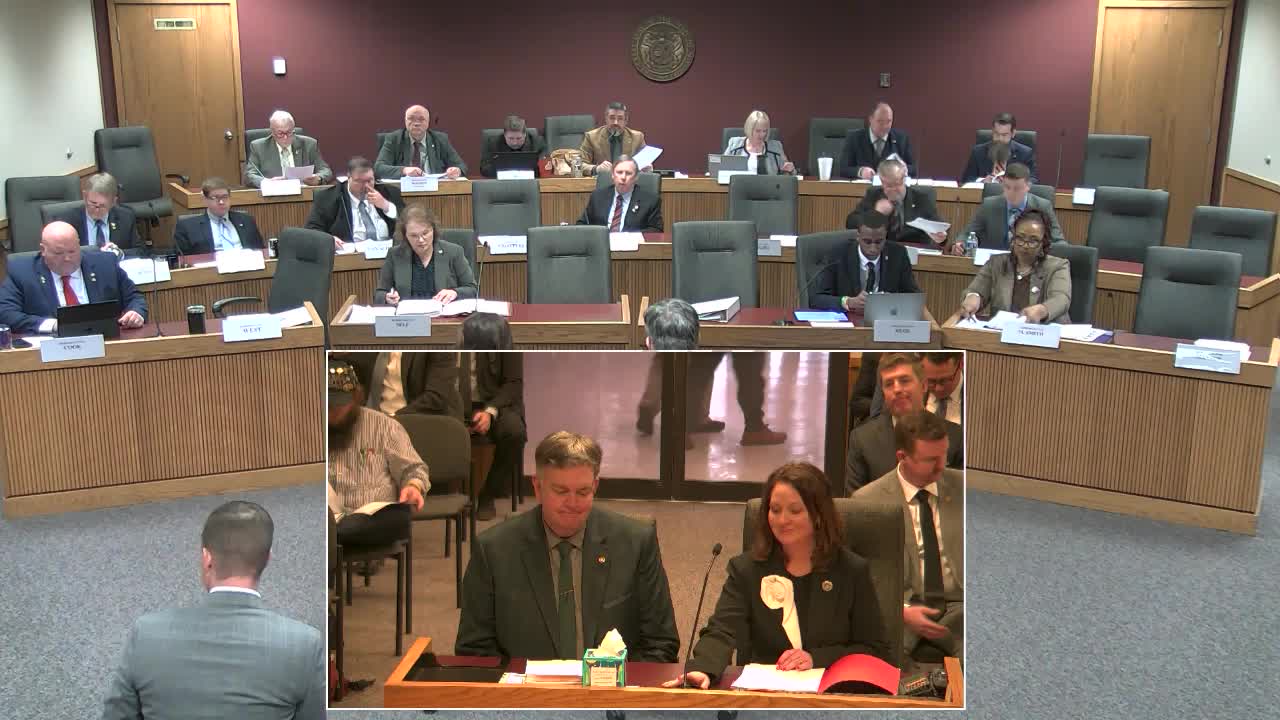
Missouri committee hears bills to eliminate passenger-vehicle safety inspections
Loading...
Summary
Committee members and witnesses debated bills that would remove safety-inspection requirements for noncommercial vehicles and eliminate personal-vehicle inspections; supporters cited paperwork and convenience, opponents and insurers cited road safety research and enforcement gaps.
Representative Anne Kelly (R) and Representative Jeff Farnon (R) presented companion bills — House Bill 334 and House Bill 1069 — that would roll back Missouris vehicle inspection requirements for most personal vehicles.
Kelly told the House Committee on Government Efficiency the bills would: remove inspection requirements for noncommercial vehicles; allow the Department of Revenue to remove a first-offense expired-registration mark from a driving record if the registration is rectified within 30 days; and, beginning in 2026, permit the department to offer three-year, five-year and lifetime registrations. Farnon said HB 1069 would "completely do away with personal vehicle inspections," arguing the state has already reduced inspection burdens over time.
Opponents warned about safety consequences. Representative Burton said inspections are intended to protect all Missourians by catching unsafe equipment — windshield wipers, seat belts, brakes, exhaust and pollution-control systems — and she said removing inspections would likely increase accidents and fatalities. Ranking Member Clemens said peer-reviewed studies exist showing inspection removal is correlated with increased fatal crashes and offered to circulate those studies to the committee.
During public testimony, Arnie C., who identified himself as a state public advocate, said interactions with the Department of Revenue had been time-consuming and supported eliminating the safety-inspection requirement as an unnecessary burden. Hampton Williams, representing the Missouri Insurance Coalition, told the committee the coalition supports maintaining some form of inspection and opposes portions of the bills that would entirely eliminate inspections; the group did not oppose provisions that change timing or mileage requirements.
Committee chair and members discussed the bills briefly; the chair announced the bills had been discussed in prior hearings and that presentations and testimony would be limited. No formal committee vote on HB 334 or HB 1069 is recorded in the transcript.
The bills remain in committee. The committee indicated at the outset that the versions discussed in the executive session were language versions the committee had vetted previously and that at least one amendment was expected later in the process.
Proponents and opponents agreed on one point: the bills would change long-standing practice. Whether the change becomes law will depend on follow-up committee work and any additional evidence members request about public-safety outcomes.
Ending: The hearing moved quickly to public testimony and then to committee business; no final committee action on HB 334 or HB 1069 appears in the transcript.