Get Full Government Meeting Transcripts, Videos, & Alerts Forever!
Get email alerts on the Telehealth Policy topic
No spam. Unsubscribe anytime.
Committee hears broad support for bills to preserve audio‑only telehealth and bar insurers from mandating platforms
Summary
House hearings on House Bill 822 and House Bill 825 drew widespread testimony from mental‑health providers, hospitals and rural health advocates supporting preservation of audio‑only telehealth and language preventing private insurers from dictating telehealth platforms.
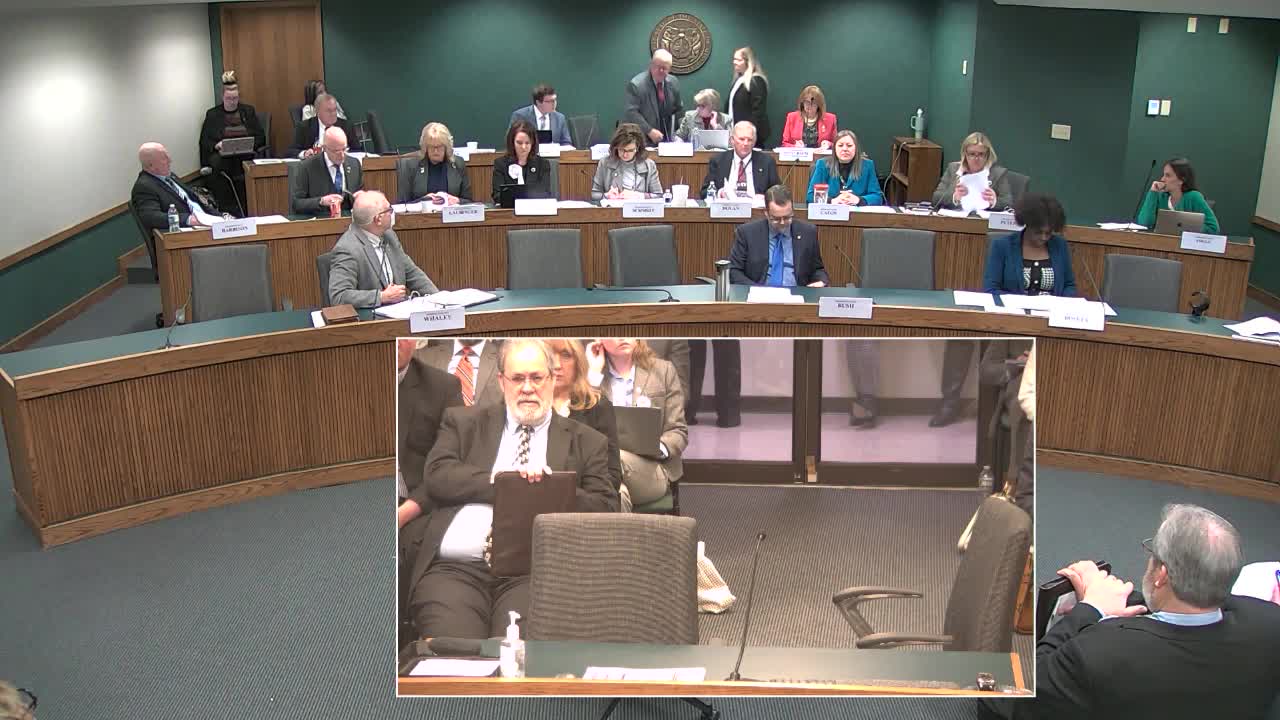
The House Committee on Health and Mental Health conducted a public hearing on two related bills — House Bill 822 and House Bill 825 — that would preserve audio‑only telehealth services and prevent private insurers from mandating specific electronic platforms for telehealth.
Committee Chair Representative Stinnett and Representative Mansur said the measures aim to codify telehealth practices the state has used during and since the COVID‑19 pandemic, and to align private‑insurer coverage with existing Mo Health Net (Missouri’s Medicaid program) and Medicare rules. “Allowing audio only can help [rural and elderly patients] to be able to access those necessary services,” Stinnett said.
Testimony in favor came from a broad coalition of behavioral‑health providers, hospitals and rural‑health groups. Dr. Chuck Hollister of the Missouri Psychological Association described scenarios in which audio‑only telehealth made the difference for patients who lacked reliable internet or could not leave home: “There’s about a million people in rural areas that don’t have adequate Internet services,” he said, and many older or disabled patients rely on audio visits for ongoing care.
Clinicians offered case examples. Jessica Gerfen of the St. Louis Behavioral Medicine Institute described an audio‑only session with a long‑term patient in crisis after life‑changing surgery that stabilized the patient over a weekend; Burrell Behavioral Health’s Julie Pratt described using phone contacts during a snowstorm to triage suicide risk and arrange ambulance transport when needed. Justin Auferman of SSM Health and representatives from Mercy Health and the Missouri Hospital Association also testified in support, and the Missouri Rural Health Association emphasized the centrality of audio access for seniors and rural patients who lack video capability.
Committee members asked how telehealth establishes a valid patient relationship and whether current law already addresses initial in‑person requirements. Representative Griffith and others noted existing statutes and regulatory rules; the committee was pointed to RSMo section 191.1146 (discussed during the hearing) and to separate legislation (House Bill 710) that has addressed patient‑relationship issues. Representative Kelly noted Medicaid and Medicare rules typically require an initial face‑to‑face relationship and said these bills bring private insurers into alignment with Mo Health Net and Medicare.
Medical associations were supportive with limited caveats: Jacob Scott (Missouri State Medical Association) said the bills properly address vendor choice, though he flagged concerns about emerging technologies (adaptive questionnaires or AI) directing care rather than clinicians. Testimony also included pediatricians, speech‑language and hearing groups, rural clinics, and social‑work organizations.
No formal amendments or committee votes on the two bills were recorded during the hearing; sponsors and advocates said the statutes aim to preserve existing telehealth access and prevent insurers from unilaterally restricting which HIPAA‑compliant platforms providers may use.