Get Full Government Meeting Transcripts, Videos, & Alerts Forever!
Get email alerts on the Abortion Policy topic
No spam. Unsubscribe anytime.
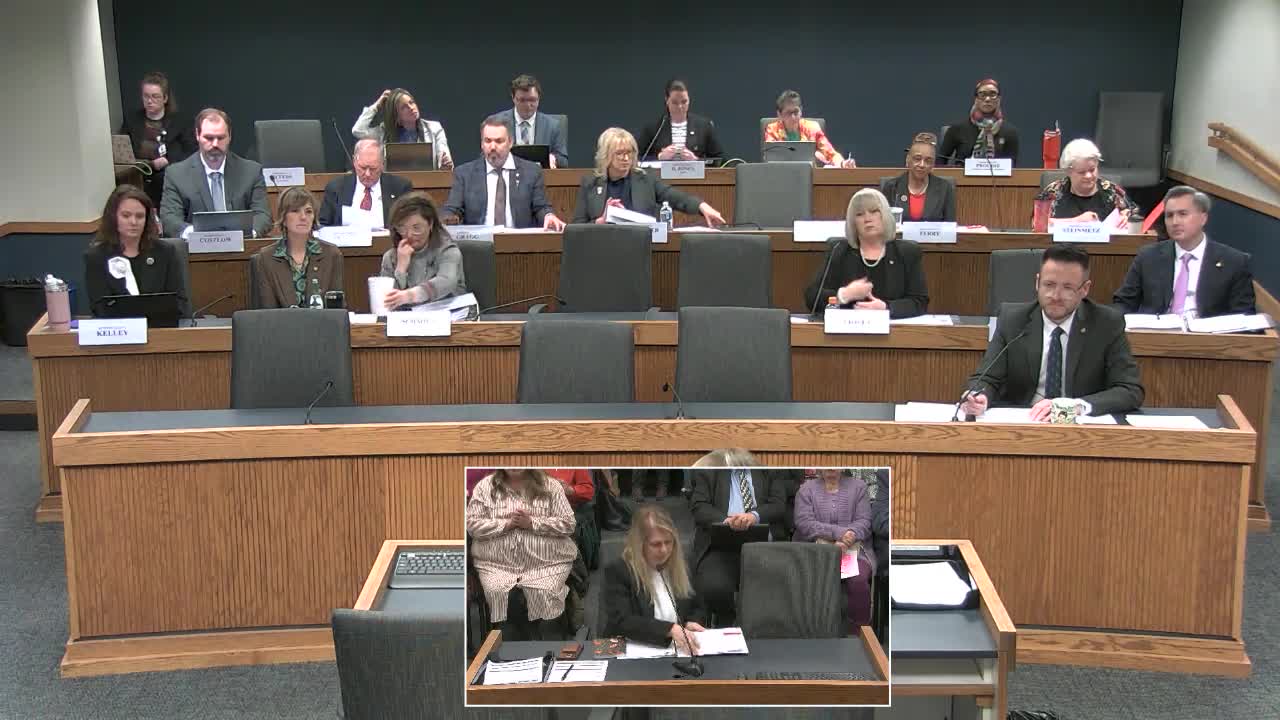
Committee hears HJR 54 to narrow Amendment 3; sponsor proposes 12‑week police‑report rule for rape, incest
Summary
Representative Melanie Stennett, the sponsor of House Joint Resolution 54, told the House Committee on Children and Families that the measure would place revised reproductive‑policy language on the ballot that allows abortions for medical emergencies, fetal anomalies, rape and incest but would require a police report and a 12‑week limit for rape and incest exceptions.
Representative Melanie Stennett, the sponsor of House Joint Resolution 54, defended her proposal before the Missouri House Committee on Children and Families, saying the measure would send revised language to the ballot to clarify and limit parts of Amendment 3.
"HJR 54 allows for abortions in the case of medical emergencies, fetal anomalies, rape, or incest," Stennett told the committee. "And in the cases of rape and incest, the abortion would need to be performed no later than 12 weeks gestation with documentation of that rape or incest being reported to law enforcement."
The committee hearing, which drew more than two hours of public testimony, split largely along familiar lines. Supporters of HJR 54—many describing themselves as pro‑life or concerned that Amendment 3’s language was broad or ambiguous—said the resolution would clarify that public funds cannot pay for most abortions, would bar disability‑selective abortions (except for defined fetal anomalies), and would prohibit gender‑affirming surgeries or related drugs for minors. Samuel Lee, a registered lobbyist with Campaign Life Missouri, told the committee he was "shocked" by a court injunction he said interpreted Amendment 3 to allow abortions for reasons including a prenatal diagnosis of Down syndrome.
Opponents—citing the November 2024 vote that placed Amendment 3 in the Missouri Constitution—called HJR 54 a repeal effort in stages and warned the proposal would create new, practical barriers to care. "Over 25 years ago ... I made the decision to have an abortion. No lawmakers were involved in this very deeply personal decision making," said Desiree White of St. Louis during public comment. Numerous witnesses, including physicians, nurses and residents from across the state, said the 12‑week deadline and the requirement that survivors of sexual assault obtain a police report at least 48 hours before care would retraumatize victims and, in practice, deny timely treatment.
Committee members pressed the sponsor on details. Representatives questioned the definitions of "fetal anomaly" versus "disability," how law‑enforcement reporting would work for victims who are undocumented or trafficked, and why the bill sets a 48‑hour window. Stennett told members she had consulted local law enforcement and said a police report need not compel an immediate investigation but would provide documentation for a provider; several committee members said the language needed more precision. Representative Ken Jamieson asked whether a report made in a different jurisdiction—across town or across state lines—would disqualify a survivor from the exception; Stennett said that was a point she would research further.
The draft resolution would also create civil liability language: it directs that any person who "intentionally or negligently causes damage to another person relating to the provision of prenatal care, childbirth, postpartum care, miscarriage care, or the performance or inducement of an abortion shall be liable for damages and shall be subject to suspension or revocation of his or her medical license." Multiple lawmakers and attorneys in the room flagged that provision as sweeping and asked how it differed from ordinary medical‑malpractice law.
Supporters said HJR 54 returns detailed choices to voters—because, after legislative approval, the resolution would go on a statewide ballot—and corrects what they called misleading campaign messages about Amendment 3. Opponents said voters already had that chance in November 2024, when Amendment 3 passed, and urged the committee not to send the resolution forward. Several witnesses said they had volunteered to collect petition signatures for Amendment 3 and described broad voter understanding and support for that measure.
No committee vote or formal action was recorded during the hearing. The chair closed the public‑comment period after two hours of testimony and indicated the next steps would be the usual committee process for a House joint resolution.
Why this matters: HJR 54 would not by itself change state law; if passed by the General Assembly it would appear on a statewide ballot. But the proposal would reframe the state constitution’s protections for reproductive care, insert specific limits and criminal‑process linkages for rape and incest exceptions, and add liability and professional‑licensing consequences that health‑care providers and legal observers said could change how clinicians treat emergency and complex pregnancies.
The committee hearing made clear areas that need clarification—how police reports must be authenticated, how cross‑jurisdiction cases (including trafficking and out‑of‑state assaults) would be handled, how "fetal anomaly" is defined, and how malpractice versus the proposed license revocation standard would apply—questions the sponsor said she would research further. The committee did not take a vote or adopt amendments at the hearing.