Get Full Government Meeting Transcripts, Videos, & Alerts Forever!
Get email alerts on the Human Trafficking Training And Penalties topic
No spam. Unsubscribe anytime.
Committee hears broad anti‑trafficking bill proposing training, restitution and tougher penalties
Summary
Representative Jeff Myers presented House Bill 224, a package that would require annual training for specified professionals, create a statewide council and anti‑trafficking fund, change admissibility rules for recorded statements of minors, and raise penalties and restitution tied to human trafficking and patronizing offenses; proponents urged
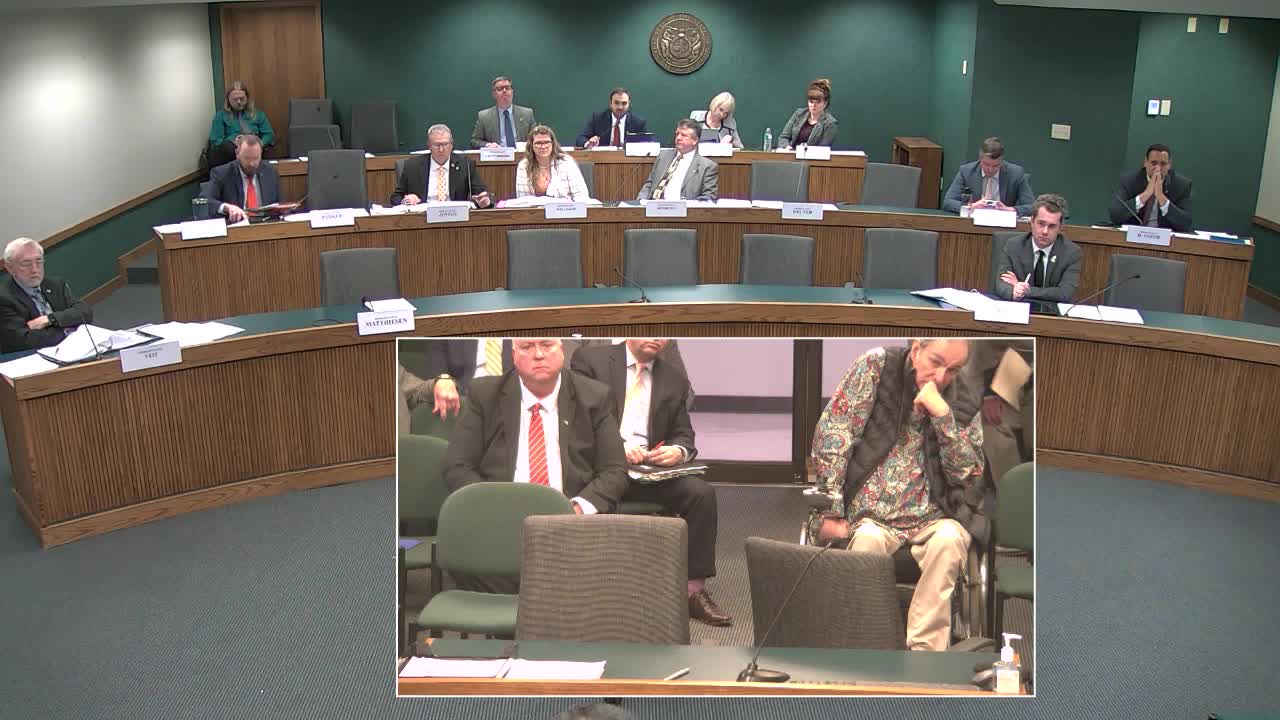
Representative Jeff Myers presented House Bill 224 to the House Committee on General Laws as a multi-part proposal to strengthen Missouri’s response to human trafficking and commercial sexual exploitation. The sponsor described measures ranging from expanded training to new felony offenses and a restitution fund for liberated victims.
Key elements Myers highlighted include: annual continuing-education requirements (the bill proposes one hour annually for prosecuting attorneys, juvenile officers, social workers, EMTs and paramedics; two hours annually for law enforcement, delivered as part of existing licensure training); a five‑year sunset on the training mandate so the program can be evaluated; a statewide council against adult trafficking and commercial sexual exploitation of children under the attorney general’s office; an anti‑trafficking fund; changes to evidence rules to broaden admissibility of recorded statements by minors and vulnerable persons; enhanced penalties for patronizing prostitution and a new offense for patronizing a victim of forced servitude; and restitution provisions that would provide set amounts to identified victims and to counties where offenses occurred.
Todd Scott of the Missouri Attorney General’s Office testified in support and said the state’s central location and transportation network increase the incidence of trafficking and that a statutorily established coordinating council would help agencies and nonprofits align training and resources. Stephanie Kaiser, a retired detective who later worked as a commercial-exploitation coordinator at a child‑advocacy center, also supported the bill and emphasized uneven training and the value of standardized, multidisciplinary training across schools, medical providers and local responders.
Opposition came from Arnie C. Acdinoff, State Public Advocate, who argued there are already federal, state and local task forces and questioned the need for new boards, the cost of funding a new executive director, and a provision that limits the statute of limitations to 20 years (he opposed shortening limitations). He warned against duplicative or unfunded mandates.
Other witnesses included Neil Getzlo, a former buyer who described diversion and education programs for men arrested for solicitation and urged stiffer penalties for buyers to reduce demand. A representative of the prosecutors association supported tighter evidentiary rules for minors’ recorded statements. The hearing record contained questions from committee members about whether the attorney general’s office already conducts similar work, how the executive-director role would be funded, and whether training mandates would be funded by the state.
The bill drew broad support for its intent to improve coordination and victim services, and opposition from witnesses who said existing agencies and task forces already undertake parts of the proposed work or who warned that new, funded mandates are necessary if training requirements are imposed. No formal committee vote was taken during the hearing.