Get Full Government Meeting Transcripts, Videos, & Alerts Forever!
Get email alerts on the Dwrs Reform topic
No spam. Unsubscribe anytime.
Senate bill would raise workforce factors in disability waiver rate system; bill laid over
Summary
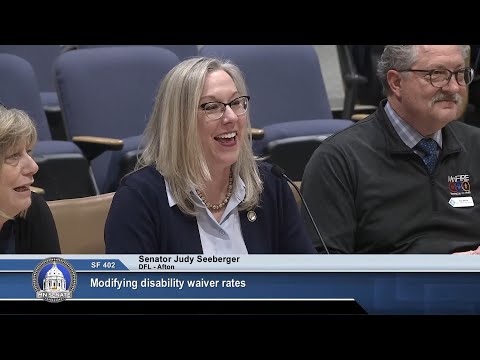
Sen. Seaburger's bill would increase the competitive workforce factor and adjust the supervisory wage calculation in the Disability Waiver Rate System (DWRS) to raise pay for direct support professionals; committee laid the bill over for further review.
Senator Julia Seaburger presented Senate File 402, which would modify the Disability Waiver Rate System (DWRS) to make wages for direct support professionals and supervisors more competitive.
Supporters including Julie Johnson (MORE), Ken Bents (ARM) and others described a persistent workforce shortage that leaves hundreds on waiting lists and said the bill contains two principal changes: increase the competitive workforce factor and change how the supervisory wage is calculated so supervisors are paid higher than direct support staff. Testimony summarized Department of Human Services analyses: the original competitive workforce factor (first adopted 2019) was set at 4.7 percent and raised to 6.7 percent in 2023; DHS's most recent analysis shows the actual gap is about 16.76 percent, and the bill would raise the factor to close that gap.
Ken Bents said the bill would set the supervisory wage using a mix of occupational medians (40% community and social service specialist, 60% community and social service manager) to avoid wage compression where direct support pay could exceed supervisors. Providers said improved reimbursement would help attract and retain staff and improve access for people with disabilities.
Members discussed the governor's budget proposal. Witnesses said the governor's proposal would reduce an absence/utilization assumption from 9.4 to 3.9 percent, which providers say would cut reimbursements and could force staff reductions; one provider said their organization’s absence/utilization runs about 18 percent. Committee members expressed concern about proposed cuts while acknowledging budget constraints. The chair laid the bill over for possible inclusion in the omnibus process; no floor action was taken.