Get Full Government Meeting Transcripts, Videos, & Alerts Forever!
Get email alerts on the Budget Transportation topic
No spam. Unsubscribe anytime.
South Colonie previews 2025–26 budget with focus on transportation, electric buses
Summary
Assistant Superintendent Jacqueline McAllister outlined preliminary 2025–26 budget priorities Feb. 4, emphasizing transportation equipment needs, a bus replacement cycle, and plans to seek electric school buses and make‑ready grant funding.
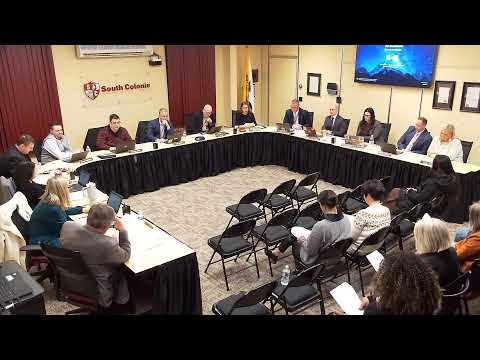
Jacqueline McAllister, assistant superintendent for management services and strategic planning, told the South Colonie Central School District Board of Education on Feb. 4 that the district's preliminary 2025–26 budget will emphasize transportation and operations and maintenance needs, including plans to pursue electric school buses and upgrades to its bus facility.
McAllister said the district expects its allowable tax levy growth factor to remain at 2% while inflation sits near 2.9%, and that the first phase of the NextGen capital project will add about 1% to taxpayers as previously discussed. She told the board that preliminary estimates show a total tax impact in the 3–4% range once capital exclusions are included, and that she will present finalized numbers at a future meeting after consulting financial advisers.
Why this matters: transportation and facilities are a major portion of the district's capital and operating costs. Changes in state aid, federal competitive grants and the tax‑cap calculation affect how much of those costs the district must levy locally, McAllister said.
Key details from the presentation:
- Cost drivers: McAllister outlined projected increases including health insurance (8–10%), salaries (3–5%), and other contractual items; she said Teachers' Retirement System (TRS) costs are steady while the Employees' Retirement System (ERS) is rising. The presentation noted 18 teacher retirements affecting staffing and attrition assumptions. - Transportation priorities: The transportation department requested equipment and facility improvements (toolboxes, a new compressor, diagnostic scanner, circulating fans, snowblowers, laptops and furniture) that McAllister described as “equipment‑line” items that can be capitalized and moved into a new facility when built. She said those equipment requests were budget‑neutral within the equipment line for 2025–26. - Bus replacement and electric bus plans: The district follows an eight‑year replacement cycle for buses, which McAllister said is when maintenance burdens increase (about 100,000 miles average at retirement). For 2025–26 the replacement plan encompasses 11 buses (nine in the regular replacement docket plus two additional units discussed). Aid on diesel bus purchases was stated to have increased from about 61.1% to 63.5%. Electric school buses, McAllister said, are aided over a longer window (she cited an eight‑year aid schedule for electric buses) and would be largely net‑cost neutral to the district when vouchers and state aid are applied. - Charging and grants: McAllister said the district has applied for grants and vouchers that could cover charging infrastructure; she cited a voucher figure of $55,000 to cover a charging station at the current bus garage. She outlined a required sequence for pursuing large “make‑ready” federal or state grants: complete a bus study (currently conducted by Wendel under a regional contract) and place at least one bus on order to be eligible for make‑ready funding. McAllister cautioned that electric bus delivery has a long lead time—likely arriving in 2026–27 if ordered now. - Budget percentages: McAllister summarized that the transportation budget is projected up roughly 3.83% (driven in part by insurance and contractual obligations), while operations and maintenance (O&M) shows a 3.14% increase overall in the preliminary presentation. She also said utilities were budgeted higher (about 5.58%) to reflect new properties the district is managing. - Other operational needs: Facilities requests included a new maintenance truck, a utility vehicle (gator) for turf work and snow removal, infield grooming equipment, replacement snowblowers and custodial equipment (vacuums, floor stripping machines, microfiber cleaning kits currently piloted at one school). McAllister explained plans for storage conversion and a new enclosed garage in the capital plan to house larger grounds and maintenance equipment. - Schedule: McAllister outlined next steps: a special meeting Feb. 25 on special education student support services, a March 4 budget workshop to focus on the instructional budget and a public hearing on the budget May 6 followed by a vote May 20.
Board questions and clarifications included whether fuel costs needed an increase (McAllister said a favorable contract and recent budgeting reduced the need to raise the fuel line), the district's rationale for an eight‑year bus life, and the budget neutral definition used for equipment line items. McAllister said the equipment threshold for capitalizing items is $1,000 and that “budget neutral” referred to fitting equipment requests within the current equipment line, not overall salary or benefit lines.
The presentation also noted dependencies: ordering buses this year and completing the bus study are required to access certain federal make‑ready grants; electric bus adoption requires coordinating charging infrastructure at the new garage. McAllister said staff will continue to refine aid and levy estimates before the first draft of the budget.
The board did not take a final budget vote on Feb. 4; members scheduled follow‑up workshops and hearings in the months ahead.