Get Full Government Meeting Transcripts, Videos, & Alerts Forever!
Get email alerts on the Ethics topic
No spam. Unsubscribe anytime.
Senate adopts code of ethics narrowing financial-interest rules to senators and spouses
Summary
The Arkansas Senate voted to adopt a revised code of ethics that narrows the statutory definition of ‘‘financial interest’’ to a senator and that senator’s spouse, clarifies disclosure requirements, and makes disclosures available to senators and the public.
The Arkansas Senate on Wednesday adopted a revised code of ethics that narrows the definition of a financial interest to include only a senator and the senator’s spouse, clarifies the scope of conflicts, and standardizes disclosure procedures.
The revision, introduced on the floor by Senator Irvin, also narrows the application of several conduct provisions to senators and their spouses, clarifies what constitutes a conflict, and directs that disclosures be made available both to fellow senators and to the public. Irvin asked the chamber to adopt an amendment containing five specific changes and then to adopt the code with that amendment.
Irvin summarized the package as five elements: redefine financial interest to include only a senator and spouse; narrow which conflicts and conduct provisions apply; clarify the scope and nature of conflicts; standardize the disclosure process; and make disclosures available to senators and the public.
When asked whether disclosure or recusal would be required, Irvin said disclosure remained an adequate response. "Disclosure would still be the adequate response," he told colleagues, while noting his personal preference to recuse when in doubt.
Senator Mark Johnson asked whether the change would bar participation or only require disclosure; Irvin confirmed the measure preserves participation so long as disclosure is made. Senator Love questioned why the committee limited the rule to spouses rather than broader family; Irvin said the committee aimed to identify direct financial interests tied to a household and to avoid complexity with extended family interests.
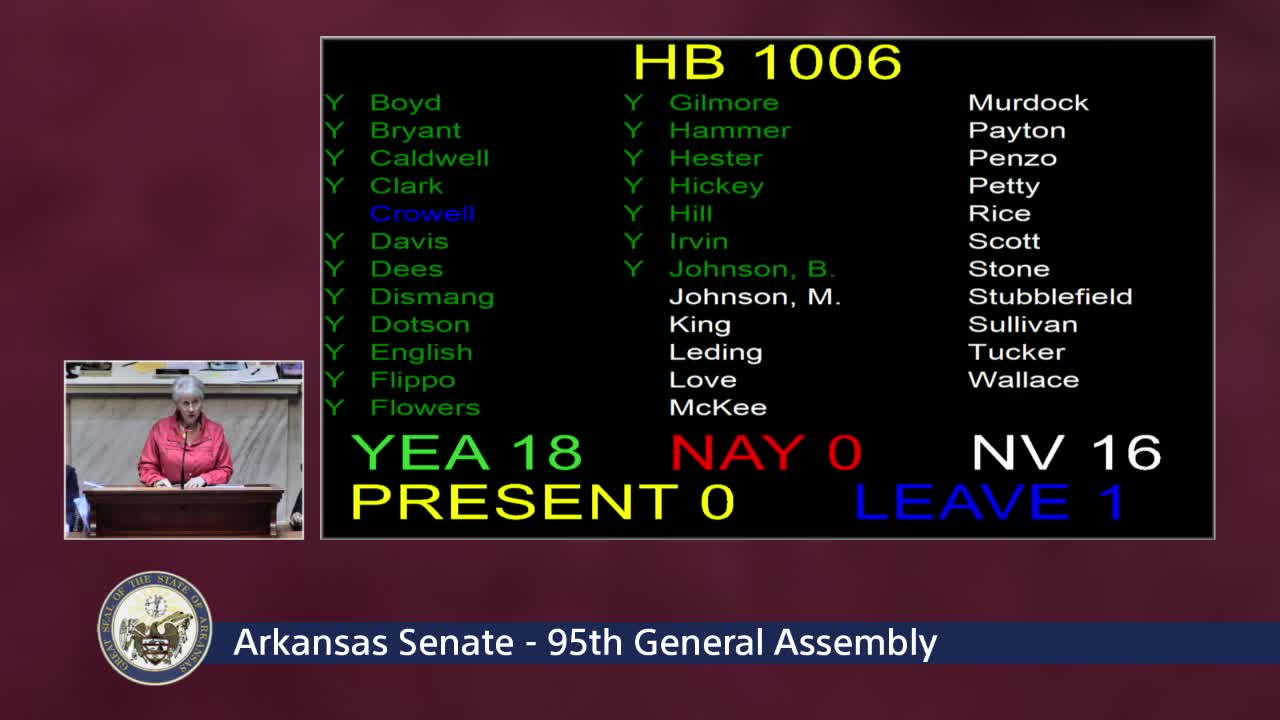
The motion to adopt the amendment and the code passed by voice vote; the presiding officer announced "ayes have it." The measure as adopted will be incorporated into the Senate's internal ethics guidance and disclosure process.
Supporters said the changes are intended to strengthen transparency while keeping the rules administrable; several senators said they preferred recusal in close cases. No roll-call vote was recorded on the floor transcript for this motion.