Get Full Government Meeting Transcripts, Videos, & Alerts Forever!
Get email alerts on the Alcohol Regulation topic
No spam. Unsubscribe anytime.
Committee approves change to beer definition to allow some craft beers in grocery and convenience stores
Summary
Lawmakers approved an amendment and a "do pass" recommendation to raise the alcohol‑by‑weight threshold that defines "beer," a change supporters say will let craft beers currently sold only in liquor stores be sold by retailers with beer/wine permits. Opponents warned of higher alcohol products becoming more accessible and public safety concerns.
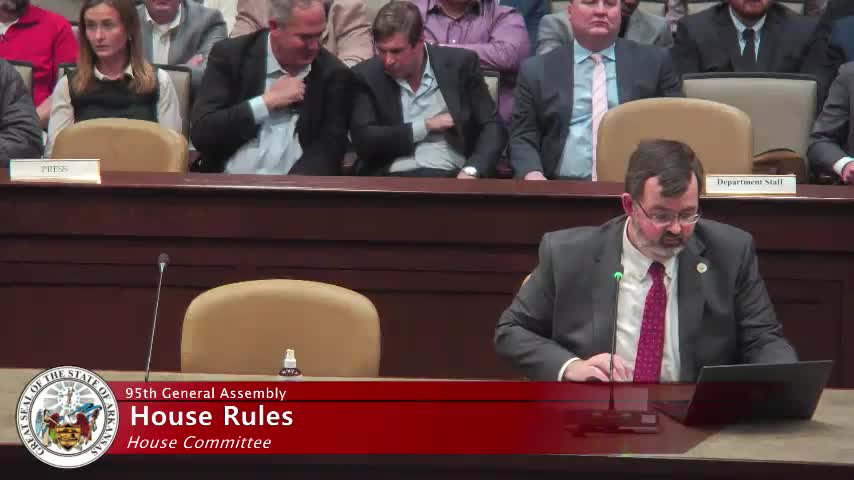
Representative Matt Brown (District 55) presented House Bill 1173 (as amended), a proposal to change the statutory definition of beer by raising the allowed alcohol by weight (ABW) ceiling for beer from 0.5% to 14% ABW. Brown said the change is intended to let grocery stores, convenience stores and other retailers with beer/wine permits legally sell many local craft beers that currently exceed the statutory ABW limit.
Brown and industry representatives described two technical amendments adopted before the committee advanced the bill. Steve Goode, representing Arkansas retailers, explained the amendment tightened the statutory definition of "malt" and "malt substitute" to prevent loopholes and to modernize language that traces back to Act 108 of 1935. The amendment also clarified brewing definitions so that the change covers malt‑based craft beers while leaving spirit‑based ready‑to‑drink products under liquor store control.
Supporters said the bill affects a relatively small share of the market—industry estimates cited in committee put the affected products at roughly 1% of total sales—and would help Arkansas brewers compete with neighboring states that have higher thresholds. Representative Brown argued the bill targets locally brewed craft beers ("North Forty, Ozark brewers") rather than national brands.
Public‑safety and public‑health witnesses warned of risks. Teresa Belew, testifying for Mothers Against Drunk Driving and related groups, displayed package comparisons and said some single cans of high‑ABW products contain as much alcohol as multiple standard servings and can facilitate rapid intoxication. Faith and community groups and independent retail liquor store owners also testified against the change, arguing it would shift exclusive product access from specialty stores to supermarkets and convenience stores and could harm small independent retailers.
The committee adopted the technical amendment and then approved the bill as amended on a voice vote. The sponsor said the measure does not address spirit‑based ready‑to‑drink beverages and that wholesalers and Arkansas brewers would continue to supply stores.