Get Full Government Meeting Transcripts, Videos, & Alerts Forever!
Get email alerts on the Disability Parking topic
No spam. Unsubscribe anytime.
Committee approves adding physical therapists to professionals who can certify disability parking credentials
Summary
House Bill 1138, as amended, adds licensed physical therapists to the list of professionals authorized to certify disability for parking placards and related credentials; committee adopted a corrective amendment before approving the bill.
House Bill 1138, sponsored by Representative Torres, was amended and passed by the committee to allow licensed physical therapists to certify a person’s disability for purposes of handicap parking permits, placards and related credentials.
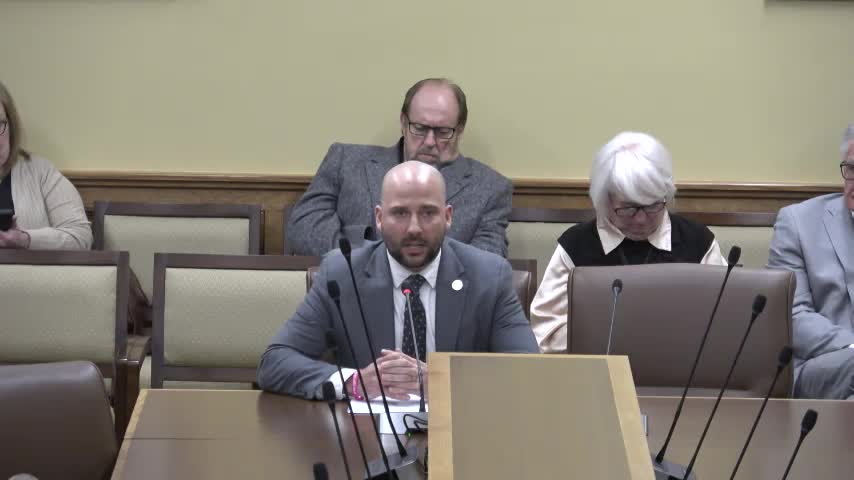
Representative Torres said the bill’s central purpose is to add physical therapists to the list of professionals who can complete disability certifications and noted an earlier drafting error that described temporary disability duration as four years. He presented an amendment deleting the problematic language and replacing it with language that restores clear timeframes; the committee adopted the amendment by voice vote after testimony from DFA counsel Alicia Austin Smith.
Representative Torres and witnesses said physical therapists are mobility specialists who often treat patients more frequently than primary care physicians and therefore can provide timely and clinically informed certification. Arthur Hulbert, a doctor of physical therapy, testified he supports the change and said physical therapists have had direct access since 1997 and are recognized as mobility experts. Christian Adcock of Disability Rights Arkansas also testified in favor, saying the change will make it easier for Arkansans to obtain needed parking credentials, particularly where physician access is limited.
Representative Mayberry praised the amendment and said the bill primarily aims to ease access to parking credentials for people with disabilities. With no opposition recorded in committee, the chair called the motion to pass; the committee adopted the amendment and then approved the bill as amended.
The transcript shows the amendment’s adoption and the committee’s do-pass recommendation; no roll-call tallies were recorded in the transcript.