Get Full Government Meeting Transcripts, Videos, & Alerts Forever!
Get email alerts on the Election Runoffs topic
No spam. Unsubscribe anytime.
Committee declines proposed runoffs for state legislative general elections
Summary
House Bill 1078, which would require runoff elections in general elections for state representatives and senators when no candidate receives a majority, failed after committee members and witnesses raised concerns about costs and turnout.
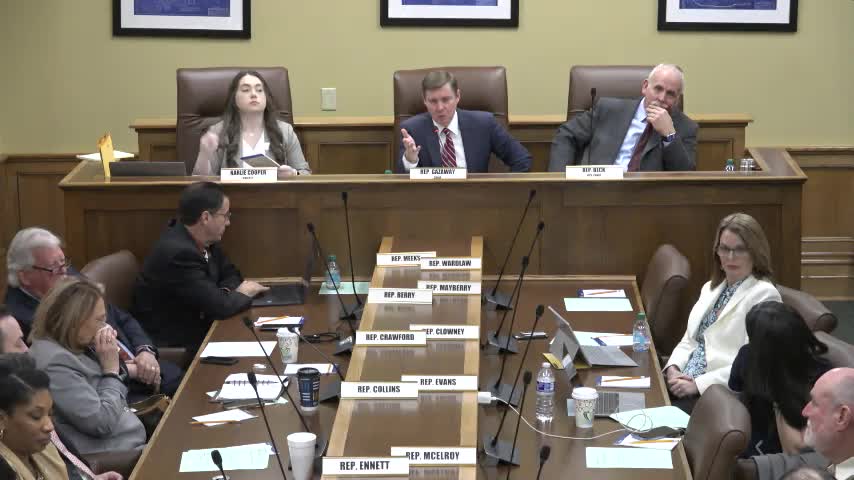
House Bill 1078, sponsored by Representative Long, would have required runoff elections for state representatives and state senators in general elections when no candidate receives a majority. The State Agencies & Govt'l Affairs House committee considered the proposal and rejected it after testimony from election officials and party representatives.
Representative Long argued runoffs ensure that elected legislators secure a majority of votes in their district and noted the bill mirrors runoff rules currently used in primary elections. He said the intent is to prevent candidates from winning with mere pluralities when third-party candidates consume significant vote shares.
Director Leslie Bellamy of the Secretary of State’s election division told the committee runoff costs vary widely by county and cited differences in polling locations and turnout; she said there is no standard statewide per-election cost. Lindsay French of the Association of Arkansas Counties said county clerks had taken no formal position and suggested adding runoffs to general elections would not necessarily add the same marginal cost incurred by primary runoffs. Seth Mays, executive director of the Republican Party of Arkansas, testified in opposition and said third-party vote share is rarely large enough in Arkansas to create the sort of plurality scenarios the bill’s sponsors invoked; he also flagged logistical concerns related to certification deadlines and turnout.
Committee members asked about past examples and cost estimates. Witnesses cited local examples, including high local runoff costs in a particular county’s primary and the 2022 Conway-area race as a factual reference point, but said counties differ widely.
Representative Long closed by saying he had coordinated with the Secretary of State’s office previously and that the bill had received broad support on the House floor in the prior session. After discussion, the committee voted on a motion to pass; the chair announced “The noes have it,” and the bill failed. The transcript contains no roll-call tally.