Get Full Government Meeting Transcripts, Videos, & Alerts Forever!
Get email alerts on the Medical Solicitation Ban topic
No spam. Unsubscribe anytime.
Committee backs bill banning in‑person and live electronic solicitation of recent accident victims by medical providers
Summary
The committee recommended passage of House Bill 12 37, which would bar medical providers from in‑person or live electronic solicitation of accident victims for 30 days after the incident.
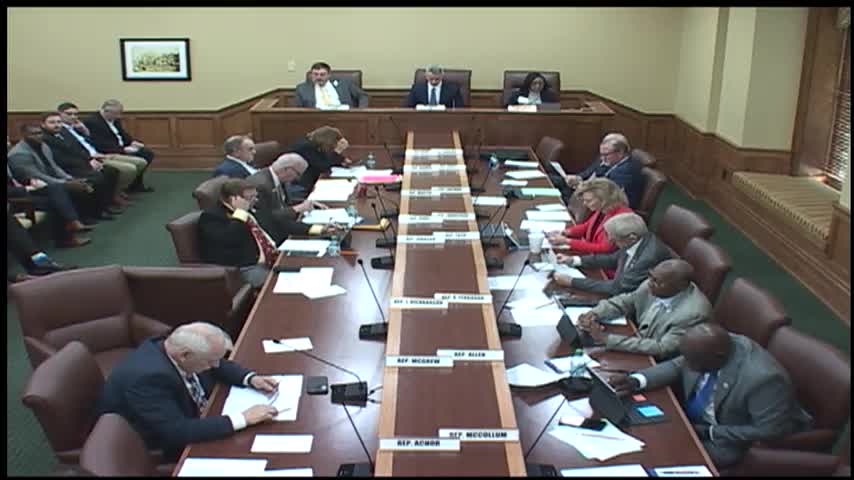
The committee recommended passage of House Bill 12 37 after an extended hearing that included testimony from the bill sponsor, affected medical and legal stakeholders, and representatives who opposed the measure on First Amendment grounds.
Representative Jay Richardson, the bill sponsor, said the measure responds to a recurring problem in his district where injured people receive unsolicited visits, phone calls or messages immediately after collisions. Richardson described prospective patients being “scared” by doorstep and phone contact and said the bill would prohibit medical providers from soliciting injured individuals for 30 days following a collision or other qualifying disaster. Richardson also described mechanisms in the bill that allow injured parties to recover payments and attorney fees and that permit criminal prosecution when fraud is proven.
William Buckley, a Fort Smith attorney speaking with Richardson, testified about clients who received multiple calls and in‑home visits and said those arrangements can produce inflated bills and make injured people vulnerable. Representative Perry recounted a constituent’s timeline of calls and texts and said the bill would help prevent people from being coerced into treatment and high bills.
Opponents including Robbie Wills of WSG Consulting, representing the Arkansas Chiropractic Society and other clients, urged caution. Wills said Arkansas previously adopted a registration regime for procurement agents (Act 515 of 2013) and cautioned that prior efforts to create a broad 30‑day ban had been struck down in court as an overbroad restriction on commercial speech. Wills argued the state’s interest could be addressed by strengthening registration and enforcement of deceptive practices rather than imposing a broad criminal prohibition.
Committee members examined carve‑outs and enforcement. Sponsor Richardson said the bill preserves written advertising (mail, radio, television) and allows contact when a provider has a preexisting relationship with the patient; the bill would bar live contact such as door knocks, phone calls, texts and instant messages during the 30‑day period. Richardson testified the statute would allow injured victims to recover payments and attorney fees and that criminal violations could be prosecuted; he described the criminal culpability as a Class D felony when funds wrongfully taken are proven (testimony referenced “D as in dog” to identify the felony class).
Several members asked whether the bill treats medical providers the same way attorneys are already regulated; Richardson said the measure aligns medical‑provider restrictions with the standards attorneys must follow in marketing and that attorneys generally may not call or text potential clients without a prior relationship. Opponents urged the committee to consider narrower amendments and warned of likely legal challenge under the Central Hudson commercial-speech framework.
Representative Wooten moved a recommendation of “do pass.” The motion carried by voice vote. The transcript records the chair calling for “aye/no” and then “The ayes have it.”