Get Full Government Meeting Transcripts, Videos, & Alerts Forever!
Get email alerts on the Land Use topic
No spam. Unsubscribe anytime.
Nashville council tables Project Sprout rezoning after residents raise traffic, noise and biosecurity concerns
Summary
The Town of Nashville Council voted to table a conditional rezoning request for the Project Sprout campus off Cook Road after a lengthy public hearing in which nearby residents cited concerns about noise, traffic, wetlands and risks to nearby poultry operations.
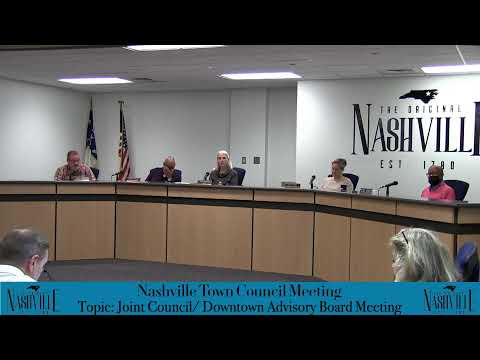
The Town of Nashville Council on Feb. 4, 2025 voted to table a conditional rezoning request for a proposed agrifood campus known as Project Sprout, citing outstanding concerns raised by neighbors about noise, traffic, wetlands and biosecurity.
Planning Director Sean Lucas told the council the rezoning request (a conditional zoning nonresidential, or CZNR, for about 38.37 acres on the north side of Cook Road) would add a mix of uses to land currently zoned I-1 industrial. Lucas said the package of permitted uses under the proposed development conditions ranges from indoor/outdoor storage and processing to short-term lodging, a community/education center and an outdoor amphitheater; he also noted the conditional map amendment would not be valid until the applicant accepts the development conditions in writing.
The matter drew more than a dozen speakers during the public hearing. Andrew Stocks of Stocks Engineering, representing the applicant, described site engineering plans, said the site will be served by public water and sewer, noted stormwater would be designed to state and local criteria, and said driveway connections would require North Carolina Department of Transportation approval. Stocks also said the project will be phased, with a processing facility on the south side expected to move forward first and the education/innovation elements to follow.
Neighbors who spoke said the project threatens the community’s rural character and raised specific technical concerns. Tim Cook, a Cook Road resident, said, “I live right across the road…put a row of trees on the ditch bank in front of my house” to block views and noise. Jetta Pinkney, who lives at 552 Cook Road, said, “We are concerned about the noise…we have grandchildren that like to play,” and asked the council to consider residents’ quality of life. Poultry farmer Mike Edwards told council members he is worried about food-safety risks and biosecurity, noting setbacks that would apply to poultry operations: “If I was gonna build…a chicken house I would have to be a thousand feet away,” he said. Other residents cited traffic, potential impacts to wells and the local water table, and reductions in property values.
Council members discussed ways to address the concerns. Council member Kate Burns (referenced during deliberations) urged gathering more information specifically about biosecurity and whether uses on the north parcel could be reordered or reduced to limit risk to nearby poultry houses. The applicant, represented in part by a founder of Ripe Revival, said corporate stakeholders and grant requirements constrain some choices but that the team was open to further discussion and to examining alternatives such as an indoor performance space or additional sound mitigation.
After deliberation, a council member moved to table the rezoning request to allow staff, the applicant and residents to develop mitigation options and additional technical information; the motion carried on a voice vote. The council asked the applicant to return with more detail on biosecurity measures, traffic mitigation, stormwater/wetland studies and alternatives for the amphitheater before the council considers the conditional zoning again.
What happens next: Tabling preserves the applicant’s ability to pursue the conditional rezoning in the future but pauses any vote while the applicant and town staff address the requested studies and design changes.