Get Full Government Meeting Transcripts, Videos, & Alerts Forever!
Get email alerts on the District Budget topic
No spam. Unsubscribe anytime.
Martinez Unified projects multi‑year shortfall; board briefed on options including up to $2 million in reductions
Summary
District finance staff told the Board of Education that declining enrollment, expiring one‑time pandemic funding and rising benefits create a structural deficit; staff outlined possible reductions and a timeline for proposals and potential layoffs tied to March notification deadlines.
Martinez Unified School District fiscal staff told the Board of Education on Jan. 13 that the district faces a structural budget gap driven by declining enrollment, the end of one‑time pandemic funds and rising employee health and salary costs.
Finance staff presented multiple visuals showing revenue falling below expenses over the next several years and described options that could total roughly $1 million to $2 million in reductions if additional revenue does not materialize.
Why it matters: district leaders said the gaps would require choices that could affect programs and staffing. Staff emphasized they will try to minimize classroom impacts and preserve student supports where possible while meeting legal reserve requirements.
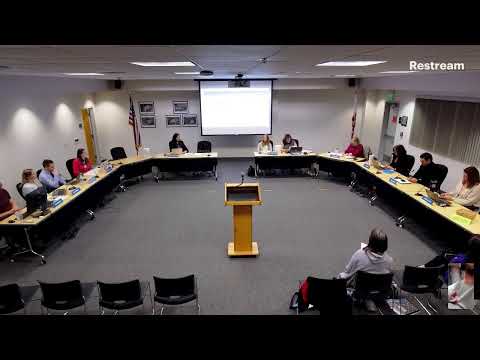
At the meeting, staff member Andy Cannon (identified in the agenda materials and the meeting as the presenter) walked trustees through the district’s revenue picture, reserve balances and projected structural deficit. Cannon said the district began fiscal year 2024–25 with an unrestricted ending reserve of about $5.3 million and a legally required minimum reserve of roughly $1.8 million (3% of unrestricted expenditures). He told the board the district’s “excess” reserves have been declining and, under current assumptions, could fall to near the minimum by 2026–27.
Cannon said the district’s unrestricted revenue is down for 2024–25 compared with 2023–24, largely because funded average daily attendance (ADA) has declined and certain one‑time pandemic resources have expired. He also highlighted the rising costs of health and welfare (which he said have increased roughly 40% since 2018–19 for total district costs) and salary increases negotiated in recent years. Special education is a large, ongoing expenditure (Cannon cited a special education budget on the order of $14 million) and the district receives a far smaller federal contribution than historical targets; he stated that for Martinez Unified the federal share is nearer 6% of special education costs, with the balance covered by state/local funds and the general fund.
Possible actions and timeline: Cannon outlined a multi‑step approach. Staff will continue to identify savings and present a formal reduction proposal for board review Jan. 27, with possible board adoption of reductions by Feb. 10 and a formal resolution identifying positions/amounts Feb. 24. If necessary, the district forecasted a mix of non‑staff and staffing reductions: for 2025–26 staff estimated about $750,000 in non‑staff reductions (textbooks, contracts, site budgets) and about $1,000,000 in staffing reductions (a rough estimate equivalent to roughly nine full‑time positions, some of which might be partial FTEs). For 2026–27 staff said additional reductions of a similar order could be necessary; overall staff gave a working range of $1 million to $1.5 million (or more) of staffing reductions over the planning horizon if revenues do not improve.
Board members asked for sensitivity runs on different COLA assumptions and for a clearer mapping between possible dollar reductions and the likely number and types of positions affected. Cannon said numbers are preliminary: for example, the $1,050,000 staffing figure represents a loose estimate of roughly nine positions, but the exact mix of certificated, classified and management positions depends on salary step, benefit status and vacancies. He reiterated that attrition and retirements could reduce the need for layoffs and that the district has used partial‑tax renewal and other one‑time actions in prior years to restore positions when feasible.
Staff also described potential revenue options (facility rentals, partial local taxes, grants) and cautioned that most grants are restricted, short‑term, and can require substantial administrative work. Cannon and the superintendent said they would return with more detailed, itemized reduction scenarios and sensitivity analyses tied to COLA and state funding developments before formal board action.
Ending: Trustees did not vote on reductions at the Jan. 13 meeting; staff set dates for review and possible adoption in late January and February and reminded the board that March 15 is the statutory threshold for certain layoff notification obligations. The district will present specific reduction proposals and associated impacts at subsequent public meetings.