Get Full Government Meeting Transcripts, Videos, & Alerts Forever!
Get email alerts on the Medical Education Residency topic
No spam. Unsubscribe anytime.
Lawmakers hear residency expansion, retention data as Idaho funds more physician training slots
Summary
Program directors and legislative analysts told JFAC that state investments in residency programs are increasing training capacity, that residents provide immediate clinical capacity, and that roughly half to more than half of graduates remain in Idaho.
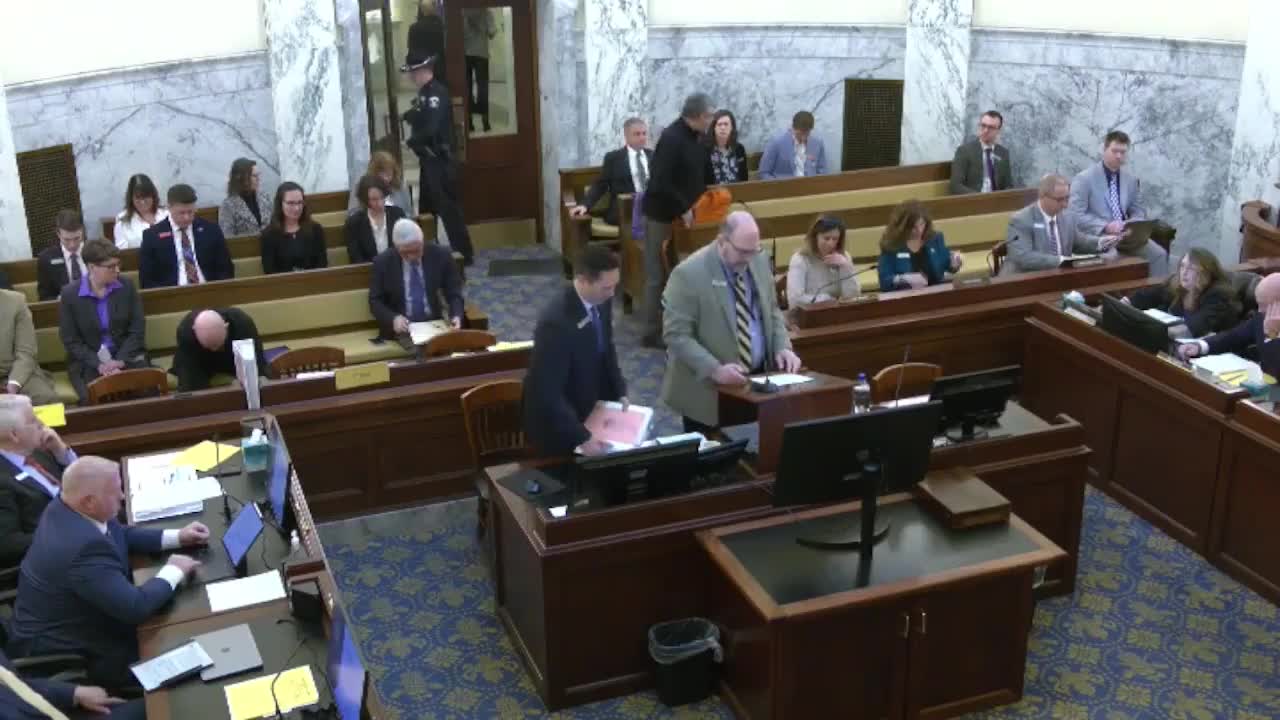
Budget analysts and residency directors told the Joint Finance‑Appropriations Committee that state support for graduate medical education is a linchpin in addressing Idaho's physician shortage, and they outlined requests for additional resident slots and continued funding for existing programs.
Kevin Campbell, a budget and policy analyst with the Legislative Services Office, summarized the state's residency portfolio and retention numbers, telling the committee that "55 percent of graduates of Idaho residencies and fellowships stay in Idaho." That retention rate, Campbell said, places Idaho among the top 10 states for retaining physicians who train in the state.
Residency program directors described a multi‑part approach: increase the number of residency slots in Idaho, fund incentives that encourage clinicians to practice in rural Health Professional Shortage Areas, and invest in loan repayment and other retention programs.
Residency requests on the committee agenda included: eastern Idaho psychiatry and family medicine expansions, a Boise Internal Medicine request for one additional resident, and several Family Medicine Residency (FMR) program additions including a new St. Alphonsus Nampa program. Specific items discussed or requested during the hearing included: - Eastern Idaho Medical Residency (EIMR): a request of $240,000 for four additional psychiatric residents (funding to support the third or fourth year of multi‑year training was discussed). Kevin Campbell noted prior FY2024/FY2025 increments of $240,000 to support psychiatric residency years. - Boise Internal Medicine: a request of $60,000 ongoing for one additional resident for FY2026. - Family Medicine Residencies (multiple sites): a request tied to standing up a new program at St. Alphonsus Medical Center, Nampa that includes funding for six new residents and one fellowship (the presentation showed a $420,000 ongoing request in that set), plus other ISU/ISU‑partner resident requests across Pocatello, Rexburg, Rupert, Coeur d'Alene and Twin Falls.
Program directors emphasized that residents provide care while training. Psychiatrist Matthew Larson said his psychiatry residents see patients daily and add immediate capacity: "I have four residents seeing patients, kids, adults, all day every day," he told the committee. That clinical work reduces local wait times even as the state seeks to retain more graduates.
Speakers described the current funding model for many Idaho residencies as a three‑way partnership: the sponsoring educational institution, local health systems (hospitals/clinics) and the state each provide roughly one‑third of a resident's annual cost. Program directors noted the average total cost per resident has risen to about $210,000 per year; historically the state's share was about $60,000 per resident, set when costs were lower. Several program directors suggested the state consider increasing its per‑resident contribution to reflect inflation and current operating costs.
Officials described a multi‑year, state‑led expansion that began in 2018: the number of residencies statewide grew from nine programs to 16 and residents from roughly 134 to about 262, according to program directors and Legislative Services materials. Dr. Mo Hagman, Boise internal medicine program director, and Dr. Brandon Mickelson, ISU family medicine program director in Pocatello, told the committee the expansion is producing measurable increases in training capacity and local clinical access. Dr. Ted Epperly, a family physician, said Idaho's three‑way funding approach is now a regional model that neighboring states have looked to emulate.
Retention figures varied by specialty and program. Directors said some primary‑care programs show retention as high as 65 percent; the statewide average cited by Legislative Services was 55 percent. Loan repayment programs cited by Division staff were reported to have near‑91 percent retention of participants.
Where the committee stands: members asked program directors and analysts whether additional investments were the right mix of front‑end (medical school slots) and back‑end (residency slots and loan repayment). Program directors argued the bottleneck is the residency end of the pipeline: medical students apply in large numbers but cannot all be placed without more residency slots and training infrastructure. Committee members asked for continued updates and asked analysts to track cost‑per‑resident and retention outcomes as the budget requests are reviewed.
Ending: Residency directors asked the committee to sustain the multi‑year plan and complete the final phases under consideration so training programs remain stable and produce physicians who can practice in Idaho communities.