Get Full Government Meeting Transcripts, Videos, & Alerts Forever!
Get email alerts on the Public Health Budget topic
No spam. Unsubscribe anytime.
Public health services seeks restorations, one‑time federal enhancements in FY2026 budget
Summary
Department of Health and Welfare officials told the Joint Finance‑Appropriations Committee they are seeking restoration of several ongoing public‑health programs, one‑time federal data and workforce enhancements, and dedicated fund increases as part of the division's FY2026 request.
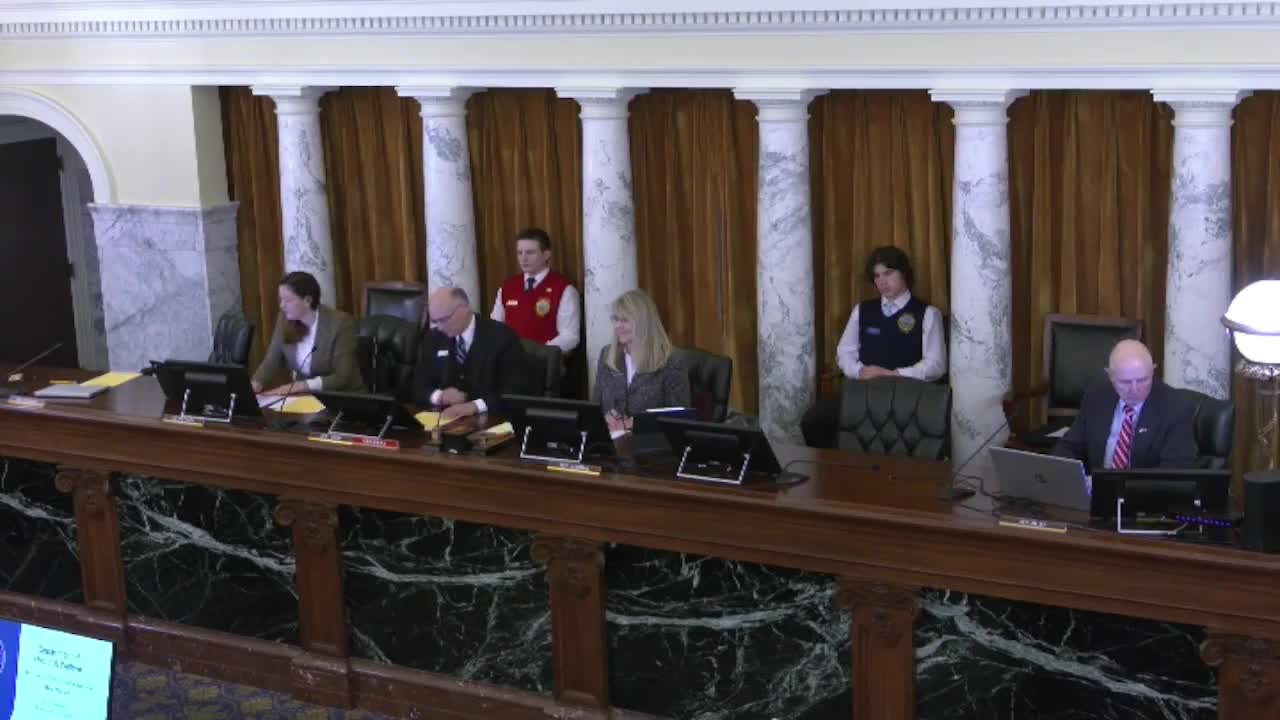
At a Joint Finance‑Appropriations Committee hearing, Department of Health and Welfare Director Alex Adams and Division of Public Health Administrator Elke Shaw Tullock outlined the Division of Public Health Services' FY2026 budget request, including restoration of multiple ongoing programs and roughly $8.8 million in one‑time federal enhancements.
The request matters because the Division administers core public‑health functions statewide — immunizations, communicable‑disease surveillance, laboratory services, suicide prevention, WIC and vital records — and much of its funding flows out to local health districts and contractors. "I would characterize it as a healthy exercise," Director Alex Adams told the committee about the division's program review and budgeting changes.
Keith Bybee, division manager for budget policy analysis, walked members through the division's structure and the budget trend. "Public health services is a big one," Bybee said, describing five program areas: physical health services, emergency medical services, laboratory services, suicide prevention and the health policy initiatives program that houses the State Healthcare Innovation Plan (SHIP). He told the committee the division had 256.52 full‑time equivalent positions established, with four vacancies as of Aug. 31, 2024.
Committee materials show the FY2025 original appropriation for the Division of Public Health Services at about $164,020,000. Bybee and department staff attributed prior year volatility to large federal inflows — CARES Act and ARPA funds — that raised appropriated levels in earlier years and have since come down. The division said roughly half of its spending is trustee and benefit payments; personnel accounted for about 18.6 percent (about $27 million) and operating expenditures about $46 million in the FY2025 snapshot presented to members.
Officials asked the Legislature to restore a suite of previously ongoing programs that were moved to one‑time funding last year. The packet and committee discussion listed specific restoration requests (amounts below reflect the department's presentation): - Suicide prevention: $1,807,700 general fund and $195,000 federal funds (program established by the Legislature in 2016). - Drug Overdose Prevention Program: $2,820,200 ongoing to restore 4 FTE. - Refugee health screening: $991,000 ongoing (1.5 FTE) to continue screenings and follow‑up for new arrivals to Boise and Twin Falls. - Alzheimer's and related dementias program: $275,200 ongoing. - Fit and Fall Proof community exercise program: $140,000 ongoing. - Block grants (repurposed): $190,000 ongoing to support preventive health and maternal/child health block grants. - Diabetes health equity and prevention: $1,063,700 ongoing. - HIV prevention activities: $957,300 ongoing. - Oral health workforce activities: $379,600 ongoing. - Integrated hepatitis surveillance and prevention: $599,200 ongoing. - WIC/Food Program restoration: $6,944,600 ongoing (restore supplemental nutritional food grant funding). - Temporary Assistance for Needy Families (TANF) restoration: $400,000 ongoing.
Separately, the division said it submitted a set of one‑time enhancement requests tied mostly to federal grant carryovers (ARPA/Epidemiology and Laboratory Capacity grants and other federal sources). Bybee told members the total of the one‑time, agency‑requested enhancements on the slide was $8,752,500 and that the governor recommended those items. Those one‑time items included: public health infrastructure and workforce grants to support hiring and training for local public‑health districts; vital records data modernization (Data Modernization II, CDC reporting pathways); WIC system modernization; general public‑health data modernization and exchange; and a continuing communicable‑disease prevention grant supporting 4.4 limited‑service positions at $2,041,800 (year 4 of that grant).
The packet and discussion included a technical corrective supplemental that JFAC approved on Jan. 17 for a cancer data registry. Bybee also highlighted an immunization assessment request: the Division asked for $2,500,000 ongoing from dedicated funds to support the Idaho immunization program, which the department said ensures vaccine access for children under 19.
Committee members pressed department staff for program details and performance measures. Senator Cook asked for documentation showing what the division has spent on data modernization projects before approving additional funds; Director Adams said the department would circulate a brief summary of work done so committee members could review prior investments and outcomes. Adams also noted the department had dissolved its Bureau of Equity and removed roughly 30 policies as part of the budget reorganization.
Elke Shaw Tullock, the division administrator, spoke to workforce incentives that are administered through the division, including loan repayment programs. She told the committee the division's loan repayment efforts have a high retention rate: "Almost 91% of the providers that receive these loan repayments stay in the state and practice in the state," she said.
Where things stand: members did not take a formal vote during the hearing. Committee leadership urged members to follow up individually with analysts and agency staff for deeper review; the department agreed to provide written details on data modernization, ARPA carryover uses and system upgrades.
The committee will consider the division's materials and follow‑up documents as it drafts budget recommendations during the 2025 session.
Ending: Department staff and committee analysts remain available to provide additional detail. Director Adams closed by reiterating the department viewed last year's program timing changes as a "healthy" budgeting exercise and said the current request aims to restore statutory programs and fund targeted modernization and workforce initiatives.