Get Full Government Meeting Transcripts, Videos, & Alerts Forever!
Get email alerts on the Civics Education topic
No spam. Unsubscribe anytime.
Committee debates bill to emphasize constitutional republic and failures of autocratic systems; amendment passes, final bill pulled for revision
Summary
Representative Scott Richardson's bill would require schools to teach failures of autocracies and the strengths of a constitutional republic; the committee approved an amendment changing the effective school year but the sponsor said he will pull the bill to revise language after committee feedback.
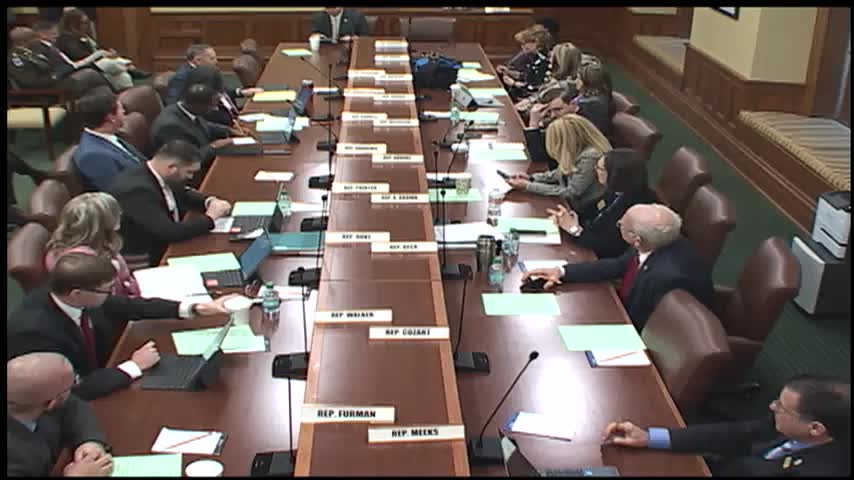
Representative Scott Richardson presented House Bill 1060 to the House Education Committee, a measure that instructs schools to include instruction comparing autocratic and communist systems with the United Statesconstitutional republic and to reinforce civic participation for students in grades 7 through 12.
Richardson said the bill builds on a prior measure from the legislaturethat passed the House last session but died in the Senate and that the new version adds an explicit emphasis on "constitutional republic" as a form of government. "I find many references to our democratic approach or democrat ideas, but I found no real reference, to constitutional republic," Richardson said, arguing students should learn differences between a constitutional republic and other systems.
The committee debated several implementation issues, including whether the bill directed the State Board of Education or the Department of Education to develop curriculum or standards, the list of historical examples and a 25-year time window referenced in the draft, and how quickly the Department could provide standards and supporting materials.
Jacob Levy, Secretary of Education, told the committee the department typically writes standards and supports districtsin implementing curriculum but does not usually produce full local curriculum. "The standard is just explicitly outlining what we expect students to know and learn in each subject at each grade level," Levy said, and he estimated a comprehensive standards revision could take about a year while a full state review of standards typically occurs every 7 to 10 years.
Committee members raised concerns about several items in the bill: the language that references "the natural deterioration of democracies into autocracies over the last 25 years" (members worried the fixed 25-year reference could date the statute), whether the requirement would inadvertently prescribe curriculum rather than standards, and whether the bill's examples should be broader than 25 years to capture longer historical contexts. Representative Painter moved an amendment to correct an effective-school-year error in the draft; the committee approved the amendment by voice vote. The amendment moves the bill's effective date from the 2024-25 school year to the 2025-26 school year.
After extended discussion and input from the Department of Education, Representative Richardson said he would work with the committee and the department to revise language, including clarifying that the bill should direct standards rather than prescribe curriculum and addressing concerns about the 25-year example list. "So I would request that of the committee and with the committee's will, I'll I'll do that," Richardson said. The committee took no further formal vote on the bill before adjourning for session.
Ending: The bill remains under revision at the sponsor's request. Committee members and the department agreed the issues raised (standards vs. curriculum, timeline for implementation, and the 25-year example language) should be clarified before the committee takes further action.