Get Full Government Meeting Transcripts, Videos, & Alerts Forever!
Get email alerts on the Hunting Firearm Law topic
No spam. Unsubscribe anytime.
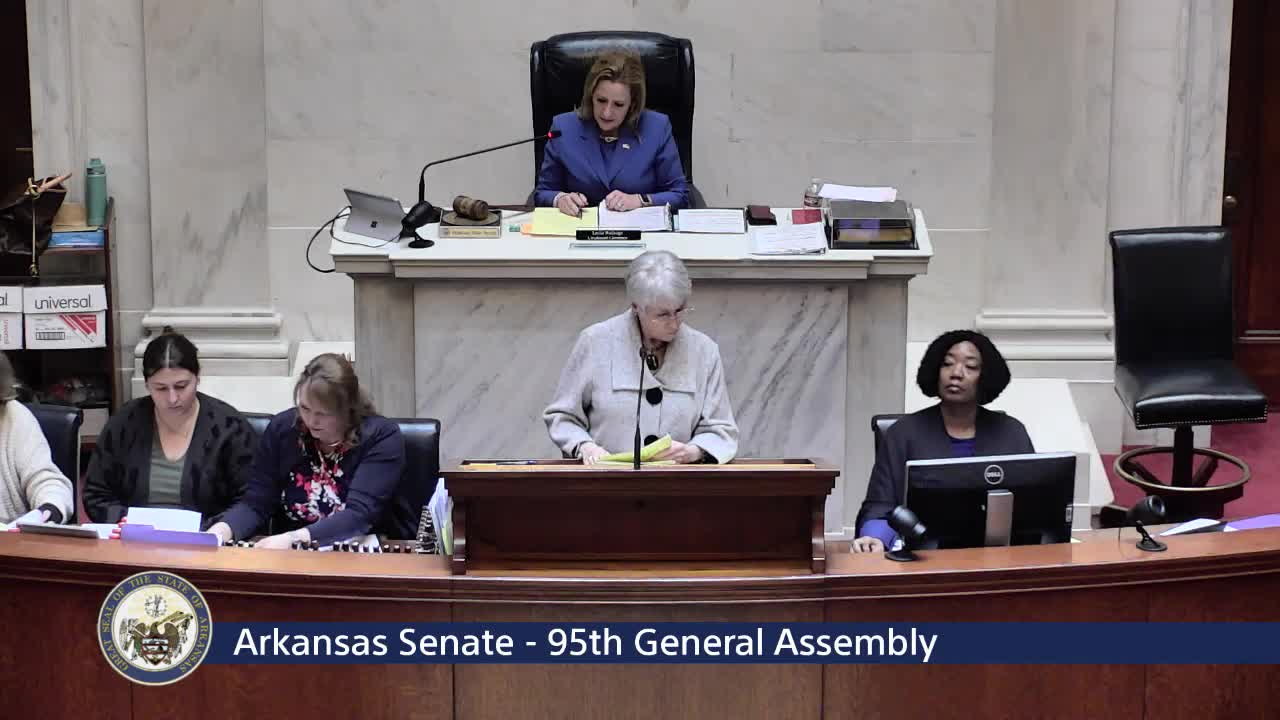
Senate approves repeal of narrow negligent-discharge penalty tied to deer hunting
Summary
The Arkansas Senate passed legislation repealing a 1965 statute that created a separate criminal penalty for negligent firearm discharge while deer hunting; sponsor said the law is outdated and unused.
The Arkansas Senate on Monday passed Senate Bill 15, a bill from Senator Boyd that repeals a decades-old statute creating a specific criminal penalty for negligently discharging a firearm while deer hunting.
Sponsor Senator Boyd told colleagues the provision dates to 1965 and applies only to deer hunting. He said the statute predates the legalization of elk and bear hunting and the modern hunter-orange requirement adopted in 1976, calling the provision “an extraneous mandate on the books.” He added that the Arkansas Game and Fish Commission told him it has never used the statute and that prosecutors have not raised objections to the repeal.
Supporters and questioners asked how the change would interact with other criminal statutes. Senator Flowers asked whether negligent homicide and other criminal statutes could address negligent discharges; Boyd said that was his interpretation and that "there are ample other criminal statutes" and civil remedies that could apply. Senator Stubblefield asked whether the law would affect shooting ranges; Boyd said the current statute applies only to deer hunting and would not cover other shooting activities.
The measure passed on a roll call, 33 yeas, 1 nay and 1 present, and the bill was ordered transmitted to the House.
The bill does not create new penalties; it removes the specific deer-hunting negligent-discharge provision. The sponsor characterized the change as cleanup of an unused statutory provision.
No amendment to the bill text was recorded during floor debate, and no formal direction to staff or rulemaking was given on the matter.