Get Full Government Meeting Transcripts, Videos, & Alerts Forever!
Get email alerts on the Inspection Notice Policy topic
No spam. Unsubscribe anytime.
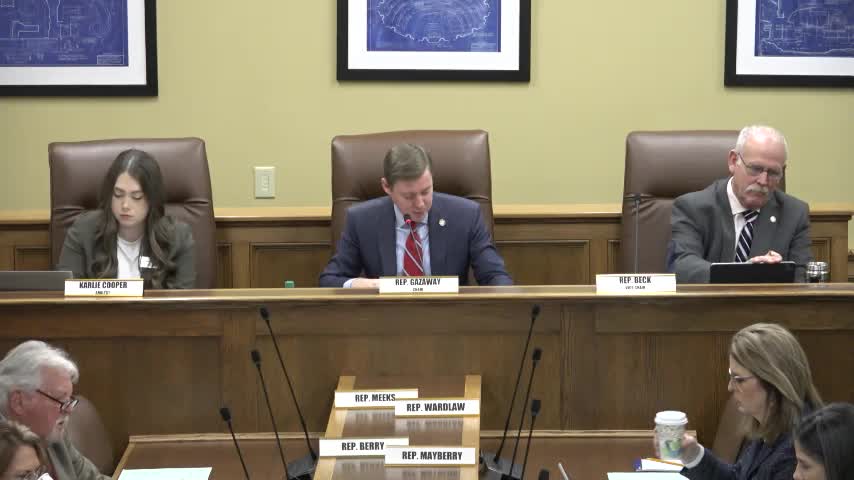
Committee pauses bill that would criminalize agency tip-offs before complaint inspections after extended questioning
Summary
House Bill 10‑58, which would bar state employees from warning regulated entities about complaint-based inspections and create penalties for violations, drew testimony from Taneytown Mayor Angela Russell and the Department of Energy and Environment. The sponsor asked the committee not to take a vote and said he will refine the draft.
Representative Jay Unger introduced House Bill 10‑58 and said the bill would prohibit state agencies from tipping off regulated entities about complaint‑based inspections. He cited complaints from Taneytown about the EcoVista/Waste Management landfill and asked Mayor Angela Russell to testify.
Mayor Angela Russell, identified herself as mayor of Taneytown and described recurring odors, visible trash and animal deaths near the landfill. She recounted that an 609‑acre landfill’s inspection records showed few violations and said residents had observed facility staff and contractors cleaning the site before inspections, which she said suggested inspectors or agency staff gave advance notice. “My citizens are suffering,” Russell said, describing nausea and burning eyes and saying she had contacted the department and the media.
Department of Energy and Environment witnesses denied agency staff give improper notice. Shane Corey, secretary for the Department of Energy and Environment, said the department increased inspections after complaints and was unaware of any employees giving improper advance notice. Bailey Taylor, DEQ director, said some inspections require advance scheduling — for example, stack testing or mechanical integrity tests — so agency staff may need to coordinate with permit holders to ensure required personnel are present. Taylor said routine solid‑waste inspections are conducted within a quarter and can occur anytime in that quarter, but complaint inspections are dispatched in response to complaints.
Committee members pressed the sponsor and DEQ on evidentiary standards and enforcement. Representative Hawke and others said they had heard the allegations but noted proof and the ability to prosecute would be challenging; the sponsor said the bill contemplates a criminal penalty (class B misdemeanor) and removal from employment if an employee is convicted. Committee members raised concerns the bill could unintentionally criminalize routine or necessary notices (for example, to coordinate personnel for stack tests) and could trap entry‑level inspectors who make honest scheduling errors.
Representative Unger asked that the committee not take a vote and said he was flexible on tightening language. The committee did not vote; members asked the sponsor to refine the draft to narrow its scope and address exceptions, mens rea, and enforcement procedures.
The record shows extended questioning of DEQ officials and testimony from Taneytown’s mayor; no committee roll‑call vote occurred on the bill in this hearing.