Get Full Government Meeting Transcripts, Videos, & Alerts Forever!
Get email alerts on the Second Amendment Constitutional Challenge topic
No spam. Unsubscribe anytime.
Appeals court hears argument over whether superior court should decide Bruen-style Second Amendment challenge or remand to district court
Summary
A single-justice session of the Appeals Court in matter 25J0050 heard competing arguments over whether the superior court should retain a Bruen-era constitutional challenge to Massachusetts’ firearm licensing suitability standard or remand it to the district court for factfinding; the justice took the matter under advisement.
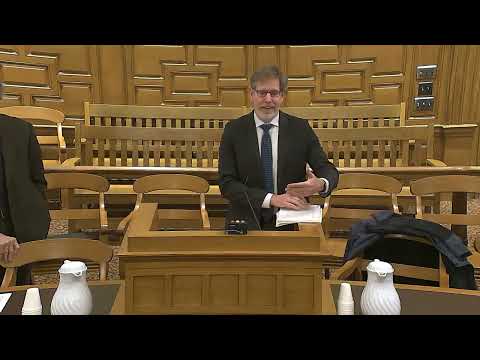
A single-justice session of the Massachusetts Appeals Court on Oct. 12 considered competing requests over where a Second Amendment challenge to the Commonwealth’s firearm licensing statute should be decided.
Judge John Englander opened the hearing in case 25J0050 (In re: Dana Dupras Sr.) saying, “Part of the reason I wanted to have a hearing is because I'm not sure I fully understand what you want or whether I can do it.”
The Commonwealth, represented by Tim Casey, assistant attorney general, asked the single justice to vacate a superior court order that had remanded the matter to the district court for an evidentiary hearing and to direct the superior court to decide the constitutional (“Bruen”) question itself. “We are simply asking, for you to vacate the superior court's order, which had remanded the matter to the district court for an evidentiary hearing on the so called factual question of, Bruen's historical inquiry and instead direct the superior court to decide the Bruen question itself,” Casey told the court.
Counsel for the petitioner, identified in the transcript as Mister Patton, agreed that the issue should be resolved as a question of law. “I agree with, attorney Casey that this is, should be decided as a question of law,” Patton said, arguing that the superior court and subsequent appellate review could resolve the constitutional question based on the parties’ legal presentations.
The parties disputed whether the district court had addressed the Second Amendment challenge in the first instance. The record shows contested procedural history: the petitioner’s license was suspended, a district court proceeding followed, and the superior court later remanded the case to the district court for an evidentiary hearing on factual matters related to suitability. The Commonwealth said the parties fully briefed historical materials at the superior-court level and that no expert historical record was necessary for the legal question.
Discussion in court turned on two related points: (1) whether Bruen-style historical inquiry is a legal question that a superior court or appeals court may decide on the existing briefing, and (2) whether there are factual disputes relevant to that historical analysis that would require evidentiary factfinding in the district court. The attorneys and the single justice debated federal and state precedents and the practical effects of sending dozens of similar cases back to district courts.
Counsel and the single justice also discussed changes to the Commonwealth’s licensing statute made after 2019. The transcript records reference to amendments that, in 2022, tightened the licensing-authority standard by specifying that a determination of unsuitability should be based on “reliable, articulable, and credible information.” The attorney general’s office said it has intervened in many superior-court cases rather than in each district-court case because there are “dozens” of district-court proceedings raising related constitutional challenges and the Commonwealth may not receive notice in every instance.
Judge Englander questioned whether a single justice can override the ordinary course that the district court decide issues presented there first on certiorari review. He noted that in some prior appeals-court decisions the panel sought further input from the superior court judge and in other contexts appellate courts have asked lower tribunals to develop the factual record. After extended questioning and argument, the single justice said the matter was “under advisement” and that he likely would issue a written ruling.
No formal appellate decision was announced from the bench at the hearing’s close; Judge Englander said he “probably will write something, and I'll get it out, reasonably quickly as I can.”