Get Full Government Meeting Transcripts, Videos, & Alerts Forever!
Get email alerts on the Health Insurance Funding topic
No spam. Unsubscribe anytime.
Joint finance committee approves $14,130 per‑FTE health insurance funding for FY2026
Summary
The Idaho Joint Finance‑Appropriations Committee voted to set health insurance funding at $14,130 per eligible full‑time equivalent position for fiscal year 2026, adopting a compromise figure after debate over reserve balances and actuarial projections.
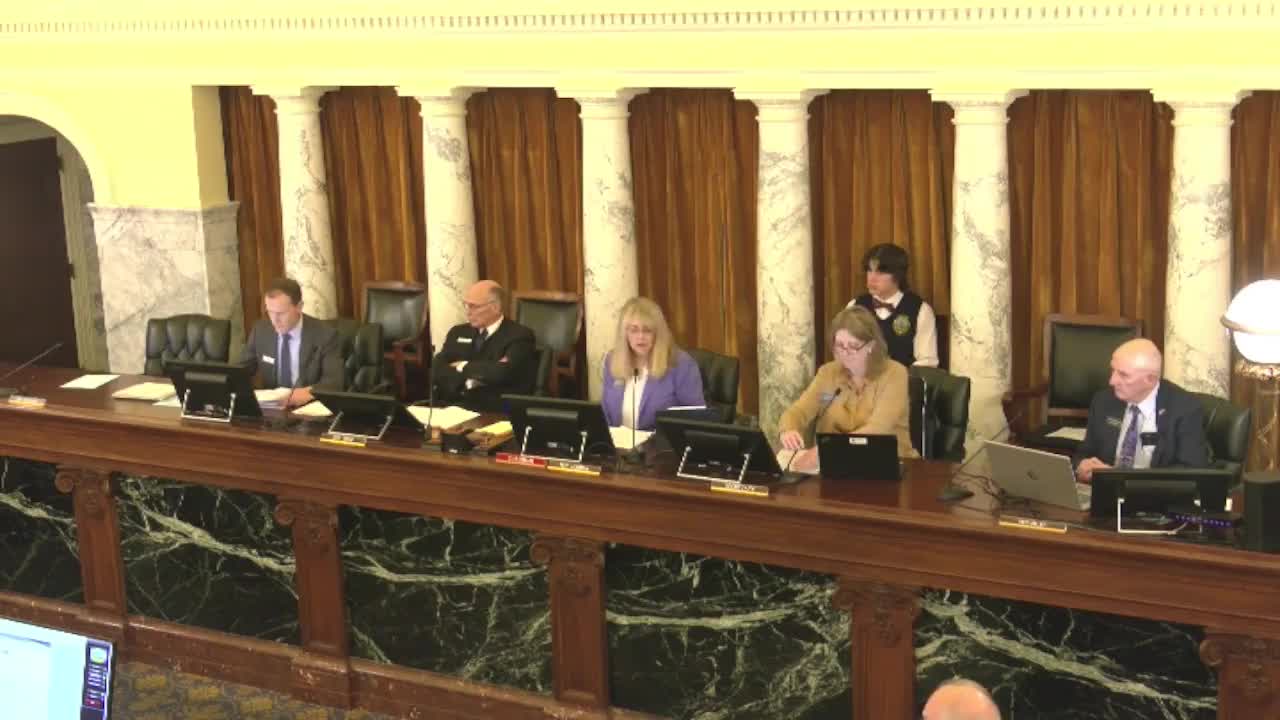
The Joint Finance‑Appropriations Committee voted Friday, Jan. 31, to set health insurance funding at $14,130 per eligible full‑time equivalent (FTE) position for fiscal year 2026, approving increases to state agency budgets to cover higher employer‑paid benefit costs.
The motion to set the per‑FTE health insurance appropriation at $14,130 was offered by Senator Woodward and seconded by Representative Tanner. Committee staff presented three options on the screen: the CEC committee recommendation of $13,960 per FTE, the governor’s recommendation of $14,300 per FTE and the midpoint compromise at $14,130. Mr. Bybee, a staff member, described the three dollar‑amount motions and noted that the largest adjustment in the personnel benefit cost package was the health insurance figure, with smaller agency‑level adjustments for workers’ compensation and Social Security.
Why it matters: the committee’s choice changes the state’s projected reserve balance and flows through agency budgets statewide. Mr. Bybee said the committee’s projected reserve balances for fiscal 2026 would be approximately $51.6 million under the $13,960 option, $61.4 million under the $14,300 option and between those amounts for the $14,130 midpoint.
Committee debate focused on how actuarial projections and prior use of reserve funds should influence the chosen premium level. Representative Furness urged the committee to accept the CEC recommendation of $13,960, saying the actuarial reports used in projections have historically been conservative and that lower funding would avoid over‑accumulating reserves. “They have 4 different projections, that they gave the Department of Insurance or the Department of Admin… Those projections have consistently been wrong over the years. They’ve consistently been, too conservative,” Furness said. Senator Ward Engelking argued for reflecting the actual cost of insurance and warned that using reserves to buy down premiums can make future increases appear larger: “If we buy it down again this year, we’re gonna see a big—it's gonna look like a bigger increase next year than it actually is. I think we should be reflecting the actual cost of insurance.”
The motion at $14,130 carried on a joint roll call: the Senate recorded eight ayes, zero nays and two absent or excused; the House recorded nine ayes, zero nays and one absent or excused, for a combined total of 17 ayes, 0 nays and 3 absent or excused. The motion sponsor reported that the choice increases appropriations by $36,043,900 from the general fund, $8,599,500 from dedicated funds and $3,753,800 from federal funds, a total increase of $48,397,200.
Background and outlook: committee staff said the health insurance number is part of a wider package of personnel benefit cost proposals the committee planned to consider in sequence. The committee recorded that if a motion fails it may revisit CEC and personnel benefit decisions at a later date.
Votes at a glance Motion: Set health insurance funding at $14,130 per eligible full‑time equivalent position for FY2026. Mover: Senator Woodward. Second: Representative Tanner. Outcome: Passed (due‑pass recommendation). Fiscal effect (as stated by mover): +$36,043,900 general fund; +$8,599,500 dedicated funds; +$3,753,800 federal funds; total +$48,397,200.
Full roll call evidence: during the roll call the committee recorded the following individual affirmative votes (as called aloud during the meeting): Senator Groh (aye); Senator Woodward (aye); Senator Cook (aye); Senator Hart (aye); Senator Carlson (aye); Senator Galloway (aye); Senator Ward Engelking (aye); Senator Wintrow (aye); Representative Harmon (aye); Representative Miller (aye); Representative Furnace (aye); Representative Handy (aye); Representative Tanner (aye); Representative Manwaring (aye); Representative Mitchell (aye); Representative Price (aye); Representative Gallaviz (aye). The committee summary stated: Senate 8 ayes, 0 nays, 2 absent and excused; House 9 ayes, 0 nays, 1 absent and excused; total 17 ayes, 0 nays, 3 absent and excused.
Ending: With the health insurance funding figure adopted, committee staff moved the agenda to other CEC motions. Members noted that final CEC decisions and related language remain to be resolved in later votes or meetings.