Get Full Government Meeting Transcripts, Videos, & Alerts Forever!
Get email alerts on the Broadband Idaho Commerce topic
No spam. Unsubscribe anytime.
Commerce outlines broadband pipeline: $35M state fund, $120M ARPA projects and $580M BEAD application timeline
Summary
The Department of Commerce briefed JFAC on broadband spending and deployment: $35 million in state broadband funds (most already obligated), $120 million in ARPA capital projects already contracted across 18 projects, and a $580 million BEAD (IIJA) program entering prequalification with funding applications expected this year.
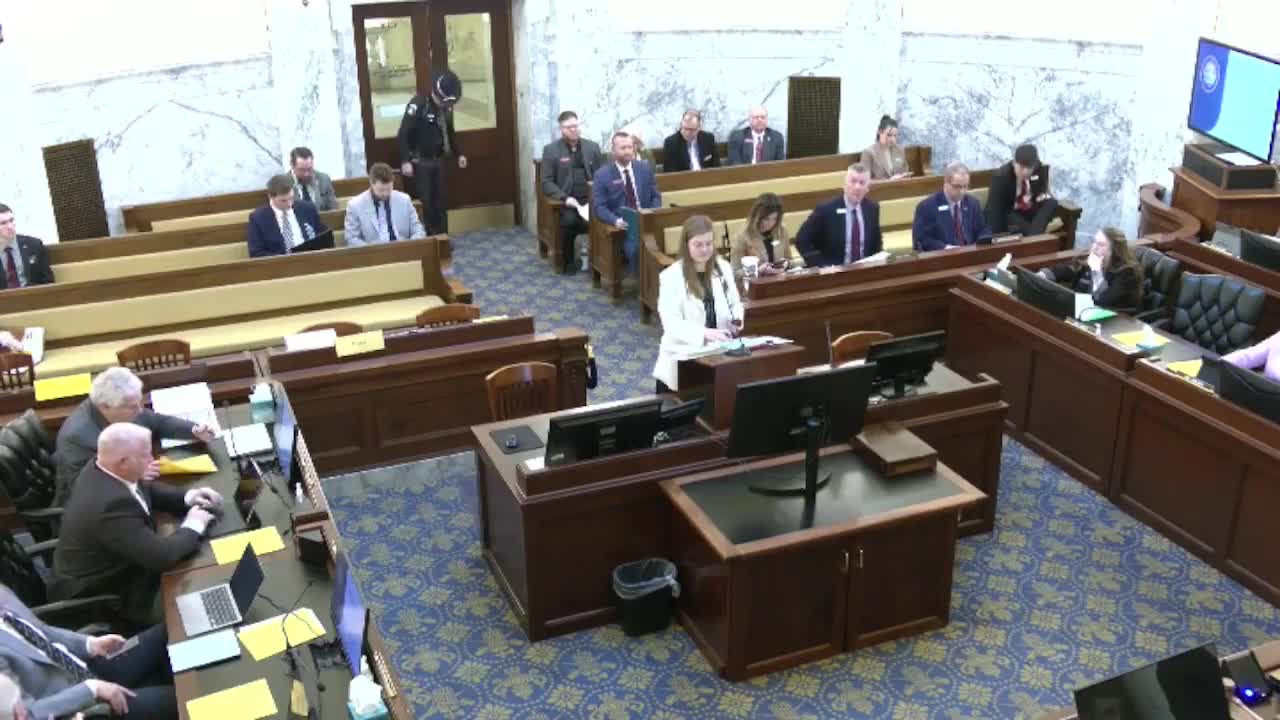
Brooke Dupree, a budget and policy analyst with the Legislative Services Office, told the committee the Department of Commerce and its newly created broadband office manage multiple funding streams, including a state broadband fund, ARPA capital projects, and federal IIJA/BEAD funds.
Director Tom Keeley introduced his leadership team and framed broadband as a multi‑year, statewide effort. He said Commerce is coordinating with partners (Visit Idaho, local governments, INL and other state entities) to align infrastructure, workforce, tourism and economic development opportunities with broadband expansion.
Ramon Jabe Sanchez, Idaho’s broadband manager at Commerce, gave a program‑level breakdown: the Idaho Broadband Fund (the $35,000,000 state general fund allocation) has about $26.5 million already obligated and roughly $8.5–$8.7 million remaining; the ARPA capital projects fund provided about $120,000,000 that is under contract across 18 projects aimed at connecting approximately 35,000 homes and businesses; and the federal Broadband Equity, Access, and Deployment (BEAD) program under IIJA totals roughly $580,000,000 for Idaho.
Sanchez described a staged timeline for BEAD implementation: a pre‑qualification phase opened in Q1 of the calendar year to vet potential applicants and service providers; a funding application phase is expected in Q2; the office planned to evaluate and grade proposals through the summer and put together a final package for the federal agency in mid‑fall to early winter, with the earliest movement of BEAD funds potentially occurring about a year from now. Sanchez emphasized that the Idaho Broadband Advisory Board — a legislatively created body with legislative and governor appointees — plays a central role in policy, project selection and allocations.
Committee members asked how Commerce is coordinating with private internet service providers. Sanchez said Idaho engages roughly 90 ISPs statewide and that the office emphasizes regional collaboration: the state used a portion of BEAD planning funds to make local planning grants (15 local communities) to increase coordination between local jurisdictions and private providers. On technology choices, Commerce described a BEAD priority for fiber first, then licensed fixed wireless, with alternative technologies (including low‑Earth‑orbit satellite services such as Starlink) considered where fiber or fixed wireless are infeasible.
Director Keeley and committee members also discussed workforce, housing and other economic development topics raised during the Commerce presentation; Keeley noted the department’s role in coordinating workforce and housing efforts, private activity bonds for housing, and partnerships with the Idaho Advanced Energy Commission and others on energy supply chain and advanced energy opportunities. Those topics were discussed as part of the broader economic development context and did not represent discrete FY2026 budget asks in this presentation.
Commerce staff told JFAC to expect multi‑year work as BEAD moves from planning to application and construction, and they emphasized ongoing coordination with federal agencies (NTIA for BEAD and Treasury for ARPA capital projects) and the state broadband advisory board on project selection and execution.
The department’s FY2026 presentation also included internal staff and FTP shifts tied to the broadband office’s responsibilities and a reappropriation adjustment to move previously authorized funds into the broadband office to support distribution and oversight of federal and state broadband monies.