Get Full Government Meeting Transcripts, Videos, & Alerts Forever!
Get email alerts on the Fourth Amendment Searches topic
No spam. Unsubscribe anytime.
Appeals court splits on scope of community-caretaking and emergency-aid exceptions in backpack search
Summary
The panel heard argument in Commonwealth v. Justin Page, docket number 24P298, over whether officers lawfully searched a defendant’s backpack during a response to what they perceived as a possible overdose.
The panel heard argument in Commonwealth v. Justin Page, docket number 24P298, over whether officers lawfully searched a defendant’s backpack during a response to what they perceived as a possible overdose.
Defense position
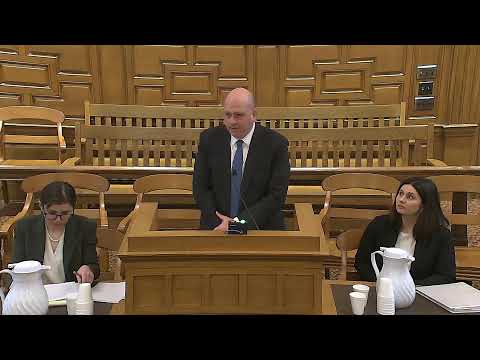
Edward Crane, counsel for Justin Page, urged the court to limit the community-caretaking exception and to resolve the case under the narrower emergency-aid doctrine. Crane argued the Supreme Court’s recent Coniglia decision narrowed community-caretaking principles and that, in any event, Massachusetts precedent confines warrantless searches of personal belongings.
Commonwealth position
Assistant District Attorney Bethany Lynch told the panel the plea in the case was conditional on the suppression ruling and said the judge had credited officer testimony that the defendant repeatedly reached for the backpack while overdosing. Lynch argued officers’ action to secure the backpack and look inside was reasonable to protect the public, the officers and the defendant and to obtain identification and medical information that might help first responders.
What the justices focused on
The justices debated whether the inquiry is objective or whether officers’ subjective motive matters. The panel discussed Commonwealth v. Kapler and McCarthy precedent and asked whether the officer’s stated purpose — checking for a weapon or finding ID and medical information — was sufficiently tied to alleviating the medical emergency. Justices also considered timing: would a search immediately at the scene differ from a search just before placing the person in an ambulance?
Outcome
The court did not announce a ruling at oral argument; the matter was taken under advisement. The panel signaled close attention to whether the record shows officers acted primarily to relieve an emergency and not as a pretext for criminal investigation.