Get Full Government Meeting Transcripts, Videos, & Alerts Forever!
Get email alerts on the Family Law Retirement Division topic
No spam. Unsubscribe anytime.
Appeals court reviews dispute over retirement-account split and whether valuation date includes later gains or losses
Summary
A divorce appeal turned on whether a judgment that awarded 50% of retirement accounts "as of 11/25/2020" meant a fixed share measured that day or a percentage that carries subsequent gains and losses until segregation; the record includes a denied motion for clarification in the trial court.
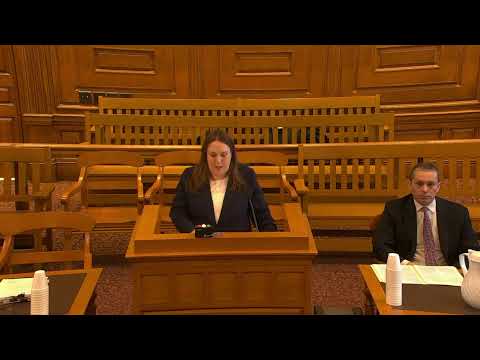
The Appeals Court heard argument in an appeal over the interpretation of divorce terms in Guy Musto v. Carolyn Musto (docket 23P1418). The parties disagree about whether the trial judge's 50 percent division of certain retirement accounts "as of Nov. 25, 2020" fixed a dollar amount on that date or instead established a percentage that remains subject to market fluctuations until the accounts are segregated.
India Mintroff, arguing for Carolyn Musto, said the judgment's silence about post-valuation gains or losses created ambiguity or, at minimum, an inequitable result that would shift post-valuation appreciation on the wife's separate property to the husband. Mintroff argued that usual family-court practice and out-of-jurisdiction authority favor assigning gains and losses to each party's separate share until segregation.
Scott D'Amelio, representing Guy Musto, responded that the record before the Appeals Court is limited to the trial judge's denial of a clarification motion and that the wife failed to timely pursue relief after earlier motions (including a Rule 60B motion) and an appeal that was dismissed for failure to prosecute. D'Amelio said the judge's judgment, read as a whole, establishes the formula the court intended and that the court did not abuse discretion in denying clarification.
The panel asked whether procedural bars (failure to prosecute an earlier appeal, and the proper vehicle for clarification) foreclosed the current challenge. Counsel debated the scope of Rule 60 motions, earlier SJC decisions (cited in argument as Connor v. Bennett, Catalano, DeLuca, Littles) and whether the trial judge's later, oral remarks altered the written judgment.
The oral argument concluded and the matter was submitted to the panel; the transcript contains no disposition.