Get Full Government Meeting Transcripts, Videos, & Alerts Forever!
Get email alerts on the Forgery And Utterings topic
No spam. Unsubscribe anytime.
Panel questions whether repeated check-cashing supports knowledge and intent in forgery appeal
Summary
In Commonwealth v. Michael Pardee (24P140) the panel examined whether repeated cashing of eight checks — some after the victim’s death and with memo lines listing services not performed — suffices under recent decisions (Oliver, Scordino) to establish knowledge of forgery or intent to defraud.
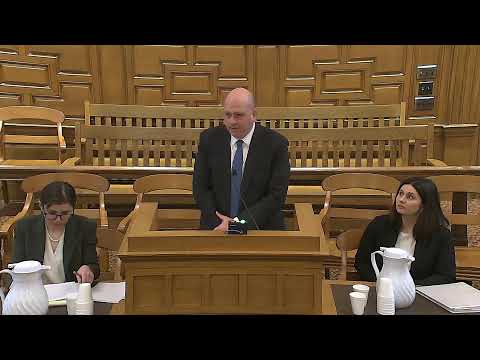
The appellate panel heard argument in Commonwealth v. Michael Pardee, docket number 24P140, about whether the evidence that eight checks were cashed at a check-cashing facility was sufficient to prove knowledge of forgery or intent to defraud.
Why it matters
Judges noted the court’s recent decisions in Oliver and Scordino, which limit convictions when identification and knowledge must be inferred from ordinary business practices. Defense counsel argued that those cases control here because the evidence rests on business practice in the check-cashing facility and multiple inferences rather than direct proof that the appellant cashed the checks knowing they were forged.
Key facts and dispute
The Commonwealth pointed to eight separate check-cashing events in a short period, with several checks listing memo-line purposes (roofing, nursing, painting) and two checks issued after the victim’s death. The Commonwealth urged that the number, timing, amounts and memo-line descriptions together support a jury inference of knowledge and intent.
Defense response
Defense counsel argued the evidence relied on inference upon inference: that someone else could have written the memo lines, that checks circulate, and that identification at the check-cashing facility relied on witness recollection and file photos rather than a teller’s live identification. Counsel urged Oliver and Scordino require closer proof of knowledge than the Commonwealth offered.
Panel questioning and legal frame
Chief Justice Amy Blake and Justice John Englander pressed both sides on whether the record includes direct evidence identifying the person who cashed the checks, and whether the memo lines or the repeated pattern of transactions materially distinguish the case from Oliver and Scordino. The panel also discussed whether the defense raised intent to defraud below or whether that ground was preserved for appeal.
Outcome
The panel took the case under advisement. Justices focused their questioning on two discrete elements—identification of the person who cashed the checks and whether the transaction pattern, memo lines and post-death payments supply sufficient circumstantial evidence of knowledge of forgery or intent to defraud to sustain a conviction.