Get Full Government Meeting Transcripts, Videos, & Alerts Forever!
Get email alerts on the Drug Possession Constructive Possession topic
No spam. Unsubscribe anytime.
Appeals court hears drug-possession appeal with disputed constructive-possession and prosecutorial-misconduct claims
Summary
Defense argued the evidence and trial conduct were insufficient or prejudicial to support convictions for possession with intent; the Commonwealth said the record supports constructive possession and the jury verdicts.
The panel heard argument in Commonwealth v. Ahmed Shabazz (docket 23P1417), an appeal raising sufficiency-of-the-evidence and prosecutorial-misconduct claims stemming from a multi-defendant search and drug seizure.
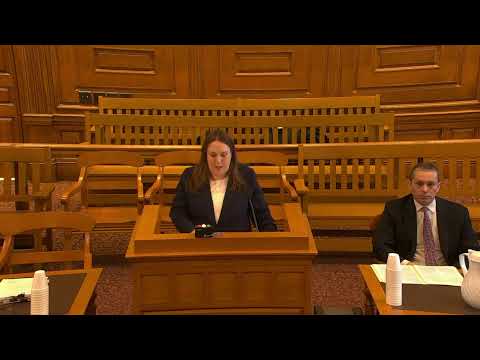
Jean Liddy, arguing for Shabazz, said the evidence in the east bedroom'where officers found a scale, a price ledger and drug residue'did not support constructive possession beyond mere presence because multiple people used the house and some contraband was found on a severed co-defendant. Liddy challenged the prosecutor's opening and closing rhetoric, saying repeated references to an absent co-defendant (Marcus Johnson) and themes about a "trap house" unfairly prejudiced the jury.
Sarah Swan, for the Commonwealth, said the verdicts reflect a careful, limited jury decision and that the judge repeatedly instructed the jury not to attribute evidence found on a severed co-defendant to the defendants on trial. Swan pointed to documentary and testimonial indicia of constructive possession: the defendant was observed leaving the room where the items were found, price sheets and a scale were located there, and a substitute chemist and other witnesses connected the substances to cocaine.
The panel probed whether the prosecutor's repeated references to the severed co-defendant were prejudicial when the judge had given limiting instructions, whether the drug certificate evidence was properly preserved, and whether the lack of a joint-venture instruction (as argued by defense counsel) undermined the constructive-possession finding. The Commonwealth noted the jury convicted on one count of possession with intent and acquitted on five other counts, and argued that the mixed verdict shows discernment rather than undue prejudice.
The court took the case under advisement; the transcript shows the argument concluded and the matter was submitted with no opinion recorded in the hearing transcript.