Get Full Government Meeting Transcripts, Videos, & Alerts Forever!
Get email alerts on the Criminal Evidence topic
No spam. Unsubscribe anytime.
Appeals court weighs whether rent money belonged to tenant or wife in larceny appeal
Summary
In Commonwealth v. Reese Collins (docket 24P548) the three-justice panel heard competing arguments over whether evidence showed ownership and intent required for larceny; defense counsel stressed joint ownership and return of funds, while the Commonwealth defended jury’s inference of intent to permanently deprive.
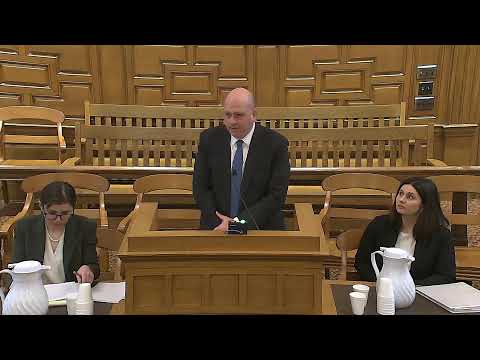
Chief Justice Amy Blake and a three-justice panel heard oral argument Tuesday in Commonwealth v. Reese Collins, docket number 24P548, over whether the evidence at trial was sufficient to support a larceny conviction for money taken from a leased apartment.
The dispute focused on two elements: whose money it was and whether the defendant intended permanently to deprive the alleged victim of it. Penelope Kathawala, representing appellant Reese Collins, told the panel that “the Commonwealth has conceded there was insufficient evidence” on the higher charge and argued the record likewise fails to prove ownership for the lesser-included larceny offense.
Why it matters
If ownership of the money is ambiguous — for example, if the funds were contributed toward a jointly owed rent payment — the court said, a larceny conviction may not stand. Kathawala pointed to testimony that a brother gave $500 toward rent, that the money was hidden by the wife in a shared dresser, and that the brother had sometimes handed rent money to either spouse. “The money was given to either Miss Souza or Mr. Collins to pay rent,” she said, arguing that possession and control were not shown to belong solely to Mr. Collins.
What the court pressed
Justice William Mead and Justice John Englander pressed both sides on the standard of review and on whether the jury reasonably could infer intent. Mead asked whether returning the money undercuts an inference of an intent to permanently deprive; the justices cited case law going back decades, including Commonwealth v. O’Connell, saying the law can treat a temporary taking followed by return as larceny in some circumstances.
Commonwealth response
Steven Nadeau, on behalf of the Commonwealth, told the panel that even taking the evidence in the light most favorable to the Commonwealth the jury could reasonably find the defendant had taken the money with intent to deprive the owner and that the evidence about where the money was hidden and how the defendant behaved while leaving supported that inference.
Outcome and next steps
The panel did not decide the case at argument; the matter was taken under advisement. The court asked about procedural questions relating to resentencing if the panel were to reverse part of the conviction, and counsel acknowledged possible remand issues. No opinion date was given on the record.