Get Full Government Meeting Transcripts, Videos, & Alerts Forever!
Get email alerts on the University Finance And Policy topic
No spam. Unsubscribe anytime.
University of Idaho emphasizes stabilization, research partnerships and pending decisions on Phoenix deal, DEI reorganization and medical education
Summary
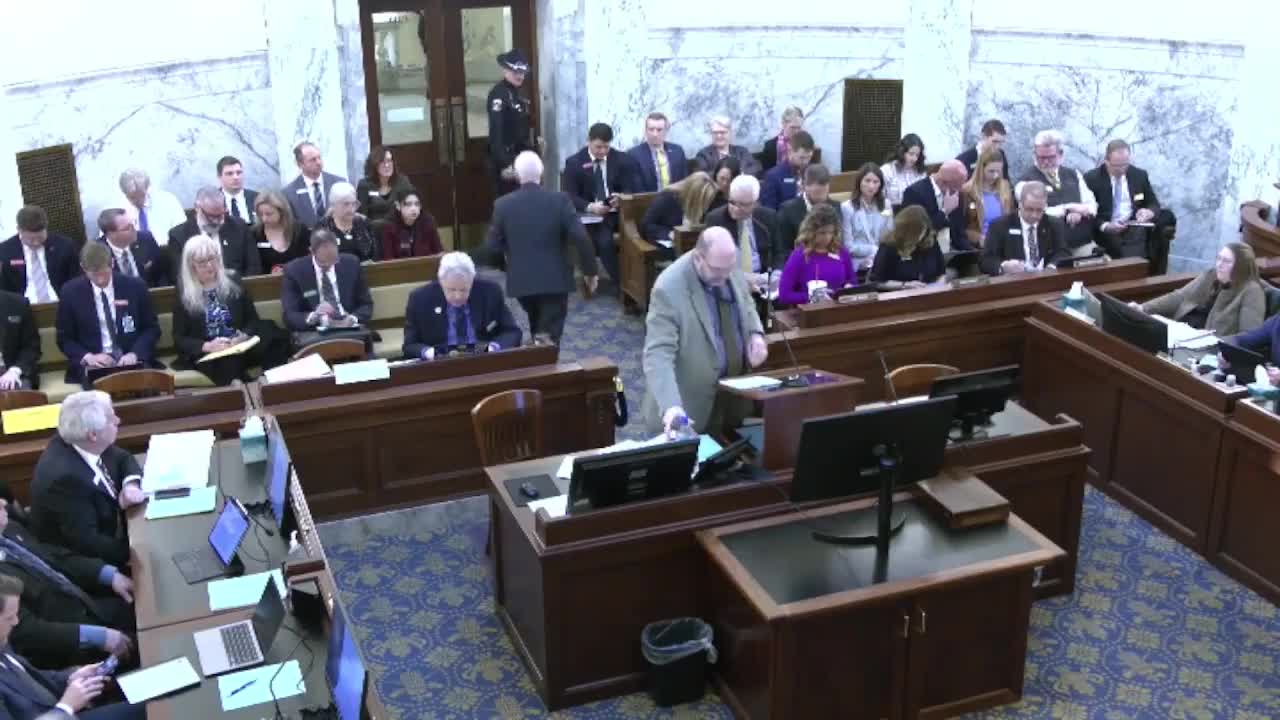
Kevin Campbell, budget and policy analyst for the Legislative Services Office, opened the University of Idaho segment of the Jan. 27 Joint Finance‑Appropriations Committee hearing with a five‑year overview that placed the university’s FY2025 base budget at about $196.3 million and reported enrollment at 12,286 students.
Kevin Campbell, budget and policy analyst for the Legislative Services Office, opened the University of Idaho segment of the Jan. 27 Joint Finance‑Appropriations Committee hearing with a five‑year overview that placed the university’s FY2025 base budget at about $196.3 million and reported enrollment at 12,286 students.
The nut graf: University of Idaho leaders told the committee they recovered from earlier structural budget stress through a large FY2021 reduction, voluntary separations and other adjustments, have strengthened cash and restricted reserves, and are managing several unresolved strategic matters — a possible affiliation with the University of Phoenix, a reorganization of offices after a State Board of Education decision about DEI functions, and a potential change in the WAMI/medical education partnership.
President C. Scott Green described aggressive cuts taken after he joined the university and said the institution “took a $26,000,000 reduction to our budget” in FY2021. He told the committee the university has improved liquidity and currently “maintains sufficient cash reserves to support its short term and long term obligations,” although he acknowledged the university does not yet meet the State Board reserve requirement because of an accounting treatment related to retiree medical benefits (OPEB). Green said the OPEB adjustment previously reduced unrestricted reserves by about $33 million and that those resources now appear on the balance sheet as restricted assets tied to OPEB liabilities.
Financial and budget details presented by Campbell and university officials included: personnel costs representing about 68.5% of the budget, operating expenditures about 29.3%, less than 1% in capital outlay, past use of a governor’s catch‑all enhancement for operational needs, and recent ongoing EWA adjustments. Campbell also said the university historically spent about 90% of its appropriations in the period shown.
The committee probed a range of operational and program questions. President Green discussed LAUNCH, the state student aid/workforce program, and said the university’s freshman class was its largest in history and the freshman group grew about 8%, adding that the university saw a notable number of LAUNCH‑supported students in high‑demand majors such as mechanical engineering, computer science, veterinary and medical sciences.
On a potential affiliation with the University of Phoenix, Green said the university and the Phoenix sellers extended a deadline for negotiation through June 10 and that any path forward would require State Board approval and likely legislative review. He added the transaction is non‑exclusive for the sellers, and the agreement includes a breakup fee of up to $20 million to offset expenses if the deal does not proceed.
Green also described implementation of a State Board of Education resolution regarding campus DEI offices. He said the university “shut down our offices at the end of 20 24” in anticipation of the board decision and that “positions have been dissolved and staff have been reassigned to different positions that serve all of our students.” He said the Chief Diversity Officer position was repurposed as Executive Director of Tribal Relations and that some services no longer exist in their former form, while certain support functions were consolidated into programs such as Vandal Success and a new first‑generation student support unit.
On medical education, lawmakers asked about the WAMI/WWAMI partnership and a possible new relationship with the University of Utah School of Medicine. Green said the university has discussed multiple partners and that University of Utah was, in his view, the “best fit” culturally and operationally; he cautioned that any change remains subject to State Board approval and other review.
Other topics covered: the university’s research and partnership work with Idaho National Laboratory (INL) — including nuclear materials, integrated energy systems, power engineering and secure cyber‑physical systems — water resources research and the Idaho Water Resources Research Institute, the WWAMI/MD program’s role producing physicians for Idaho, and federal research pass‑throughs to subrecipients. Committee members requested a list of federal subrecipients and asked for documentation that the committee can review on jobs and duties for employees moved during the DEI reorganization. President Green and staff agreed to supply follow‑up materials.
Ending: No committee votes were taken. Committee leadership announced the statewide colleges and universities hearing would be postponed to allow time for additional questions and follow‑up from members.