Get Full Government Meeting Transcripts, Videos, & Alerts Forever!
Get email alerts on the State Public Defender topic
No spam. Unsubscribe anytime.
New State Public Defender agency seeks millions to cover transcripts, contractors and staffing during transition
Summary
Lawmakers questioned the State Public Defender about supplemental and ongoing budget requests tied to a $39 million transfer, transcript obligations after an Idaho Supreme Court ruling, rising contract rates and county onboarding costs as the new agency absorbs public defense duties.
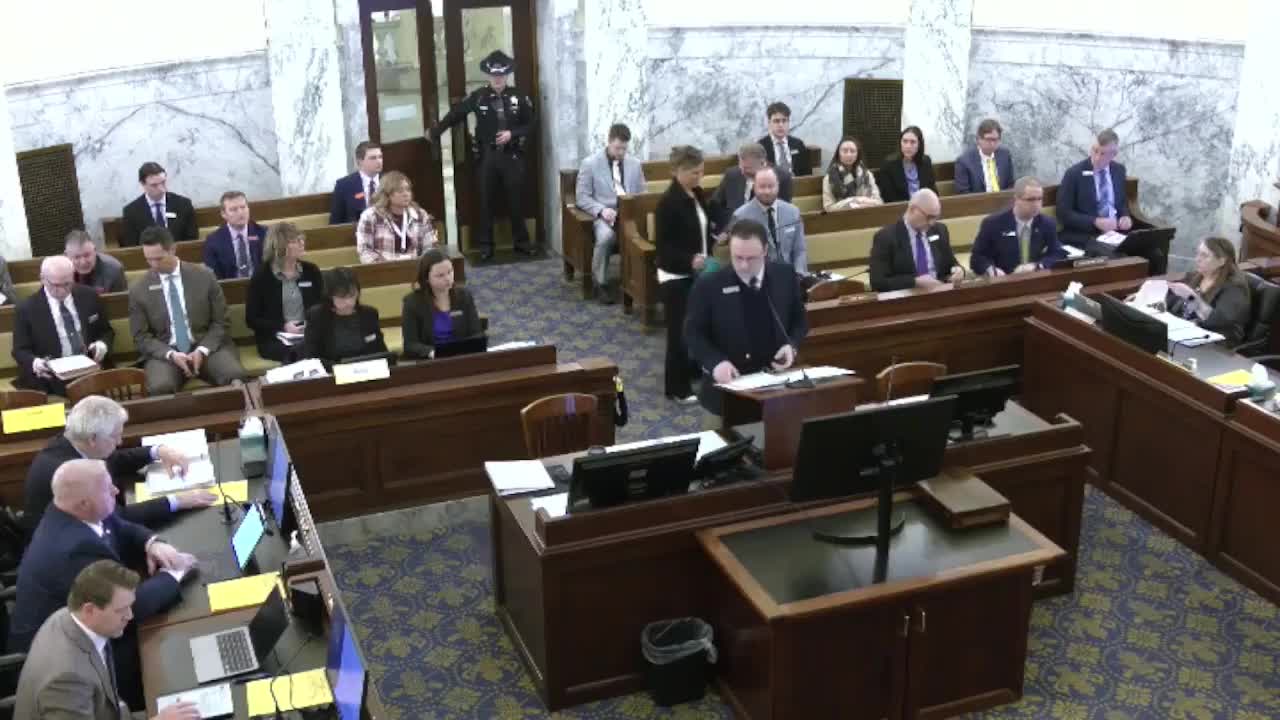
The Joint Finance-Appropriations Committee heard an extended budget briefing on the newly created State Public Defender agency, including requests for supplemental and ongoing appropriations to fund staffing, contract rates, transcripts and county onboarding as the office transitions statewide public defense responsibilities to the new structure.
Christopher Lahoset, budget and policy analyst with the Legislative Services Office, told the committee the office was created by statute (Title 19, Chapter 60, Section 3 of Idaho Code) and that a primary dedicated funding source is a $39 million transfer from the tax relief fund into the state public defense fund (codified in Idaho Code §57-8207). Lahoset outlined multiple requests: a $2.5 million one‑time supplemental to fully utilize the $39 million transfer, a $390,200 one‑time supplemental for transcript costs following the Idaho Supreme Court ruling in State v. Blasick, a $5,427,600 one‑time supplemental for FY25 personnel and contracting, and FY26 requests including ongoing operating increases of $16,000,380 from the General Fund as well as requests for additional full‑time positions tied to onboarding counties.
"The primary dedicated fund for the agency is the state public defense fund," Lahoset said, explaining the funding flow from online retailer sales tax to the tax relief fund and then to the public defense fund. He said the agency reported having 29 vacant positions and a personnel budget of about $37.7 million; total fiscal year 2025 appropriation was shown as roughly $52,000,015.30.
Eric Frederickson, the State Public Defender, described the rapid change since the agency began operations in October and the operational challenges that followed. Frederickson told the committee the transition has produced a surge of withdrawals and case assignments the agency had to triage: "We walked into 1,300 withdrawals and cases," he said, adding that the office and district defenders were handling active litigation during the transition. Frederickson said the numbers available during budget formulation were affected by pandemic-era caseload fluctuations and that the available funding assumptions were therefore low.
Several lawmakers pressed Frederickson on specific cost drivers. The agency said counties historically paid for certain costs (for example, court‑ordered transcripts and psychosexual evaluations) but that a December Idaho Supreme Court decision (State v. Blasick) clarified that the state — via the public defender office — must cover transcript costs. Frederickson said psychosexual evaluations can cost about $2,500 each and that district court funds that previously covered some items were not disclosed to the Public Defense Commission.
Committee members raised questions about the agency's use of contracts and flat‑fee arrangements, facility costs, and whether counties will continue to provide facilities. Frederickson noted statute requires counties to provide facilities until 2029, and that further statutory change would be required to alter that timeline.
The agency requested authorization of 17.96 full‑time positions and $226,700 ongoing for onboarding Benewah, Elmore, Jerome and Shoshone counties, and Lahoset said the agency had about $1,259,000 in reappropriated funds from prior supplemental legislation that could be drawn down. Frederickson described efforts to standardize pay and to increase contract rates to recruit attorneys in rural counties, saying the office has seen contract attorneys and senior staff depart and that raising pay and standardizing rates was intended to equalize representation across urban and rural counties.
Frederickson and lawmakers also discussed scope: he said the office has been appointed to matters beyond traditional criminal defense practice in some cases and that clarification or legislative direction could be helpful to limit appointments to statutory responsibilities. Lawmakers and agency officials agreed further follow‑up and documentation would be provided to the committee; no vote or appropriation action was taken during the hearing.