Get Full Government Meeting Transcripts, Videos, & Alerts Forever!
Get email alerts on the Higher Education Budget topic
No spam. Unsubscribe anytime.
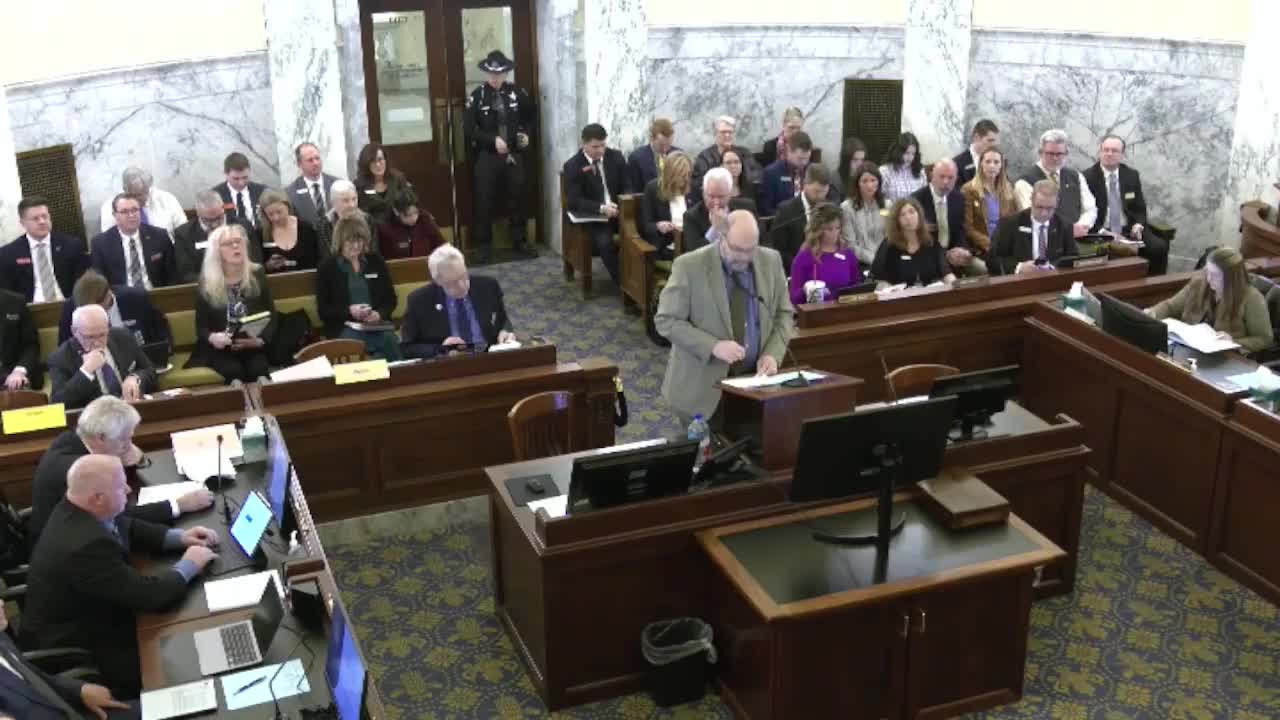
Lewis‑Clark State College budget presentation highlights enrollment, salary gap, career‑technical gains and prison‑education expansion
Summary
Kevin Campbell, a budget and policy analyst with the Legislative Services Office, told the Joint Finance‑Appropriations Committee on Jan. 27 that Lewis‑Clark State College’s FY2025 base general fund appropriation is about $41.7 million and that the college reported roughly $23.7 million in tuition and fee revenue reappropriated from FY2024.
Kevin Campbell, a budget and policy analyst with the Legislative Services Office, told the Joint Finance‑Appropriations Committee on Jan. 27 that Lewis‑Clark State College’s FY2025 base general fund appropriation is about $41.7 million and that the college reported roughly $23.7 million in tuition and fee revenue reappropriated from FY2024.
That revenue treatment, Campbell said, is standard in the college and university budget process because the academic year and the state fiscal year do not align precisely. He also identified endowment funds including the Normal School Income Fund, and said distributions and uses are specified in Idaho code (transcript reference: “code section 3,330 three‑three 304”).
The nut graf: The committee hearing centered on how statewide budget formulas and one‑time enhancements affect small, regionally focused institutions. Lewis‑Clark leaders told lawmakers the college is stabilizing enrollment after pandemic declines, using targeted state enhancements to cover occupancy and operational costs, and pressing for pay adjustments to close a measurable salary gap with K‑12 and peer institutions.
President Cynthia Pemberton, introduced the college’s leaders and answered committee questions, telling the committee that Lewis‑Clark enrolls about 3,881 students and offers more than 130 academic and career‑technical credentials, including new graduate programs in nursing and cyber accounting.
Pemberton and Campbell described the enrollment workload adjustment (EWA), a three‑year weighted credit‑hour formula administered by the State Board of Education that redistributes a pool of funding among institutions. Campbell explained reappropriation of tuition and fee dollars and noted that the EWA will reduce Lewis‑Clark’s FY2026 appropriation by $102,500 unless other action is taken. Pemberton said the formula’s weighting disadvantages Lewis‑Clark because it averages a lower credit‑hour weighting (about 1.85) than sister institutions (about 2.51) and that “for 3 decades, LC State has received, on average, 26% less possibility of having the credit hours produced precipitate a positive formula outcome.”
On staffing and pay, Pemberton provided a comparison against K‑12 pay levels: she said an LC State instructor, on average, makes about $9,000 less per year than the statewide K‑12 average and that an LC State assistant professor makes about $3,777 less per year. She said the college has requested $287,000 in operational capacity enhancement (OCE) for salary/CEC adjustments but estimated that roughly $1.2 million would be needed to close the gap toward mid‑median levels.
Committee members asked about retention and completion metrics. Pemberton described recent investments in wrap‑around student supports — centralized advising, a tutoring “one‑stop,” peer and faculty mentors, colocated food pantry services and employer connections — and said early indicators show freshman retention and recent enrollment are improving (she reported a 2.4% increase in fall and a 9% increase in spring in their most recent terms).
LAUNCH, the state student aid/workforce program, also featured in the discussion. Pemberton said about 240 LC State students received LAUNCH funds in the fall term and that career‑technical programs saw strong benefits: she cited a 19% increase in career‑technical enrollment in fall and another ~10% increase in spring, and noted 36 of 54 fourth‑year electrical apprenticeship students completed their program with LAUNCH support.
Pemberton said Lewis‑Clark is the only Idaho institution to complete the full transition from the experimental prison‑education pilot to a full prison‑education program, now serving nearly 200 incarcerated students at sites in Orofino, Pocatello and Boise, after approvals by IDOC, the State Board of Education, the college’s accrediting agency and the U.S. Department of Education.
Financial details provided by Campbell and Pemberton included a FY2024 total appropriation of about $40.5 million (with the earlier‑noted $23.7 million tuition/fees), a multi‑year breakdown showing personnel as about 82.6% of the college’s budget and operating expenses about 16.5%, and enhancements in recent years for occupancy, CEC and endowment adjustments. They said less than 1% of the college’s budget is capital outlay.
The session closed with Pemberton restating the college’s mission as a small, regionally focused four‑year public institution and asking the committee to consider further support to address ongoing salary and operational gaps.
Ending: The committee did not take a formal vote on Lewis‑Clark’s requests during the hearing; members asked for additional comparative salary data and campus‑specific documents that analysts and college staff agreed to provide after the session.