Get Full Government Meeting Transcripts, Videos, & Alerts Forever!
Get email alerts on the Public Defense Appellate topic
No spam. Unsubscribe anytime.
Appellate public defender requests deputy attorney to reduce costly contract overflow
Summary
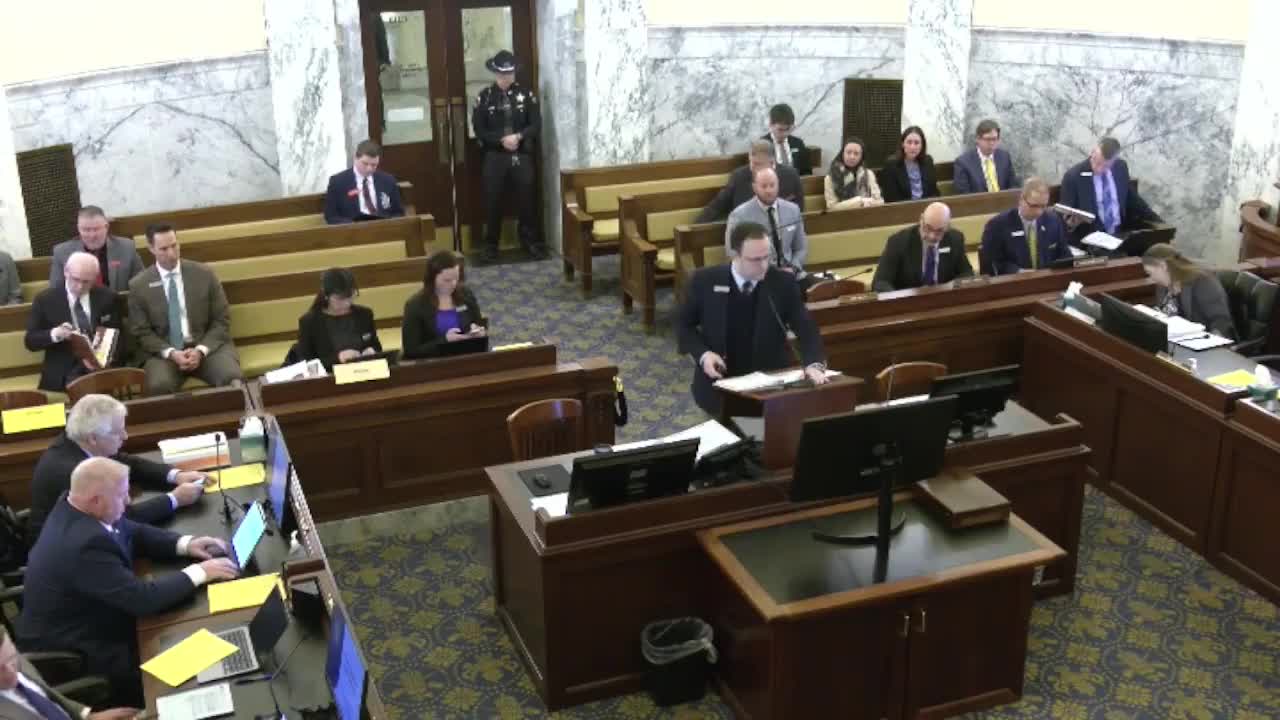
The Joint Finance-Appropriations Committee heard the State Appellate Public Defender request funding for a deputy attorney to handle non-capital appeals, citing rising caseloads and higher costs from contracting overflow cases.
The Joint Finance-Appropriations Committee on Thursday heard a request from the Office of the State Appellate Public Defender for funding to add a deputy state appellate public defender to handle non-capital felony, misdemeanor and juvenile district and post-conviction appeals.
The request is part of the office's fiscal year 2026 enhancement package and is presented as a cost-saving move: the office estimated continued contracting for overflow cases would cost roughly $254,000 per year, while hiring an in‑house attorney at about $140,000 salary would reduce that expense.
Christopher Lahoset, budget and policy analyst with the Legislative Services Office, opened the presentation and outlined the office's structure and recent appropriation history, noting the office is authorized for 26 full‑time positions and, as of Dec. 15, reported no vacancies. Lahoset also told the committee the office's average personnel appropriation over five years is just under $2.8 million and that about 85% of total expenditures in 2024 went to personnel costs.
Eric Leighton, director of the State Appellate Public Defender, told the committee the office's post‑pandemic caseload has grown significantly and that the office currently expects a caseload near 650 cases for the fiscal year. "This position would be our thirteenth attorney in our appellate unit," Leighton said, explaining that case assignments are distributed across attorneys according to experience and complexity. Leighton said the office has used contracting for both conflict cases (which must be handled outside the office when conflicts exist) and, more recently, overflow cases to relieve pressure.
Leighton told lawmakers the office maintains funds earmarked for conflict representation (about $200,000 annually) but that contracting out overflow cases is typically more expensive and can cross fiscal years, complicating budgeting. He said roughly 14 overflow cases were contracted out in the last year and a half.
Committee members asked about turnover and hiring challenges; Leighton said the office had experienced turnover in recent years related in part to creation of the State Public Defender and the loss of some experienced attorneys. He reported the office is "for the moment" fully staffed but noted upcoming departures, and explained the new in‑house hire would allow the office to handle a larger share of appeals internally while also serving as a training pipeline for less‑experienced attorneys.
The presentation concluded with Lahoset noting supplemental and reappropriated funds from earlier legislative action that have been used to cover a surge in appellate work; the analyst and director stood for questions and had no formal motions or votes before the committee.
The committee did not take an immediate action on the enhancement request during the hearing; lawmakers asked clarifying questions about case mix, contracting, and the office's five‑year appropriation history.