Get Full Government Meeting Transcripts, Videos, & Alerts Forever!
Get email alerts on the Industrial Commission Budget topic
No spam. Unsubscribe anytime.
Industrial Commission seeks staff, IRIS maintenance after digital overhaul and rising caseloads
Summary
The Industrial Commission told the Joint Finance Preparation Committee it needs staff increases, maintenance contract funding for its IRIS case-management system, vehicle replacements for field staff and other one‑time items after an extensive digital modernization and a rebound in case volume.
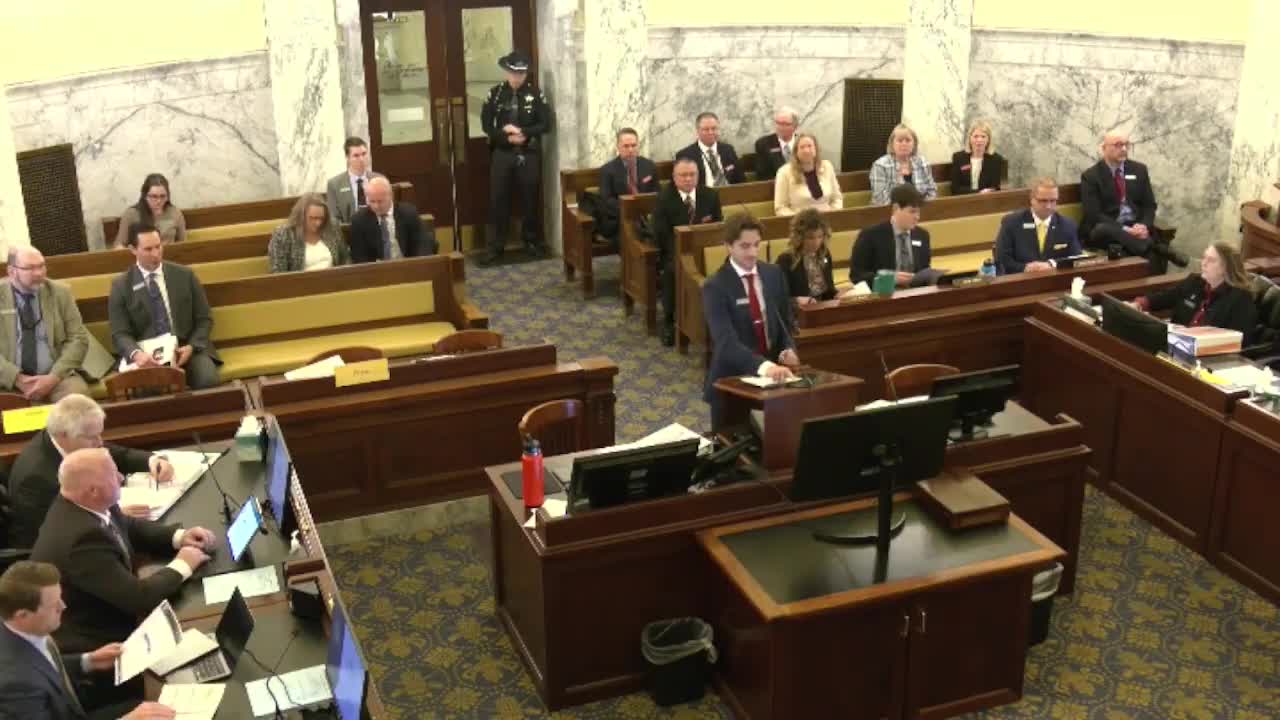
Industrial Commission Director George Gutierrez and Legislative Services analyst Noah Peterson briefed the Joint Finance Preparation Committee on Jan. 23 about the agency's budget request for fiscal 2026, emphasizing continued costs from the IRIS case-management modernization, staff reclassifications and a plan to replace high‑mileage field vehicles.
The Industrial Commission oversees workers' compensation adjudication, rehabilitation services and the Crime Victims Compensation Program. Peterson said the commission has 130.25 full‑time positions allocated across programs (70.5 compensation; 47.25 rehabilitation; 12.5 crime victims compensation) and had 12 vacant FTPs as of August. The agency is a dedicated‑fund entity and does not receive general fund appropriations.
Committee members were asked to consider 10 enhancement requests totaling $298,200 ongoing and $554,200 one‑time. The IRIS project — a multi‑year effort to digitize previously paper‑dependent workflows — has driven much of the commission's recent one‑time spending. Peterson said the commission has received about $12,874,000 in one‑time appropriations for IRIS since fiscal 2021, including $3.5 million one‑time in fiscal 2025. The FY2026 request includes a $288,000 one‑time IRIS maintenance contract to provide technical support until the Office of Information Technology Services (ITS) can assume those duties.
"This is contracted support. As far as specifics as what the contractors are doing, I can get you a little bit more detail on that," Peterson said when asked by Senator Cook whether the maintenance funding was for new functionality or ongoing upkeep.
Gutierrez told the committee that while IRIS improved business‑system efficiency and reduced paper handling, it shifted some responsibilities and increased the volume and complexity of data available to staff. That change, he said, increased workload in areas such as employer compliance and required additional legal‑preparation work before cases go to hearing.
"When we implemented IRIS we increased the volume and number of sources of data that we are now able to pull in on employers," Gutierrez said. "We're now identifying nearly 60% more cases. ... More cases are getting pushed down the line and bottlenecking in our legal department." He said the agency previously relied on an in‑house Deputy Attorney General and now uses the Attorney General's civil litigation division, creating a need for additional preparation work before cases are sent to DAGs.
Key personnel requests include: $66,500 ongoing to fund a senior financial technician in the fiscal department to reduce turnaround for Crime Victim Compensation payments; $111,600 ongoing for a referee position to help adjudicate workers' compensation and crime‑victim appeals; a $32,300 ongoing rehabilitation field consultant for Twin Falls and Burley areas (where case volume is about 35% higher than the five‑year average); $25,500 to reclassify five adjudication associates; and $62,300 to fund a technical records specialist in employer compliance. Gutierrez said the financial technician request responds to a backlog of roughly 800 outstanding victim payments that was reduced by temporarily shifting staff assignments.
The commission reported a $4,555,000 reversion to the state last year, driven largely by trustee and benefit payments (about $3,000,000 reverted, including roughly $2,400,000 from the crime victims compensation program), $644,000 in personnel reversions, $835,000 in operating reversions and $55,000 in capital outlay. Peterson said the commission historically spends about 80% of total appropriation on average over recent years.
The committee asked whether reverted trustee and benefits funds could be reallocated to staff positions. Peterson and Gutierrez said most reversions were from trustee and benefits accounts and that shifting those funds to other purposes would require legislative or executive approval because those funds are statutorily designated for payments to victims or peace officers.
Other requests include a $30,000 one‑time contingency for IRIS recommended by ITS, replacement IT items totaling $104,200 (about $78,000 for laptops and docking stations, $26,200 for monitors), and four small SUVs to replace high‑mileage field vehicles (miles reported in the 82,000–98,000 range; model years roughly 2006–2011). Gutierrez said many field vehicles are not road‑safe and that replacements are needed to ensure staff safety and reliability when visiting remote areas.
The governor recommended a 5% commissioners' compensation (CEC) increase (reflected as a $22,400 adjustment for commissioner pay) and did not recommend the contingency fund. Gutierrez asked the committee for support of the 2026 budget request as presented.
Why it matters: The commission's requests tie directly to service timeliness — adjudication delays, payment turnaround for victims and compliance enforcement — and to the long‑term sustainability and maintenance of recent IT modernization. Committee members repeatedly asked for additional breakdowns of IRIS expenditures and maintenance needs; Gutierrez and staff agreed to provide more detailed, written cost breakdowns.
What’s next: Committee members asked for written detail on IRIS development and maintenance costs, a complete vehicle inventory and clearer accounting of how reverted funds are composed and restricted.