Get Full Government Meeting Transcripts, Videos, & Alerts Forever!
Get email alerts on the Agriculture Invasive Species Budget topic
No spam. Unsubscribe anytime.
Idaho Agriculture seeks investigator pay structure, funds for quagga mussel response in FY2026 budget
Summary
Department of Agriculture analysts and Director Chanel Tewell told the Joint Finance Appropriations Committee that the department requests ongoing and one‑time funding in FY2026 to staff quagga mussel prevention work, create a pay ladder for agricultural investigators, replace vehicles and cover IT and replacement items.
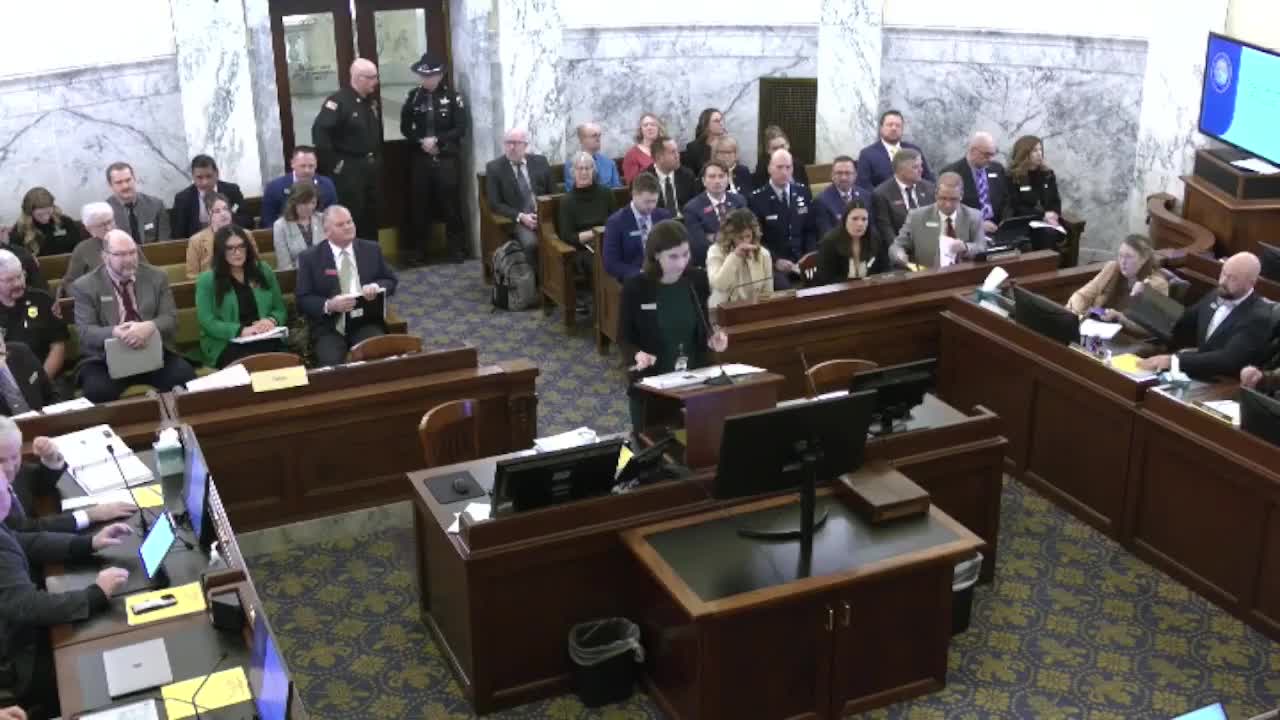
At a Friday morning meeting of the Joint Finance Appropriations Committee, Frances Lippett, budget and policy analyst for the Legislative Services Office, reviewed the Idaho Department of Agriculture’s budget and highlighted requests tied to invasive‑species response and personnel retention.
The department asks JFAC to approve a range of items in its fiscal year 2026 request, including continued funding for quagga mussel response, a proposed pay structure for agricultural investigators and one‑time replacement items such as vehicles and IT hardware. The measures aim to sustain sampling and watercraft inspection stations and to reduce investigator turnover that the department says is affecting service delivery.
Lippett said the department’s statutory responsibilities are set out in several titles of Idaho Code and that the agency is organized into eight budgeted programs, with plant industries the largest at 75 full‑time equivalents and animal industries the second largest at 62 FTEs. She said the department’s dedicated funds are the most numerous of any state agency and noted two funds tied to recent operations: the invasive species fund and the pest control fund.
Lippett summarized recent Legislature actions that provided both a one‑time and ongoing infusion to combat quagga mussels: a $5,000,000 general‑fund cash transfer into the invasive species fund and an ongoing $1,500,000 general‑fund appropriation for staffing and check‑station operations. Lippett said the $5,000,000 transfer is appropriated against both the receiving dedicated fund and the general fund because the accounting requires a corresponding general fund appropriation to reflect the cash transfer.
Chanel Tewell, director of the Idaho State Department of Agriculture, told the committee the department "doubled the sampling statewide" and expanded watercraft inspections after a 2023 detection event on the Snake River. “By every measure, that work has increased,” Tewell said, describing added sampling, stations and personnel and noting the department treated a location on the Snake River in 2024.
On staff retention, Lippett said the department requested $340,400 in ongoing funding to create a pay structure for 53 agricultural investigator positions; the proposal is intended as a career ladder to encourage retention and professional development. Lippett reported that 23 of those investigator senior positions had less than two years’ service; Director Tewell corrected and updated the committee, saying 27 of the 53 positions had been filled for less than two years and only nine had 10 or more years of experience. Tewell said investigators are the agency’s first responders for complaints ranging from animal care to pesticide drift and that turnover and training needs impose a service cost.
Representative Mitchell asked about replacement vehicles included in a one‑time request of roughly $891,000; Lippett said the agency would provide a list and estimated 17 vehicles, mostly pickup trucks and a couple of SUVs, were included. Lippett also described a pest control fund balance that reflected Mormon cricket treatment and monitoring costs and said a $1,700,000 balance on the pest control fund was incurred in FY2024 and is being requested for payment in FY2025.
Other elements in the FY2026 request include replacement IT hardware (laptops) and one‑time replacement items; Lippett listed a FY2025 deficiency warrant request of $1,724,300 for exotic species response. She also noted the department requested a one‑time appropriation of $1,100,891,000 for replacement items in an earlier slide (transcription reflects formatting anomalies); the committee discussion focused on specific, enumerated replacement amounts for vehicles and IT rather than the larger number.
Senator Hart asked about meat inspection and federal preemption. Tewell said federal law (the Federal Meat Inspection Act) places primary federal responsibility for consumer meat inspection and that Idaho has little input when inspections are under federal jurisdiction; she said some states have explored state inspection programs but federal preemption and equivalence requirements complicate state programs.
The department also flagged a new Degradation of Livestock Prevention Fund created by House Bill 592 to provide $225,000 from the general fund to compensate livestock owners for losses from grizzly bears and wolves, and noted a USDA resilient food systems grant for which the department received federal funds.
The committee did not take final action on any line items during the presentation; analysts and the director said they would provide follow‑up details regarding the vehicle list, clarification of certain grant entries and other line‑item specifics.
Looking ahead, Lippett and Director Tewell asked the committee to consider the retention proposal and continued investment in invasive species prevention as ongoing operational needs rather than short‑term fixes, noting the department’s broad responsibilities across plant, animal and inspection programs.