Get Full Government Meeting Transcripts, Videos, & Alerts Forever!
Get email alerts on the Military Justice topic
No spam. Unsubscribe anytime.
Committee introduces bill to update Idaho Code of Military Justice to speed handling of minor misconduct
Summary
RS31809, presented by Representative Ted Hill with Captain Derek Anderson of the Idaho National Guard, would revise the Idaho Code of Military Justice to empower lower-level commanders to handle minor misconduct, limit enlisted service members’ ability to reject nonjudicial punishment, and create an appellate layer to the Adjutant General.
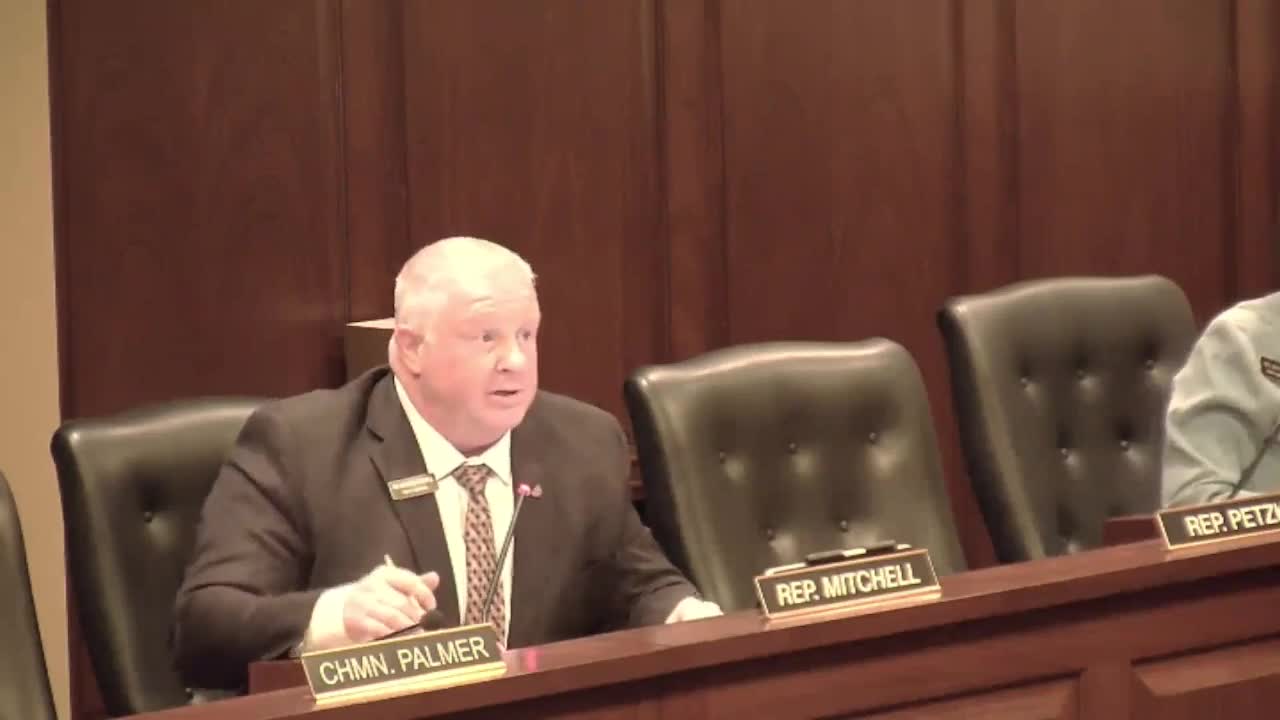
Representative Ted Hill (District 14) introduced RS31809 and said he would yield most of the presentation to Captain Derek Anderson of the Idaho National Guard. Captain Anderson described proposed changes to the Idaho Code of Military Justice intended to streamline handling of low-level misconduct and better align state practices with active-duty processes.
Anderson said the changes target minor misconduct and would, among other things, amend Article 15 to remove promotional-authority language that currently prevents lower-level commanders from imposing administrative sanctions. The proposal would empower captains and other lower-level commanders to address minor misconduct rather than routing such matters to a general officer. The draft also would remove enlisted service members’ current ability to refuse nonjudicial punishment (NJP) and demand court-martial for low-level offenses, while providing an appellate path to the Adjutant General for those who believe punishment was excessive.
Captain Anderson said Article 20 would be amended to prevent senior noncommissioned officers (E-7 and above) from turning down a summary court-martial in favor of a higher-level forum for minor matters. Anderson emphasized the changes apply to minor misconduct (his examples included a soldier arriving at formation intoxicated or being disrespectful to a senior officer) and not to felonies or serious civilian crimes, which will continue to be handled by civilian law enforcement and courts. He also cited proposed technical updates to Article 7 to reflect State v. Clark (2018) and edits to Article 27 to allow for cross-state judge-advocate support in rare conflict situations.
Representative Ponca asked for an example of “minor misconduct”; Anderson replied with the examples above. Representative Nicholson moved to introduce RS31809; the committee approved the motion on a voice vote. No roll-call vote was recorded in the transcript.