Get Full Government Meeting Transcripts, Videos, & Alerts Forever!
Get email alerts on the Hjm1 Obergefell Federalism topic
No spam. Unsubscribe anytime.
State Affairs committee advances HJM 1 asking Supreme Court to revisit Obergefell; extensive public testimony both for and against
Summary
Representative Heather Scott told the House State Affairs Committee that House Joint Memorial 1 is about "upholding federalism and a state's right to make our own decisions," and asked that the U.S. Supreme Court reconsider Obergefell v. Hodges.
Representative Heather Scott, R‑District 2, opened debate on House Joint Memorial 1, telling the House State Affairs Committee the memorial "is about upholding federalism and a state's right to make our own decisions." Scott asked the committee to formally "reject Obergefell" and to ask the U.S. Supreme Court to reconsider the 2015 ruling that legalized same‑sex marriage nationwide.
"This memorial today in front of you is about upholding federalism and a state's right to make our own decisions. It is not about defining marriage, it's about who should be defining marriage," Scott said during her five‑minute opening statement.
The committee spent the remainder of the morning hearing public testimony. Dozens of residents and clergy provided two‑minute statements. Supporters of the memorial, including Arthur Shopper of Mass Resistance and several pastors, argued the federal court overreached and states should decide marriage policy. Opponents—ranging from couples who said their families rely on marriage protections to medical and faith leaders—argued overturning Obergefell would remove hundreds of legal protections from same‑sex couples and harm families.
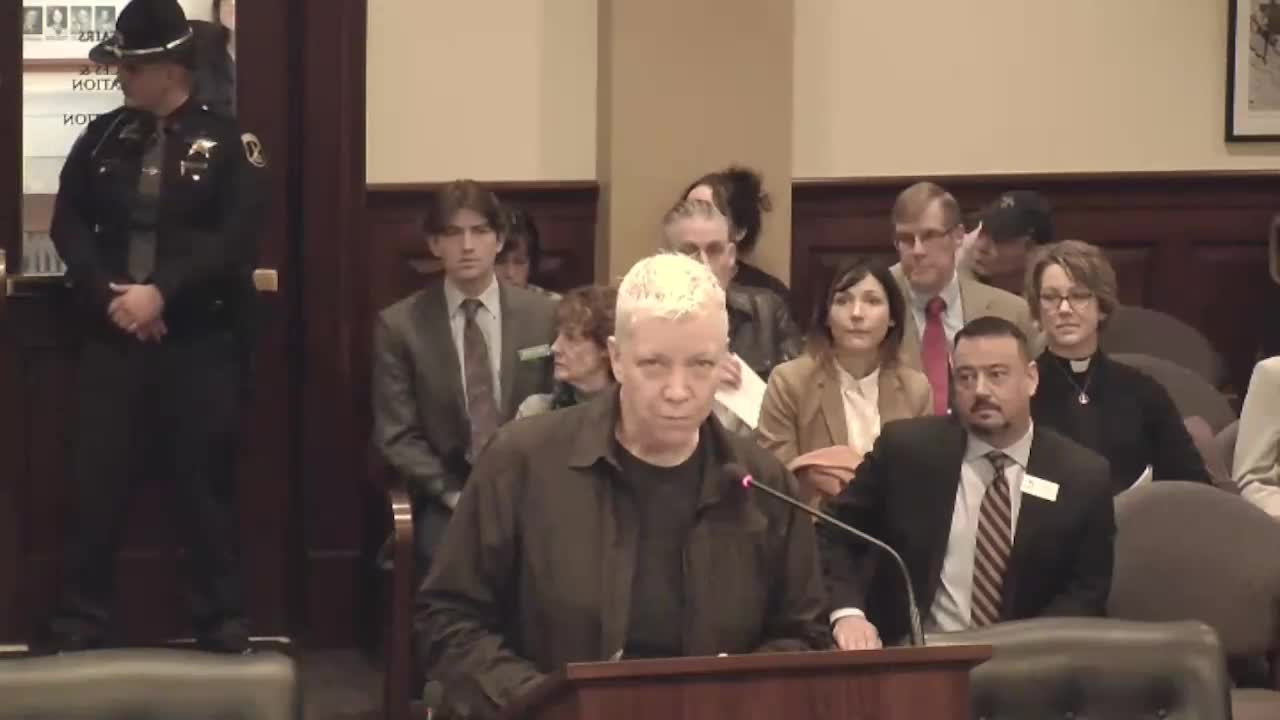
Sue Latta, the named plaintiff in Latta v. Otter, told the committee she and her wife married in California and fought in federal court to secure marriage recognition in Idaho. "We are not asking for special rights, We're asking for equal rights," Latta said. Latta described financial and practical harms that flowed from Idaho's prior nonrecognition of same‑sex marriages and told the committee her litigation led to marriages beginning in Idaho in 2014.
Clergy who testified against the memorial framed marriage as inclusive. The Rev. Sarah Lawal, testifying for the Interfaith Equality Coalition, said, "To use the legislative process to deny some couples the recognition of their marriages is to diminish our collective humanity." Several medical professionals and mental‑health providers warned of increased harm and suicide risk if legal recognition were withdrawn.
Representatives pressed Scott on constitutional issues. Representative Keeles noted the committee had a letter from a former Idaho attorney general and state supreme court justice saying the memorial likely would not be considered by the courts; Scott replied the memorial is intended as a statement that could encourage the Supreme Court to take a case. Representative Achilles and Representative Morley repeatedly raised concerns about equal‑protection principles and the practical reach of any state action. The transcript records discussion of Latta v. Otter (the local federal case that previously affected Idaho marriage law) and repeated references to the Tenth and Fourteenth Amendments.
Representative Achilles offered a substitute motion to hold the memorial in committee, arguing the memorial misrepresented legal history, ignored Latta v. Otter, and would be divisive; that substitute motion failed 13‑2 on a roll call. The committee then approved a motion to send HJM 1 to the floor with a do‑pass recommendation. Committee minutes recorded Representative Achilles and Representative Morley as voting no on the final motion to advance.
The committee record shows a broad cross‑section of testimony: some speakers framed the memorial as a defense of states' rights and religious liberty; others described the memorial as an attack on the rights and day‑to‑day protections of Idaho families. The transcript contains no binding change in law; the committee vote advances the memorial to the next legislative stage.