Get Full Government Meeting Transcripts, Videos, & Alerts Forever!
Get email alerts on the Housing Compliance topic
No spam. Unsubscribe anytime.
Kalamazoo County to add housing compliance specialist as millage-funded projects increase
Summary
Deputy housing director said the county needs a compliance specialist to audit rents and income eligibility across millage-funded projects; finance director confirmed the new role and existing housing director positions would be funded from the housing millage (Fund 297) and are not included in the county’s indirect-cost de minimis calculation.
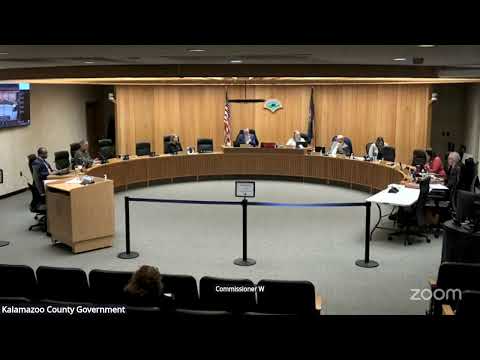
Deputy Director of Housing Willa deToronto told the Kalamazoo County Board of Commissioners at its February work session that the county needs a housing compliance specialist to monitor compliance on projects funded by the county housing millage.
DeToronto said the county has allocated funding that will create more than 1,400 housing units through three funding rounds to date, with roughly 800 units already occupied, under construction or expected to break ground in spring 2025. Some projects use Low-Income Housing Tax Credit (LIHTC) or federal HOME funds and are subject to state or federal compliance; others rely solely on the county millage and require local monitoring, DeToronto said.
The proposed compliance position would audit agreements, verify rents and income qualifications, monitor single-family rehab and supportive-services grants, and help build a data-tracking system to report outcomes to taxpayers. DeToronto said the housing department currently has two staff and that adding a compliance specialist would increase capacity; the county is implementing new management software (Neighborly) and staff would help roll out a compliance system tied to that platform.
Commissioner Mazur asked whether adding the position would require scaling back previously awarded grants; DeToronto replied no. The board’s administrator, Catlin, explained that the county uses a two-year lag rule to calculate indirect-cost/de minimis rates for millage funds and that the initial 10% figure reflected start-up conditions. Finance Director Post said the housing director, the deputy director, and the new compliance position would all be funded out of the housing millage (Fund 297). Post said the county’s indirect-cost base covers core corporate services (treasurer, finance, HR, administration, insurance, corporate counsel) and that housing staff positions are not part of that de minimis indirect-cost allocation.
Commissioners asked staff to provide additional detail about the percentage of the housing fund dedicated to department salaries; Finance Director Post offered to calculate and email the board the figure after the meeting. No formal action or hiring decision was recorded at the work session.