Get Full Government Meeting Transcripts, Videos, & Alerts Forever!
Get email alerts on the Criminal Records topic
No spam. Unsubscribe anytime.
Senate advances bipartisan criminal record-sealing bill after floor debate on safeguards
Summary
SB 14 66, a sweeping rewrite of Virginia's conviction-sealing rules, cleared the Senate after debate about public-safety exceptions and implementation details; sponsors described the measure as bipartisan fixes to 2021 law.
The Senate advanced SB 14 66 on Tuesday after floor debate and amendments intended to limit the sealing eligibility for violent and sex offenses and to tighten mechanics for restitution and firearms checks.
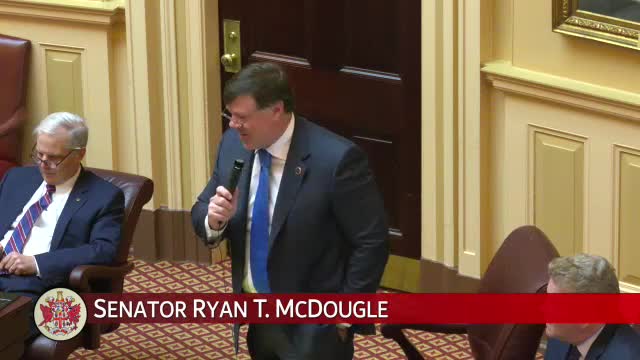
Senator Serraval (Eastern Fairfax), sponsor of the bill, framed it as a bipartisan cleanup following a 2021 law that expanded sealing and statutory changes needed to implement automatic processes. The bill narrows automatic sealing eligibility by excluding many violent felonies and sexual offenses, clarifies that restitution must be paid before a conviction may be sealed, and fixes ambiguities about whether ancillary offenses or probation violations are included in sealing timelines.
Serraval said the measure was crafted with input from the Crime Commission, Commonwealth's attorneys, sheriffs and the state police. He said contested provisions were negotiated and that the bill includes safeguards so sealed records may still be considered for sentencing and bond purposes in future offenses.
Opponents cited concerns the original 2021 law had allowed some serious convictions to be concealed from employers or schools; proponents pointed to labor-market benefits and argued the bill strikes a balance by excluding the most serious offenses and adding process safeguards.
Action: The Senate recorded a roll-call final passage vote. The tally was 25 yes, 15 no; the bill passed the Senate and moves on for further consideration.
Ending: Senators said the bill reflected months of bipartisan work to address implementation issues while trying to preserve public safety and re-entry pathways for those convicted of less serious offenses.